30+ Years
of Medical Experience

If you have been searching for natural remedies for estrogen dominance, you have probably already read a long list of symptoms and a longer list of promises. This post starts somewhere different: how your body actually handles estrogen in the first place, and where naturopathic approaches aim their support.
Here is the honest framing: everything below is general information to discuss with a clinician, not a plan to start on your own, and nothing here promises a change in your estrogen, your symptoms or your cycle. What we can do is grade the evidence honestly, so your next conversation with someone who knows your history is more useful.
If you landed here after recognising a pattern in yourself, you are not overreacting. The cluster behind that search is familiar: changes in your cycle, shifts in mood, the way your body holds water and how you feel in the weeks before your period.
The full picture of those signs, their causes and how they are assessed lives in our detailed breakdown of estrogen dominance signs and causes, along with how conventional and bioidentical hormone options fit in. This post assumes you already know what it feels like, and follows what happens underneath and what the evidence says about supporting that process naturally.
Estrogen dominance is usually a ratio problem rather than a simple overproduction problem. Estrogen and progesterone work as a pair, so when progesterone dips, estrogen can feel dominant even when estrogen levels sit in a normal range.
Several ordinary pressures can shift that ratio, each deserving more space than we have here:
Hormonal contraception and life stage also shape the picture (what the research says about long-term birth control use). Our full guide goes deeper on every one of these causes. The rest of this post takes the piece that gets the least attention: what happens to estrogen as your body clears it.
The liver is the main processing centre for estrogen. Everything your ovaries, your fat tissue and your digestion produce passes through it first. Researchers describe a two-stage job: transform, then package for removal, a pathway reviews of estrogen metabolism lay out for endogenous and exogenous estrogens alike.
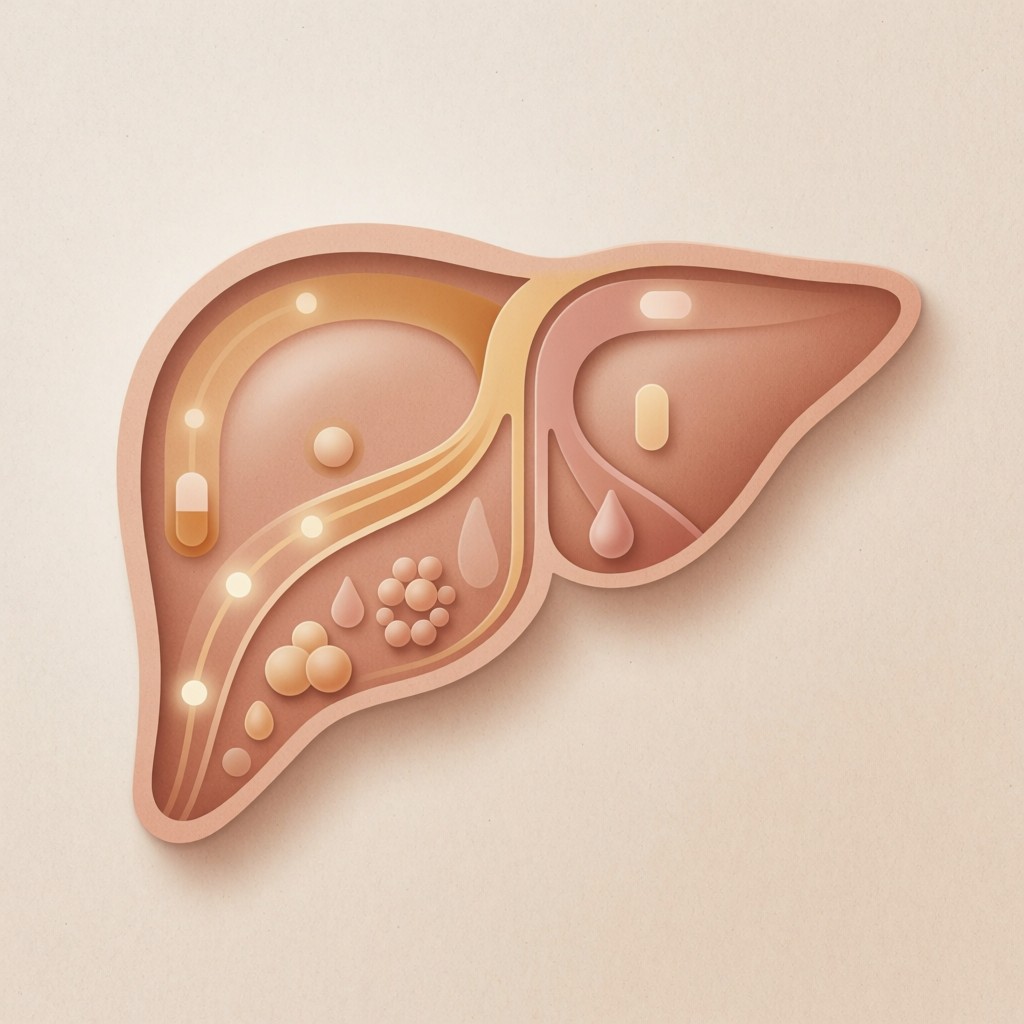
A family of enzymes called CYP450 (mainly CYP1A1 and CYP1B1 for estrogen) puts estrogen through its first transformation, producing intermediate metabolites. Two matter most for this conversation:
The first door is 2-hydroxyestrone (2-OHE1), a weaker metabolite the body clears relatively easily. The second is 16-alpha-hydroxyestrone (16-OHE1), which keeps more estrogenic activity and is harder to clear.
Research suggests the balance matters: a higher ratio of 2-hydroxyestrone to 16-alpha-hydroxyestrone is associated with more favourable outcomes in observational and laboratory work (mechanism review of estrogen metabolism and breast cancer risk). That is a population-level association, not a score you can read off a single test.
Phase II is where the body finishes the job. Two routes run in parallel:
Both routes depend on nutrients your diet supplies, which is why nutrition keeps showing up here. A well-mapped pathway still does not let you diagnose how yours runs by how you feel.
When either phase moves more slowly than it needs to, transformed estrogen waits longer before it is packaged and removed. A lagging clearance is common, gradual, and often responds to ordinary support; it is not a sign that your body is failing or toxic.
There is also a second half to the story, where the gut decides how much estrogen leaves and how much quietly returns. That loop, including the gut bacteria and enzymes involved, is covered in the two-way hormone clearance loop between gut health and hormone balance, so we link to it rather than repeat it here. For general liver support context, our guide to natural liver support is a good starting point.
If the mechanism above is the map, food is the least invasive set of levers on it. Three dietary approaches have real, if uneven, evidence behind them. None is a treatment; they work best as how you eat, not a project you are failing at.
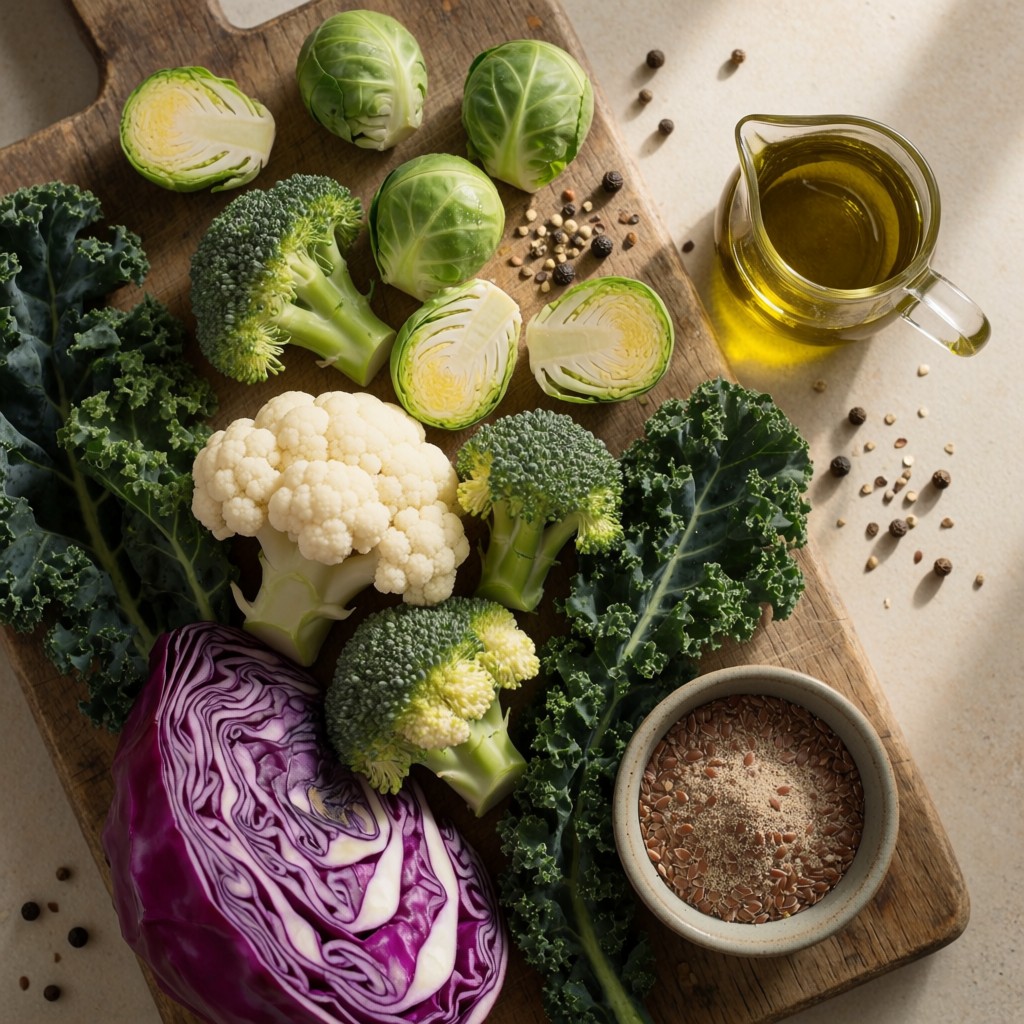
Broccoli, cauliflower, Brussels sprouts, kale, cabbage and their relatives contain indole-3-carbinol, a compound that converts to diindolylmethane (DIM) in the stomach. Population and laboratory research has linked cruciferous vegetable intake to favourable estrogen metabolism (cruciferous vegetables and cancer risk: a mechanism review). In one randomised trial, women given a supplement containing indole-3-carbinol and calcium-D-glucarate showed a significant increase in 2-hydroxyestrogen levels (Laidlaw, 2010).
Evidence grade: well supported for the food itself. For a wider view of foods that support clearance work, see foods that naturally support your detox process.
Soluble fiber binds estrogen metabolites in the intestine and helps escort them out in stool instead of leaving them available for reabsorption. In a controlled study of 62 premenopausal women, raising daily fiber intake was followed by significant drops in serum estrone and estradiol (Rose et al., American Journal of Clinical Nutrition). Evidence grade: well supported, and it doubles as ordinary digestive care (why gut microbiome balance matters).
Flaxseed is rich in lignans, which the gut converts into compounds such as enterolactone and enterodiol that influence estrogen metabolism. In a 16-week randomised trial of 46 postmenopausal women, flaxseed consumption was associated with changes in the ratio of 2-hydroxyestrone to 16-alpha-hydroxyestrone (PubMed 14749240).
Evidence grade: promising but limited. The direction is encouraging, the studies are small, and whether it helps you personally is a conversation for your clinician.
The compounds below appear in food and also exist as supplements. We are describing how each touches the pathway, not recommending any.
Supplement quality varies widely between products, some interact with medications, and several may be inappropriate during pregnancy or while breastfeeding (NCCIH, Using Dietary Supplements Wisely). Any decision to use one belongs in a conversation with a clinician who knows your full picture.
Indole-3-carbinol is what you consume; diindolylmethane is what it becomes in the stomach, and DIM is the form that supports the 2-hydroxylation pathway. The human evidence is growing but not yet definitive.
A 12-month randomised trial in 130 women showed modulation of estrogen metabolism biomarkers (PMC5571834), and a retrospective comparison of 909 DIM users against 18,385 non-users found differences in urinary estrogen metabolite profiles (2024 cohort analysis). Evidence grade: promising but limited. These are biomarker changes, not proven symptom relief.
For general context, our overview of supplements and natural detox pathways covers the wider category.
Calcium-D-glucarate occurs naturally in apples, grapefruit, broccoli and alfalfa. It supports the glucuronidation route by inhibiting an enzyme called beta-glucuronidase, which can strip the tag off estrogen and leave it available for reabsorption.
The biology makes sense and early human data is encouraging, but the evidence base is still small, and researchers have called for larger controlled trials. Evidence grade: promising but limited.
Two caveats matter here: calcium-D-glucarate may interact with some medications, including hormonal contraception and hormone therapy, and may not be appropriate during pregnancy or breastfeeding. That combination is exactly why this is information for your clinician rather than an instruction for you.
Seed cycling is the practice of eating different seeds at different phases of the menstrual cycle: typically flax and pumpkin during the follicular phase, then sesame and sunflower during the luteal phase. It comes from naturopathic and functional medicine traditions, where many practitioners find it a food-based place to start.
Here is the honest grade: traditional practice with limited trial evidence. The lignans in flax and sesame do have documented estrogen-modulating properties, so the idea has biological plausibility. Whether the timing between phases adds anything has not been established in controlled trials.
If seed cycling appeals to you, it is a gentle dietary habit to raise with your clinician, not a substitute for medical evaluation. No food pattern has yet been shown in a controlled trial to change estrogen levels on its own.
The daily levers below are less specific to estrogen and more about giving the whole system room to work, so we keep each short and link the deeper guide:
Xenoestrogens are synthetic compounds that can behave like estrogen. They turn up in some plastics (BPA and phthalates), some personal care products (parabens) and some pesticide residues.
The evidence grade here splits in two: it is well supported that these compounds have estrogenic activity in laboratory and animal research. Effects at the exposure levels typical of everyday life remain less clear in human studies (review of BPA and endocrine disruption).

The useful moves are the ordinary ones:
The goal is not perfection, and this is not a test you can fail. For a deeper room-by-room look, our guide to household chemicals and your health covers it calmly.
Your body already runs a well-mapped system for transforming and clearing estrogen, and everything here supports it rather than overriding it. Food choices, especially cruciferous vegetables and adequate fiber, carry the strongest evidence. Targeted compounds such as indole-3-carbinol, DIM and calcium-D-glucarate act closer to the mechanism but bring a thinner evidence base and real interaction questions.
Seed cycling remains a traditional practice, while lifestyle and exposure reduction support the whole picture without being a solution on their own.
None of this replaces medical evaluation or treatment, and none of it is a reason to stop anything prescribed. Naturopathic support and conventional care work best as a conversation with a clinician who sees your full history, including the BHRT option covered in our estrogen dominance guide.

It is always appropriate to ask about your hormones. Book sooner rather than later if:
Heavy or rapidly increasing bleeding, severe pain, fainting, or a positive pregnancy test with pain or bleeding are reasons to seek care promptly rather than wait for a routine appointment. When you are ready, our naturopathic services, specialized lab testing and bioidentical hormone replacement therapy for women pages explain how each visit works, alongside a broader look at hormone imbalance signs.
Your body has a sophisticated system for processing and clearing estrogen, and understanding how it works is the first step. Talking with a clinician who sees your full picture is the next one.
This information is for educational purposes and does not replace medical advice. Discuss any health concerns with a qualified healthcare provider before making changes to your diet, supplements or treatment.