30+ Years
of Medical Experience

You sit down to tackle something that matters, reach for your phone to check one quick message, and twenty minutes vanish into scrolling. If that scene feels familiar, you are not alone.
Modern life pulls attention in dozens of directions. Research by Sutton and colleagues found that constant digital interruptions and rapid context switching measurably reduce cognitive performance, even in people who consider themselves good multitaskers (Sutton et al., 2020).
Concentration is not a fixed trait. It is a trainable skill, and the right games to improve concentration, simple attention tasks, and daily habits can sharpen your focus.
This guide brings those three levers together in one practical system built for busy adults, with evidence-based steps you can start today.
It is not your imagination. Concentration genuinely feels harder than it used to, and the reasons are mostly environmental.
Every ping, notification, and open tab trains your brain to expect interruption. Over time, your baseline attention span shortens, and you feel restless even when trying to focus on something you care about.
The Sutton research highlights this clearly. People in distraction-heavy environments switch tasks constantly, and each switch leaves mental residue that slows whatever they turn to next.
Think of attention as a biological resource, not a character flaw. Like your muscles after a long workout, your attention system fatigues under sustained demand. When it flags, it is signaling overload, not weakness.
The good news: small, targeted changes shift the balance back. Games challenge your attention systems directly. Simple tasks rebuild your ability to stay with one thing. Supportive habits create the conditions for focus to thrive. That three-part approach is what this guide covers.
Before jumping into games, it helps to know what the evidence shows. Honest expectations keep you motivated for the long run.
A 2025 meta-analysis of 16 randomized controlled trials found that brain training improved cognitive functioning, working memory, and processing speed in healthy adults (2025 meta-analysis). That is a meaningful signal.
The same analysis carried a caveat. In some studies, aerobic exercise outperformed brain training alone. Sitting still while playing games is not a complete strategy.
A 2019 study of 60,222 participants added nuance (2019 large-scale study). People who used brain training apps showed no overall cognitive advantage over those who pursued mentally stimulating activities like board games and card games. However, participants who trained for a year or more showed higher working-memory and verbal scores.
A 2016 review reached a similar conclusion. Training clearly improves performance on the trained task itself, and to a lesser degree on closely related tasks, but evidence for broad transfer to everyday life remains limited (2016 review).
So what matters most is not which game you play. What matters is that you play consistently, vary your training, and combine it with healthy lifestyle habits.
Concentration games for adults are structured play that targets specific attention systems: selective attention, sustained attention, working memory, and processing speed. Unlike passive scrolling, they challenge those systems on purpose. Here are six to add to your week.
Stroop tasks train selective attention and cognitive control. You name the ink color of a word that spells a different color, such as “BLUE” in red ink. The conflict between reading and seeing forces your brain to override its automatic response. Free online Stroop tests take just two to three minutes per round.
Simon-style sequence games train working memory and sustained attention. You watch a pattern of lights and sounds, then repeat it. Start with four-item sequences and work up to ten or more. Free app tiers offer this format, and physical games work just as well. For more ideas, see our daily brain exercises for memory and focus.
The n-back task is one of the most studied exercises in cognitive training research. You signal when the current item matches the one shown two steps earlier. Start with 1-back, then progress to 2-back. Expect real improvement on the task itself, and keep expectations modest for broader everyday transfer, the pattern the 2016 review describes.
Sudoku and KenKen train sustained attention, logical reasoning, and systematic thinking. A single puzzle takes 5 to 15 minutes, and most adults already know how to play. Match difficulty to your current level. Puzzles that feel slightly too hard require the deepest sustained concentration.
Set a timer for five minutes and type or read with full attention. Each time your mind wanders, note it and gently return. Harvard Health recommends exactly this timed reading drill as a concentration exercise. Noticing when attention drifts is a skill in itself.
Card matching and memory tile games train visual working memory and short-term concentration. A physical deck or a free app both work, and each round lasts two to five minutes. They make an excellent mental reset between demanding tasks.
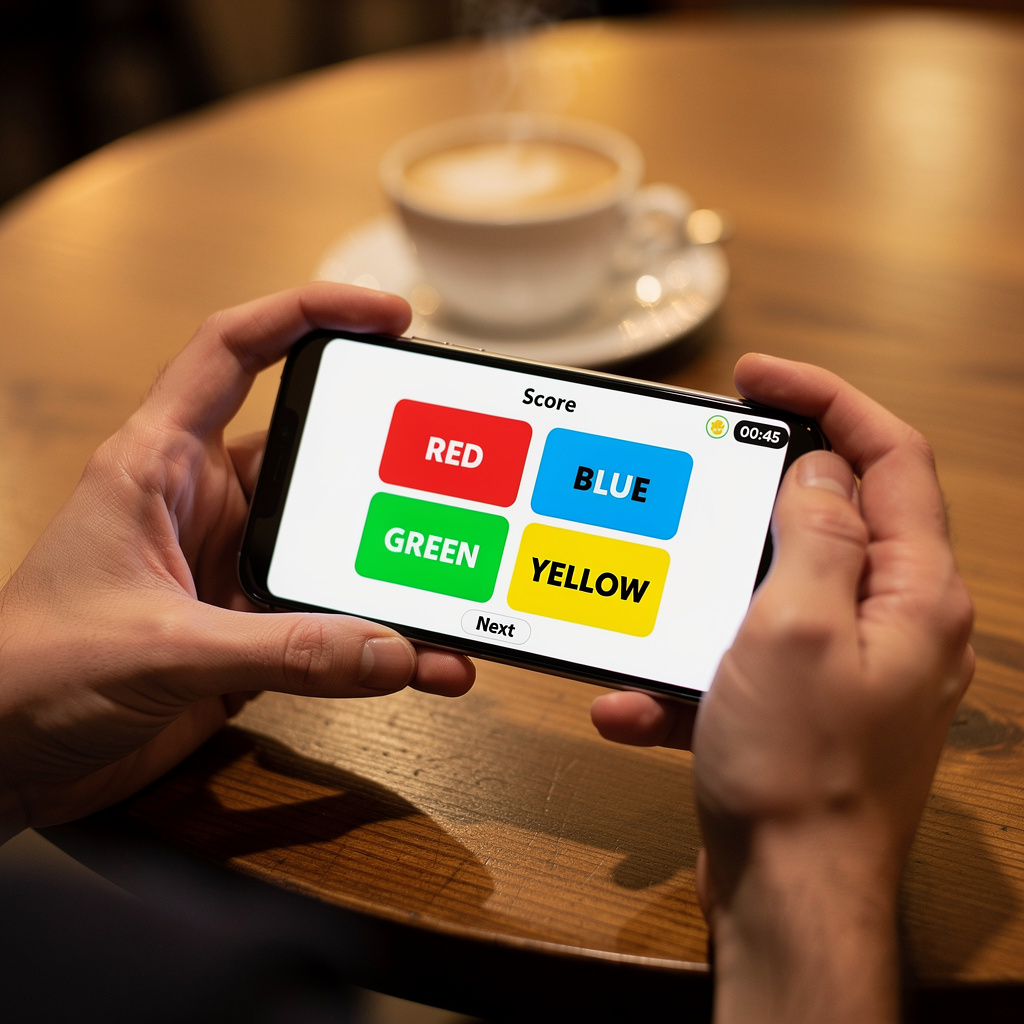
Attention tasks for adults are zero-equipment drills you can fold into an ordinary workday. They need nothing but a timer and your willingness to practice. Here are five that build focus quickly.
Pick one task and set a timer for 10 to 15 minutes. Do only that task until the timer rings. This counters the attention residue that builds when you switch between tasks. For structured mental exercises for focus and attention beyond sprints, our related guide covers several options.
Set a timer for 10 minutes and read a single article or chapter. Each time your attention wanders, mark it and return to the sentence you drifted from. The goal is not zero wandering. It is building the return muscle, the meta-awareness that corrects drift faster each time.
Start with two-digit addition, such as 34 plus 47, then progress to three-digit numbers and multiplication. This trains working memory and sustained focus with no equipment beyond your brain. Two to five minutes is enough, and you can practice while commuting or in line.
Listen to a podcast, audiobook chapter, or news segment without doing anything else. At the end, summarize aloud or write a three-bullet recap from memory. Start with three-minute segments and work upward. Daily practice strengthens sustained auditory attention.
Work in 25-minute focused sprints followed by five-minute breaks. Bounded intervals reduce the intimidation of sustained focus. For more structured options, our actionable exercises to boost focus daily extend this idea with drills you can add to a Pomodoro schedule.

Focus habits for adults only work when your brain has the foundation to support them. These five create that foundation, and consistency matters far more than intensity.
The National Heart, Lung, and Blood Institute reports that adults need 7 to 9 hours of sleep per night, and that sleep deprivation directly impairs attention, working memory, and decision-making (NHLBI). A consistent bedtime and wake time, even on weekends, is the most powerful sleep habit. For broader brain-health foundations, start with these lifestyle changes for brain health.
Federal guidelines recommend 150 to 300 minutes of moderate-intensity activity per week, which supports cognitive health (ODPH). The 2025 meta-analysis also found that aerobic exercise sometimes outperformed brain training alone. A 20-minute walk during lunch counts. Consistency matters more than duration, and movement supports the same foundation covered under sleep.
Constant notifications fragment attention into tiny shards. Create distraction-free blocks instead: phone on Do Not Disturb during focus periods, app blockers during work hours, and one notification check per hour. For more on this, read how constant digital input erodes focus and what you can do about it, then build your plan with digital detox strategies.
Chronic stress elevates cortisol, which impairs prefrontal cortex function, including attention, working memory, and decision-making (2003 HPA axis and memory review). You do not need a meditation retreat to counter this. One deep-breath minute between tasks, a short walk after meetings, or a five-minute brain-dump journal lowers the load.
Even mild dehydration, a loss of just 1 to 2 percent of body weight, impairs attention and concentration (2012 dehydration and cognition review). Keep water at your desk, eat at regular times, and avoid heavy meals before demanding focus. Nutrition influences cognition more than most people realize, explored in our look at gut health and cognitive function.

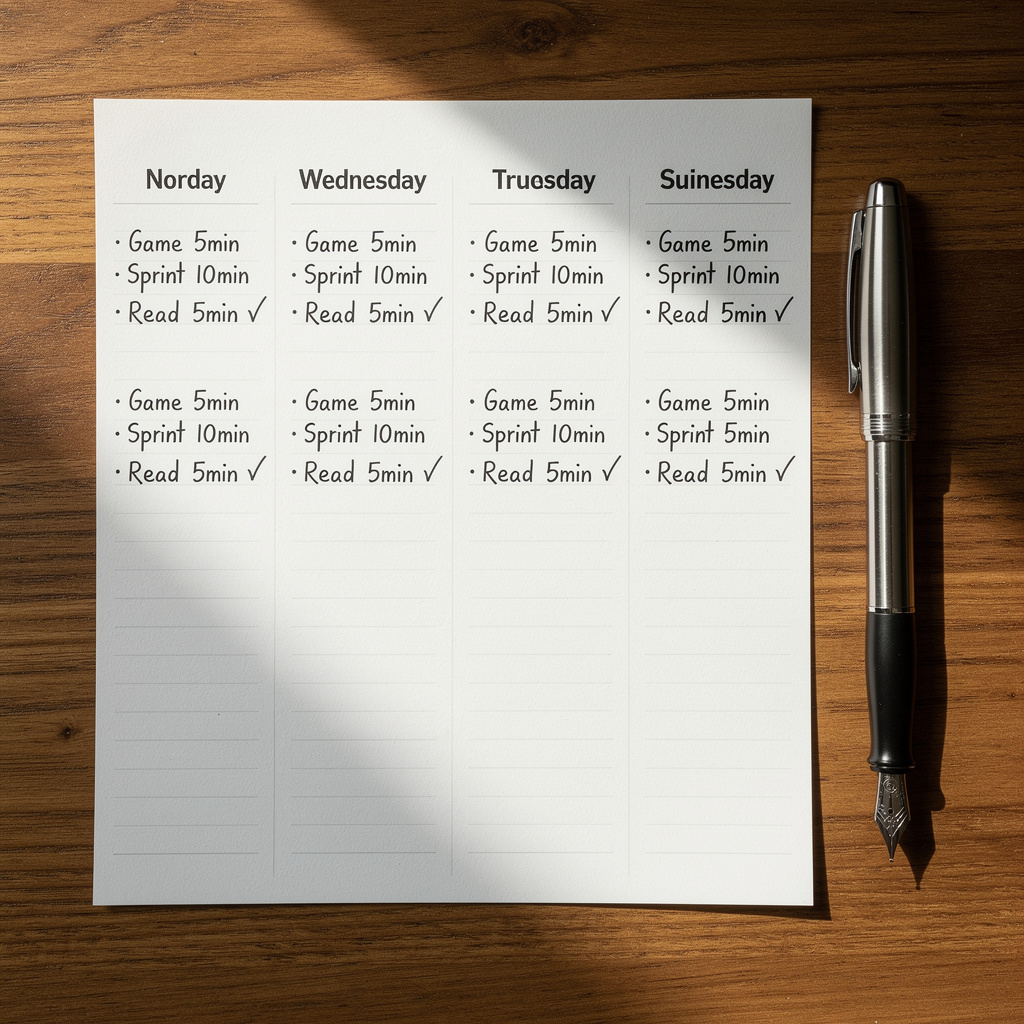
Here is a ready-to-use 20-minute daily concentration routine that combines all three pillars. You need no special equipment, only a timer and a little consistency.
Twenty minutes every day beats two hours once a week. Daily practice drives the neuroplastic changes that lasting improvement requires. Swap game types across days; the American Psychological Association recommends variety and novelty for cognitive fitness (APA). Pair this routine with our guide on how to learn faster and remember more.
Even motivated people lose momentum. Watch for these five common mistakes.
Passive play. Clicking through a game while your mind is elsewhere is entertainment, not training. Engage with each challenge deliberately.
Plateau without progression. Staying at the same difficulty level stops challenging your brain. Increase difficulty as your accuracy improves.
Marathon sessions. Ten minutes daily outperforms two hours on Saturday. Consistency drives neuroplasticity, and intensity cannot substitute for it.
Multitasking during training. Playing a concentration game while watching TV trains distraction, not focus. Give the game your full attention.
Sleep loss. Skipping sleep to “make time” for brain training cancels the benefits you are working to build. The NHLBI is clear that sleep deprivation impairs attention and working memory, so protect sleep first.
Yes, with context. A 2025 meta-analysis of 16 studies found brain training improves working memory, processing speed, and cognitive functioning. Benefits are clearest on the trained tasks. For everyday concentration, combine games with attention tasks and healthy habits.
Some benefits appear within weeks of consistent practice, but lasting gains take longer. A 2019 study of 60,222 participants found that people training for a year or more showed measurable working-memory and verbal improvements. Consistency trumps intensity.
The best game is one you will play consistently and that challenges your current level. Stroop tests train selective attention, n-back tasks train working memory, and Sudoku trains sustained focus. Rotating among types provides the variety the APA recommends.
Twenty minutes is an excellent start: 5 minutes on a game, 10 on a single-task sprint, and 5 on an attention drill. Studies find benefits in sessions as short as 15 minutes, three to five times per week.
Attention is the broad ability to select and focus on relevant information. Concentration, sometimes called sustained attention, is the ability to maintain that focus over time. Think of attention as the spotlight and concentration as holding it steady.
Yes. Neuroplasticity persists throughout life, so the ability to train attention does not disappear with age. Consistent practice, aerobic exercise, and good sleep all support improvement at any age. The key is consistency, not youth.
Start with one 20-minute session today. Try it for one week. Notice how your focus feels on day 7 compared with day 1. That small commitment is where lasting change begins.