30+ Years
of Medical Experience

If you have been curious about rhodiola and ashwagandha, you are far from alone. These two herbs keep surfacing in conversations about focus, memory, stress resilience, and mental fatigue, and interest in adaptogens for brain performance keeps climbing. The real question is simpler: do they work, and which one fits you?
Both herbs have real clinical research behind them, but they shine in different situations. Rhodiola tends to help with acute mental performance, such as focus under pressure.
Ashwagandha tends to help with memory, executive function, and steadier cognition under chronic stress. Neither is a magic pill.
Our clinicians at Infusion Health work with patients who want natural cognitive support but feel overwhelmed by information. This guide covers what the evidence shows, where the hype outpaces the data, and how to think about safety.
This article is for informational purposes only and does not replace personalized medical advice. Always consult your healthcare provider before starting any new supplement regimen.
Modern work taxes the brain in ways earlier generations never experienced. Sustained attention demands, constant notifications, back-to-back meetings, and screen fatigue add up.
By evening, many people describe the same experience: mental fog, slow processing, and a short fuse. If that sounds familiar, you are describing brain fog and cognitive fatigue, two of the most common complaints our clinicians hear.
Chronic stress makes it worse. Research shows sustained stress impairs memory, focus, and processing speed, creating a cycle: stress degrades performance, and degraded performance creates more stress.
That is why adaptogens have moved from niche herbalism into mainstream wellness. Among them, rhodiola and ashwagandha are two of the most studied adaptogens for brain performance, with dozens of human trials behind each one (Cleveland Clinic). Before examining each herb, it helps to understand what they actually do in the body.
Adaptogens help the body adapt to stressors by modulating the HPA axis (hypothalamic-pituitary-adrenal axis), your body’s stress thermostat. When it works well, you respond to pressure and return to baseline. When it is dysregulated, you stay wired or exhausted, often both in the same day.
Researchers call adaptogens “stress mimetics.” They introduce a mild stress signal that prompts cells to build a stronger adaptive response, a concept called hormesis. The result is regulation rather than raw stimulation. That is the key difference between adaptogens and stimulants like caffeine: caffeine pushes harder, while adaptogens help the system modulate itself (Panossian and Wikman, PMC).
Cortisol sits at the center of this story. In healthy amounts it sharpens alertness. When chronic stress keeps cortisol elevated day after day, the effects show up in the brain first: sustained exposure is linked to hippocampal shrinkage, the center for memory and learning, along with slower processing and greater mental fatigue.
Adaptogens appear to work on the HPA axis to restore balance rather than suppress or amplify it. Reviews describe improvements in stress tolerance, mood, and cognitive performance under fatigue, through cortisol modulation and support for neurotransmitter systems (PMC review on Rhodiola rosea).
Rhodiola rosea, sometimes called golden or arctic root, grows in cold, high-altitude climates and has a long history in Scandinavian and Russian medicine. Its primary bioactives are salidroside and rosavins (rosavin, rosin, and rosarin). Quality extracts are standardized to about 3% rosavins.
Its mechanisms fit its reputation as an alertness herb. Rhodiola appears to modulate the HPA axis and reduce cortisol under stress, increase ATP production in neurons, and upregulate BDNF (brain-derived neurotrophic factor), a protein that supports synaptic plasticity and learning (Memorial Sloan Kettering).
Rhodiola is studied most for focus and mental fatigue rather than memory. Trials in military cadets and stressed adults using 200 to 680 mg per day of standardized extract reported improvements in attention, working memory, and reaction speed, plus cortisol reductions of roughly 14% to 30% after four weeks (U.S. Army OPSS).
That is the evidence behind interest in rhodiola for focus and concentration. Some anti-fatigue effects appear after a single dose; full adaptogenic effects typically develop over 7 to 28 days.
The evidence is promising but more modest than the marketing. A meta-analysis of 36 studies (836 animal subjects) concluded that Rhodiola rosea can improve learning and memory, with the strongest effects on memory outcomes (PMC, 2018). Human trials show dose-responsive improvements after seven days at 200 to 1,500 mg per day.
Researchers also documented better performance on complex cognitive tasks under fatigue. Preclinical work points to antioxidant activity in brain tissue that may protect neurons against oxidative stress. Independent evaluators, including the Alzheimer’s Drug Discovery Foundation, rate rhodiola as moderately supported for cognitive benefits (ADDF Cognitive Vitality).

Ashwagandha (Withania somnifera), also called winter cherry, is one of the most important herbs in Ayurvedic medicine. Its primary bioactives are withanolides, including withaferin A and withanolide A. The most clinically studied extract, KSM-66, is a root-only extract standardized to 5% withanolides.
Ashwagandha works through different mechanisms than rhodiola. It modulates the HPA axis, produces GABAergic activity that calms the nervous system without heavy sedation, acts as an antioxidant, and appears to promote synaptic plasticity and dendritic growth, the structural changes behind learning and memory (PMC clinical trial, 2021).
The cognitive evidence has grown quickly. A 2026 meta-analysis in Frontiers in Pharmacology found a statistically significant improvement in memory (a moderate effect, SMD = 0.52, p < 0.001), with positive but more modest effects on attention, processing speed, and executive function (Frontiers in Pharmacology, 2026).
A 2024 trial in Nutrients found that 225 mg improved memory, attention, and vigilance in healthy adults (MDPI Nutrients, 2024). In an 8-week trial of adults with mild cognitive impairment, 300 mg twice daily improved memory and executive function.
Ashwagandha also reliably lowers cortisol, with studies reporting reductions of 14% to 28%. Typical studied doses run 225 to 600 mg per day of standardized root extract. Some acute cognitive effects appear within 3 to 6 hours; full effects build over 30 to 60 days.
What sets ashwagandha apart: its withanolides interact with GABA-A receptors, the same receptor system targeted by anti-anxiety and sleep medications, producing calming effects without heavy sedation. Combined with cortisol-lowering activity, this dual action explains why ashwagandha supports both anxiety relief and cognitive performance (PMC narrative review). Independent evaluators at the ADDF give it a similar moderate rating (ADDF Cognitive Vitality).
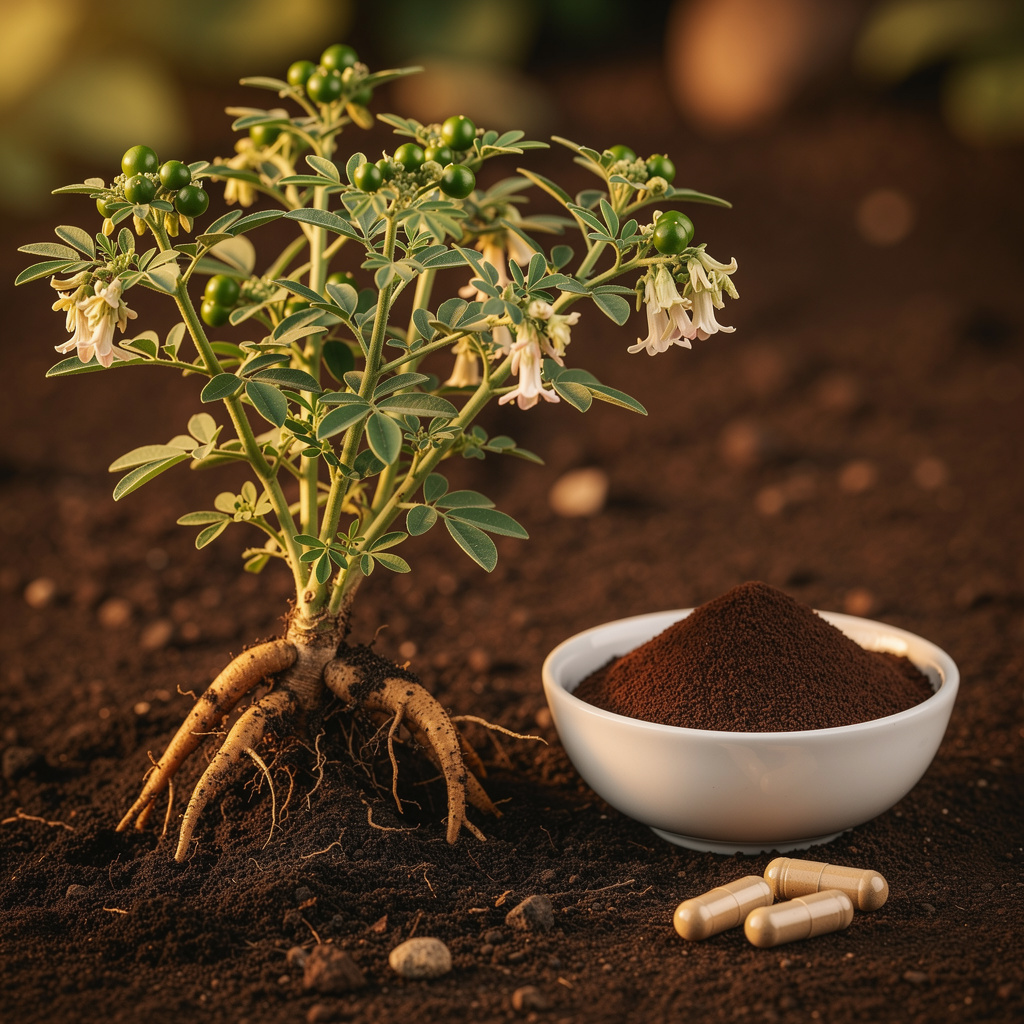
The rhodiola vs ashwagandha question comes up constantly, and the honest answer is that neither is “better” overall; they address different aspects of brain performance.
| Attribute | Rhodiola Rosea | Ashwagandha (Withania somnifera) |
|---|---|---|
| Primary cognitive benefit | Focus, mental fatigue, processing speed | Memory, executive function, attention |
| Mechanism | ATP increase, BDNF upregulation, cortisol modulation | HPA axis modulation, GABAergic activity, antioxidant |
| Onset of effect | Single-dose anti-fatigue effects; 7 to 28 days for full adaptogenic effect | Some acute effects at 3 to 6 hours; 30 to 60 days for full adaptogenic effect |
| Typical daily dose | 200 to 680 mg (standardized to 3% rosavins) | 225 to 600 mg (standardized to 5% withanolides, e.g., KSM-66) |
| Best suited for | Mental performance under acute stress, focus tasks, fatigue resistance | Memory support, anxiety reduction, sustained cognitive health under chronic stress |
| Key bioactive | Salidroside, rosavins | Withaferin A, withanolides |
| Safety flags | Generally well-tolerated; caution with bipolar disorder (theoretical MAOI activity) | Caution with thyroid conditions, pregnancy, hormone-sensitive conditions, immunosuppressants |
| Evidence base | Moderate (preclinical and human trials, fewer large-scale RCTs) | Strong (multiple RCTs, 2026 meta-analysis, 90+ clinical trials for KSM-66) |
A simple way to think about it: rhodiola fits acute mental performance demands, such as deep-focus work or resisting afternoon mental fatigue. Ashwagandha fits sustained cognitive health, such as supporting mental clarity and memory while managing long-term stress and anxiety.
Many people benefit from both, at different times. The right starting point depends on your dominant symptom pattern, which is exactly what a personalized consultation is designed to answer.
Yes, rhodiola and ashwagandha can be taken together, but timing and dosage matter. Their energy profiles differ, so pairing them thoughtfully matters. Our guide to adaptogens for stress and cognitive support covers a broader five-herb roundup including both plants.
A common strategy: take rhodiola in the morning or early afternoon when you need focus and fatigue resistance, since its effects are more activating. Ashwagandha can go in the morning or evening depending on your goals, and an evening dose may support relaxation and sleep.
One caution deserves extra attention. If you are on thyroid medication, talk to your clinician first, because ashwagandha may affect thyroid hormone levels.
This is the section most supplement blogs skip, and it matters most. Both herbs are generally well-tolerated, but “natural” does not mean risk-free.
Ashwagandha cautions. The National Center for Complementary and Integrative Health notes that ashwagandha may interact with thyroid medications, immunosuppressants, sedatives, anticonvulsants, and diabetes and blood pressure medications (NCCIH). It may raise thyroid hormone levels, which concerns people with hyperthyroidism or those taking levothyroxine, and may increase testosterone, so men with hormone-sensitive prostate cancer should avoid it.
Side effects include drowsiness, stomach upset, and diarrhea. Most practitioners advise avoiding it in pregnancy.
Rhodiola cautions. Rhodiola is generally well-tolerated at recommended doses. Memorial Sloan Kettering notes theoretical MAOI activity at high doses, warranting caution with antidepressants or bipolar disorder (MSKCC).
Mild side effects include dizziness, dry mouth, and sleep disturbance if taken late in the day. Pregnant and nursing women should avoid it.
General guidance. A quick note on dosing: amounts discussed here come from published studies and are not personalized recommendations. What fits you depends on your health status, medications, and goals, which is why professional input matters.
If you are dealing with adrenal dysfunction or chronic fatigue, supplements are only one piece of the picture. Our clinicians can review your history during a telemedicine consultation before anything new goes into your cabinet.
Supplement quality varies enormously, and standardization separates a studied extract from an expensive placebo.
For ashwagandha: look for KSM-66, the most clinically studied ashwagandha extract with more than 90 trials behind it. It should be standardized to 5% withanolides, verified by HPLC, and made from root only.
Typical studied doses are 600 mg once or twice daily. Third-party seals from USP, NSF, or ConsumerLab add assurance.
For rhodiola: look for a standardized extract with verified rosavin and salidroside content, ideally standardized to 3% rosavins. Typical studied doses run 200 to 500 mg daily; extracts such as WS 1375 are well-characterized options.
General quality tips: choose single-ingredient supplements rather than proprietary blends, which hide individual amounts. Look for transparent labeling that states extract type, standardization percentage, and plant part. Favor GMP-certified facilities, and be skeptical of exaggerated claims or vague names like “energy blend.” If you want personalized supplement guidance matched to your health profile, a clinician-guided approach provides exactly that.
Ashwagandha generally fits anxiety better, because of its GABAergic activity and consistent cortisol-reducing effects. Rhodiola can help with stress-related fatigue, but its activating profile may feel like too much when anxiety comes with racing thoughts or poor sleep.
Yes, with proper timing. Rhodiola works best in the morning or early afternoon for focus tasks.
Ashwagandha can be taken in the morning or evening depending on goals. Consult your clinician before stacking, especially with thyroid medication or other prescriptions.
Clinical evidence says yes, with caveats on effect size. A 2026 meta-analysis found a moderate, statistically significant improvement in memory (SMD = 0.52, p < 0.001). Attention and executive function effects were also positive but more modest.
Ready to move from reading to a plan that fits your body? A telemedicine consultation with our team is the simplest next step. We can review your symptoms, medications, and goals, and help you decide whether rhodiola, ashwagandha, both, or neither belongs in your routine.
For readers who want objective data first, specialized lab testing can reveal cortisol patterns, thyroid status, and other biomarkers that shape a recommendation. For the broader picture, see our guide to brain-boosting nutrients and diets for cognitive health.