30+ Years
of Medical Experience

About one in ten people now lives with an autoimmune disease, and that share has climbed within living memory. If you have a diagnosis yourself, or you are watching a parent, partner, or friend manage one, you have probably asked why.
So why are autoimmune diseases rising? The short answer is that researchers now point to six modern drivers rather than one master cause. This post walks through each one as a biological mechanism, with links to the studies behind the claims, so you can see plainly where the evidence is strong and where it is still developing.
Start with the scale. A population study of 22 million people, published in The Lancet in 2023, found that 19 tracked autoimmune diseases affect about one in ten people overall, roughly 13% of women and 7% of men (Oxford University).
In the United States, Mayo Clinic researchers estimated in 2025 that about 15 million people have at least one of 105 autoimmune diseases, and about 63% of those cases are in females (Mayo Clinic News Network).
The trend line matters as much as the total. National survey data show antinuclear antibody prevalence, a blood marker of the immune system reacting to the body’s own tissue, rising from 11.0% in 1988 to 1991 to 16.1% in 2011 to 2012, which works out to about 41.5 million Americans (Miller et al., 2023).
Those totals also vary in ways that genes alone cannot explain. The same Oxford analysis found autoimmune disorders clustered by socioeconomic group, region, and season, with clear differences between wealthier and lower-income countries. When a trait shifts that quickly and unevenly, environment is usually doing some of the work.
Better diagnosis and greater awareness do explain part of that climb. The data rise too fast for detection alone to be the whole story, which is why researchers keep looking for drivers behind the numbers.
For a wider look at the same pattern, see our earlier overview of the global rise.

An autoimmune disease happens when the immune system loses tolerance for the body’s own tissue and starts attacking it. The main weapons are autoantibodies, which are antibodies aimed at self, and immune cells that have been pointed the wrong way (NIAMS).
There are more than 80 distinct autoimmune diseases (NIAID), which is part of why the category is easy to overlook. Rheumatoid arthritis, type 1 diabetes, lupus, and multiple sclerosis are the familiar names, but the list is much longer.
Autoimmune disease also does not stay in one organ. The same loss of tolerance can surface as skin, joint, gut, thyroid, or nervous system symptoms depending on which tissue the immune system settles on, which is why it spans so many specialties.
Thyroid conditions are among the most common examples. If you have ever wondered how two thyroid disorders look almost identical at first, our comparison of Hashimoto’s and Graves’ disease walks through the difference.
Many autoimmune theories start with an infection. The best known mechanism is molecular mimicry, where a pathogen’s proteins resemble the body’s own proteins, so immune cells trained against the germ also attack self-tissue (Johns Hopkins Pathology).
A second mechanism is bystander activation. The inflammation that comes with an infection can rouse autoreactive immune cells sitting nearby, even when those cells were never the target of the response (Johns Hopkins Pathology).
The flagship evidence concerns the Epstein-Barr virus. In a landmark 2022 study of 10 million U.S. military personnel, EBV infection raised the risk of multiple sclerosis roughly 32-fold (Bjornevik et al., Science).
Context keeps this honest. Most adults carry Epstein-Barr virus and never develop multiple sclerosis, so genetics and timing clearly matter. An infection can be a trigger, not a guarantee.
The same study found no rise in multiple sclerosis risk before Epstein-Barr virus infection, which is one reason researchers study when an infection happens as carefully as what it is.
The mechanism itself is still an active research area, and a 2023 review of molecular mimicry and autoimmunity lays out what is well established and what remains proposed.

The hygiene hypothesis, in one paragraph: as sanitation, vaccines, and cleaner water cut childhood infections in wealthy countries, the immune system lost some of its early training against harmless microbes. It became more prone to misfiring at allergens and at self-tissue.
The newer version of the idea is called the old friends hypothesis. Humans evolved alongside a rich community of bacteria, parasites, and fungi, and modern low-exposure environments quietly withdraw those old friends.
Andrew Wang at Yale Medicine puts it plainly: our genes have not changed much in 70 years, while the modern environment has, and autoimmune and allergic diseases climbed over that same period.
Research on the hygiene hypothesis focuses mostly on early childhood, which is when immune calibration happens. That timing is one reason the effect shows up as a population shift rather than in any single household.
This does not mean modern hygiene was a mistake. It means a trade-off arrived with it: far fewer dangerous childhood infections, and an immune system with much less early practice telling friend from foe.
This is one of the better supported ideas in the field, starting with the original 1989 hygiene hypothesis report, and it is not fully proven. Nobody is arguing against sanitation. The point is that immune calibration changed, and it is one driver among several in the wider rise across whole countries.
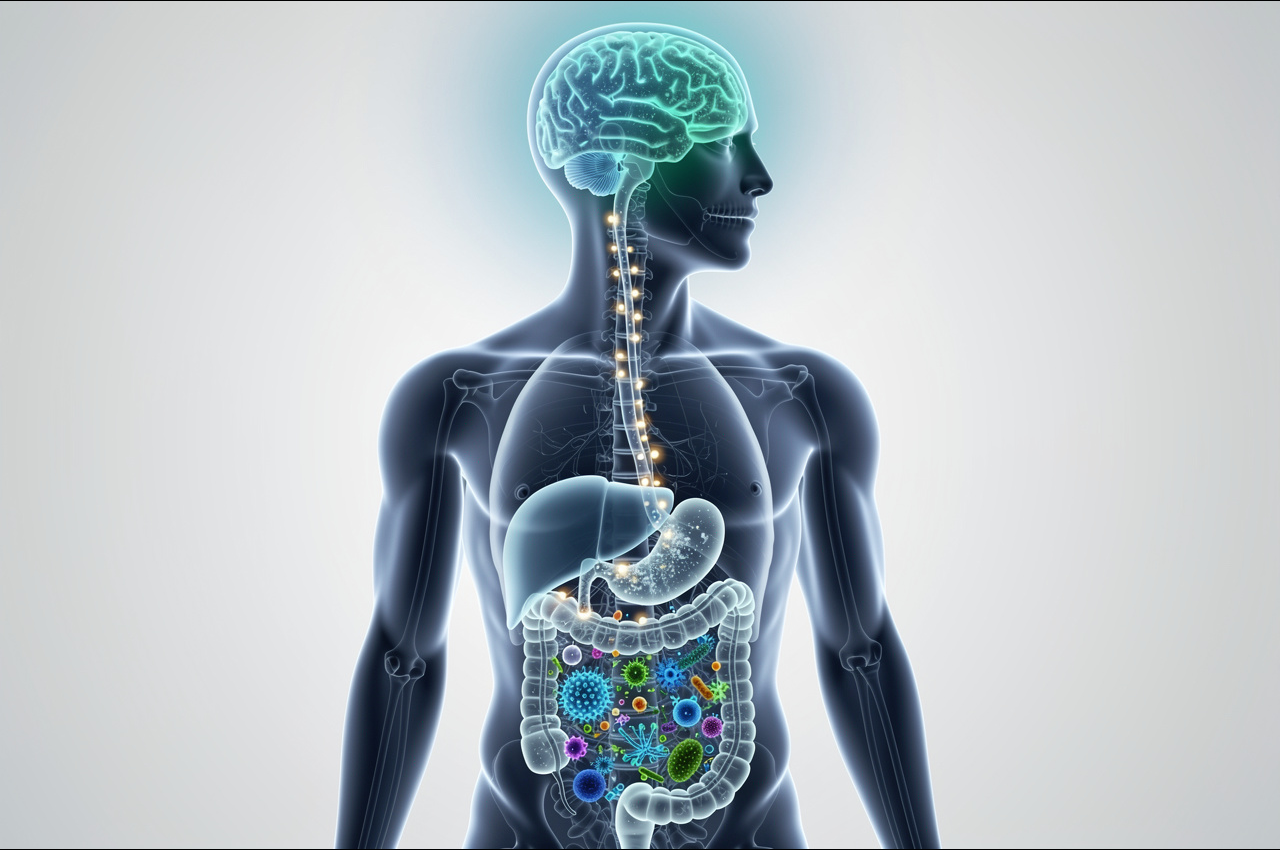
Much of the immune system’s education happens at the intestinal lining, in constant dialogue with gut bacteria. Short-chain fatty acids, produced when gut microbes ferment fiber, help maintain that peace (a 2022 review of gut microbiota, leaky gut, and autoimmunity).
When that microbial community is disrupted, a state researchers call dysbiosis, autoimmune activity tends to show up alongside it. Low-fiber diets, repeated courses of antibiotics, and heavily processed food are the most common disruptors.
The honest framing: this is correlation plus a plausible mechanism, not proof that healing the gut cures autoimmune disease. No review makes that claim, and neither do we.
This driver is hard to study because the gut-immune conversation starts at birth and keeps changing. An adult microbiome records decades of inputs rather than current habits, which complicates cause and effect.
The same restraint applies to the popular idea of leaky gut and autoimmune disease. Increased intestinal permeability is measurable in some conditions, but it comes with no proven cure claim, and the research is still moving.
You can see this axis working in everyday medicine. The gut-skin-immune connection is one visible example, and understanding SIBO and IBS is another where microbial balance shapes how symptoms appear.
Autoimmune disease skews heavily female. Mayo Clinic’s prevalence work puts the share at about 63% (Mayo Clinic), and other tallies run as high as four in five (Stanford Medicine).
For a long time that was treated as a statistic without a mechanism. That changed in 2024, when Stanford researchers showed that Xist, the RNA molecule females produce when silencing one of their two X chromosomes, can itself train the immune system to attack the body’s own tissue.
Read that carefully: the same molecules that help one X switch off can become targets. This is biology rather than lifestyle, one reason the rise carries a larger demographic footprint in women.
The skew holds across conditions. NIAID notes that rheumatoid arthritis, multiple sclerosis, and systemic lupus erythematosus all disproportionately affect women.
It also shapes how the question lands. The answer differs so sharply by sex that autoimmune disease risk factors are never the same checklist for everyone.
Women also face a diagnostic gap of their own. Our look at misdiagnosis in women covers why symptoms are more often attributed to stress or mood before an autoimmune workup even begins.
These are population-level exposures, not a personal checklist. The postwar shift toward ultra-processed food, low in fiber and high in additives, arrived alongside more air pollution and more endocrine-disrupting chemicals, and all three correlate with rising autoimmunity across whole populations.
One concrete line of evidence concerns antibodies that often precede rheumatoid arthritis. Occupational exposures such as silica are linked to a higher risk of developing them (Stolt et al.).
Persistent industrial chemicals such as PFAS have also been linked to autoimmune risk in population studies (scoping review of 51 studies).
The honest framing: these are population-level correlations, and individual risk depends on genetics plus cumulative exposure. No single food, product, or pollutant has been shown to cause autoimmune disease on its own.
Diet does interact with immune response in ways worth understanding. Our piece on gluten and autoimmune diseases shows that relationship in practice.
The rise is not simply a matter of getting older. Cohorts born later start with higher autoantibody prevalence than cohorts born earlier, and the survey data put adolescent antinuclear antibody positivity at odds ratios of 2.07 and 2.77 (Miller et al., 2023).
Type 1 diabetes in children has climbed roughly 3% to 4% a year for three decades (Lancet Diabetes & Endocrinology), which is another sign that the baseline itself is moving rather than just the diagnosis.
Autoimmune disease in young adults is rising too, so this is not only a story about aging populations. Something earlier in life is shifting the starting point.
It also explains a familiar pattern. People in their 50s and 60s often receive a first diagnosis after years of vague, intermittent symptoms, because the change underneath may have started decades earlier.
Then there is the midlife bump. Many conditions surface in the 40s to 60s window, so the pattern behind that common search question is real rather than a myth.
Three things the evidence consistently supports, none of them complicated. First, know your family history: autoimmune conditions cluster in families, and HLA gene variants are the best documented part of that.
Second, take persistent, unexplained symptoms seriously and bring them to a clinician early. Fatigue that never resolves, joint pain without an obvious cause, or digestive changes that keep returning are worth discussing. Our pieces on symptoms people ignore and on chronic fatigue and autoimmune disease show how easy these are to dismiss.

Third, understand how evaluation usually works. Diagnosis typically begins with history, exam, and autoantibody blood tests, and some conditions take time to confirm. Our overview of advanced lab testing for autoimmune diagnosis explains how precise detection can get.
If you have persistent, unexplained symptoms, talk with a doctor. The earlier an autoimmune condition is identified, the earlier you can make a plan. Our guide to advocating for yourself through a complex diagnosis can help you prepare for it.
Yes. Antinuclear antibody prevalence rose from 11.0% in 1988 to 1991 to 16.1% in 2011 to 2012, and a study of 22 million people now puts the overall share at about one in ten (Oxford University; Harvard Health). Better testing explains some of the increase, not all of it.
No single cause. The evidence points to six overlapping drivers: infections that trigger misdirected immunity, cleaner environments that change immune calibration, gut microbial shifts, female biology, population-level chemical exposures, and generational patterns. Most people carry a mix of them.
Honestly, not guaranteed. Several drivers are modifiable in principle, but no intervention has been shown to prevent autoimmune disease outright. What the evidence does support is early evaluation and knowing your family history, covered in the section above.
Two things overlap. Many conditions surface in the 40s to 60s after years of quiet buildup, and later-born cohorts start with higher autoantibody levels than the generations before them. Midlife is often when a slow process finally becomes noticeable.
If you want to keep reading, our autoimmune disorders library gathers everything we have published on these conditions, including how personalized medicine is shaping autoimmune treatment. And if something in your body has been nagging you, please do not sit on it: bring it up, ask questions, and give yourself an early start.