30+ Years
of Medical Experience

Personalized medicine for autoimmune treatment is transforming how patients manage chronic immune conditions, but for many, the journey starts with an exhausting guessing game. Your doctor prescribes a medication. You wait weeks or months to see if it works. It doesn’t. You try another, and another. Meanwhile, symptoms persist, fatigue deepens, and frustration builds. You are not alone in this experience. Autoimmune diseases affect more than 15 million Americans, representing 4.6% of the U.S. population, and approximately 40% of rheumatoid arthritis patients do not respond to their first biologic therapy. The traditional trial-and-error approach has left millions of people cycling through treatments that were never designed for their unique biology.
Personalized medicine for autoimmune treatment is changing this story. Instead of relying on a one-size-fits-all protocol, this approach matches therapies to your specific genetic profile, biomarkers, and lifestyle factors. In this article, we will explore how personalized medicine works, why it matters for autoimmune conditions, and how integrative care is bringing this revolutionary approach to patients across the country.
For decades, autoimmune treatment has followed a predictable pattern: diagnose the condition, consult established treatment guidelines, prescribe a standard therapy, and hope for the best. This approach assumes that all patients with the same diagnosis will respond similarly to the same medications. The reality is far more complex.
A landmark 2024 study published in the Journal of Clinical Investigation found that autoimmune diseases affect more than 15 million people in the United States alone, representing 4.6% of the population. Among these patients, 63% are female, and a staggering 34% have more than one autoimmune disease. These are not small numbers, and yet the standard treatment model has remained largely unchanged for years.
The consequences of this approach are measurable and significant. Research from the STRAP trial, published in Nature Communications in 2025, revealed that approximately 40% of rheumatoid arthritis patients do not respond to their first biologic disease-modifying antirheumatic drug (bDMARD). That means nearly half of all patients endure months of ineffective treatment, accumulating side effects while their disease progresses unchecked.
The emotional and physical toll is immense. Chronic fatigue is one of the most common and debilitating symptoms, and patients describe feeling like lab experiments, cycling through medications with no clear rationale for why one might work better than another. Delaying effective treatment allows structural joint damage, organ involvement, and disability to advance. The financial burden compounds the problem: unnecessary medication cycling, repeated specialist visits, and lost productivity all add up.
Personalized medicine for autoimmune treatment represents a paradigm shift. Rather than guessing which therapy might work, this approach uses data about your specific biology to guide treatment decisions from the start. It is not a futuristic concept. It is available now, and it is already transforming how autoimmune conditions are managed.
Personalized medicine for autoimmune diseases is a treatment approach that tailors therapies to an individual’s unique genetic profile, biomarkers, lifestyle factors, and disease characteristics, rather than relying on a one-size-fits-all treatment protocol. This approach is also known as precision medicine for autoimmune disease, and while the terms are often used interchangeably, personalized medicine emphasizes the tailoring process between patient and clinician at the individual level.
The core principle is straightforward: give the right treatment to the right patient at the right time. Traditional medicine starts with a diagnosis and follows a standardized treatment algorithm. Personalized medicine starts with a deeper question: what is driving this specific patient’s disease, and which therapy is most likely to work for them?
This concept has already transformed oncology, where genetic tumor profiling guides chemotherapy selection. Now it is revolutionizing autoimmune care. According to a 2026 review in Osong Public Health Research and Perspectives, the Personalized Medicine Coalition defines this approach as using diagnostic tests to identify the most appropriate medical therapy for each patient, rather than relying solely on population-level clinical trial data.
A 2022 Frontiers in Immunology study by Diaz-Pena further explains that personalized medicine enables the identification of patient subgroups who share specific pathogenic signaling pathways, allowing clinicians to target the underlying mechanisms of disease rather than just managing symptoms.
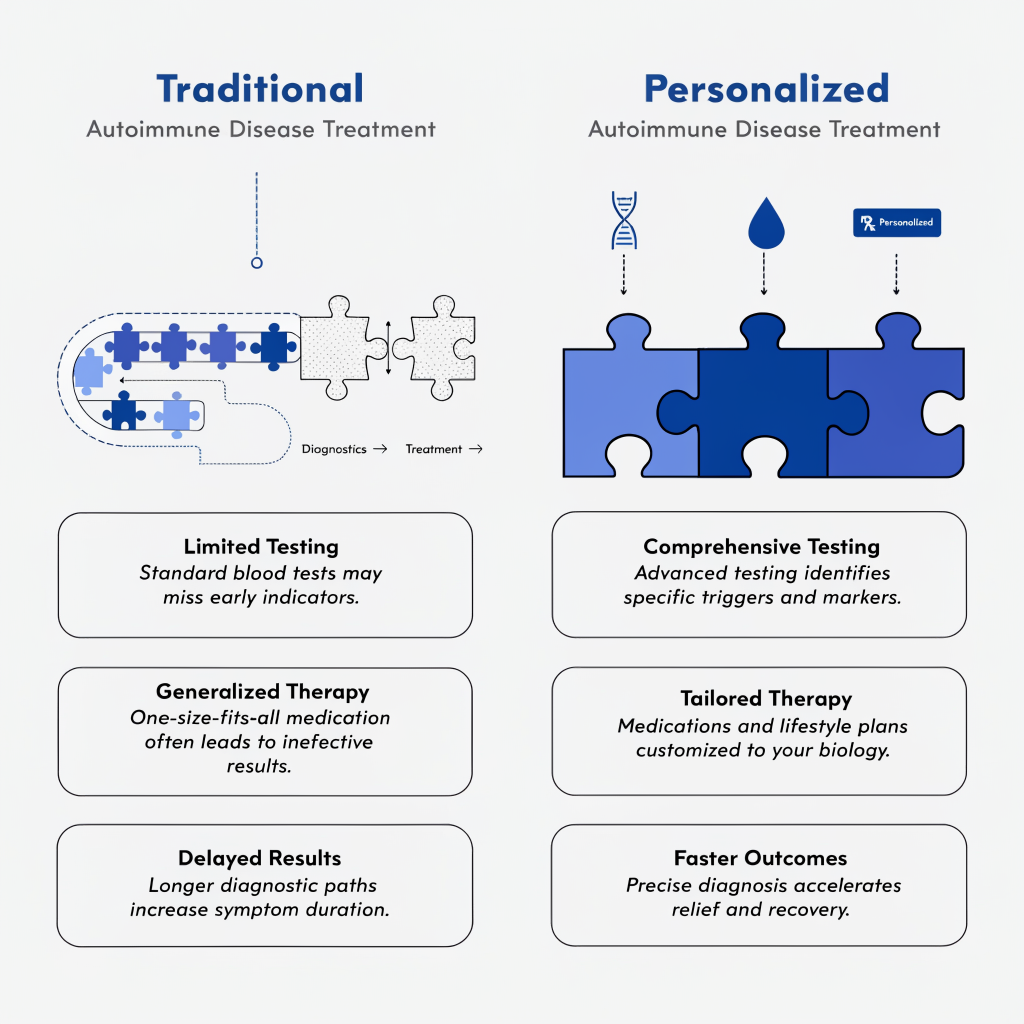
Understanding how personalized medicine works for autoimmune diseases helps demystify the process. Rather than a single visit and a prescription, personalized autoimmune treatment follows a structured, step-by-step approach that builds a comprehensive picture of each patient’s health.
Step 1: Comprehensive Diagnostic Assessment
Personalized care begins with a thorough evaluation that goes beyond standard blood work. This includes a detailed medical history, symptom timeline, family history of autoimmune conditions, and an assessment of environmental and lifestyle factors. Advanced diagnostic tools, such as advanced lab testing for autoimmune diagnosis, provide deeper insights than routine panels.
Step 2: Biomarker Identification
Biomarkers are measurable biological indicators, such as proteins, antibodies, and gene expression patterns, that reveal what is happening inside the body. Specialized lab testing can identify specific molecular and genetic markers that drive an individual’s autoimmune condition. These biomarkers become the roadmap for treatment selection.
Step 3: Genetic and Genomic Profiling
Genetic testing examines how a patient’s DNA influences disease expression and treatment response. Specific gene variants, such as HLA-DRB1 in rheumatoid arthritis, can predict which therapies are most likely to succeed and which may be ineffective or even harmful.
Step 4: Lifestyle and Environmental Evaluation
Personalized medicine does not stop at genetics. Diet, stress levels, toxin exposure, sleep quality, and gut health all influence autoimmune disease activity. Understanding these factors allows for a truly individualized treatment plan that addresses the whole person, not just the lab results.
Step 5: Tailored Treatment Plan Design
Based on all of this data, a treatment plan is designed specifically for the patient. Therapies are selected based on the individual’s unique profile, not a generalized protocol. This might include specific biologic medications, supplements, lifestyle modifications, and integrative therapies.
Step 6: Ongoing Monitoring and Adjustment
Personalized care is not a one-time event. It is a continuous, dynamic process. Regular follow-up testing, symptom tracking, and biomarker monitoring allow the treatment plan to evolve as the patient’s condition changes. This adaptive approach prevents disease progression and optimizes outcomes over time.
Biomarkers are the foundation of biomarker-driven therapy for autoimmune conditions. Without them, treatment selection is largely a guessing game. With them, clinicians can make informed, data-driven decisions about which therapies will work for each patient.
Common autoimmune biomarkers include anti-nuclear antibodies (ANA), which are associated with conditions like lupus and Sjogren’s syndrome; anti-cyclic citrullinated peptide (anti-CCP) antibodies for rheumatoid arthritis; anti-double-stranded DNA (anti-dsDNA) for lupus; and thyroid autoantibodies such as TPO and TgAb for autoimmune thyroid conditions. Inflammatory markers like C-reactive protein (CRP) and erythrocyte sedimentation rate (ESR) provide additional context about disease activity.

A particularly promising example is the PrismRA test, a blood test for rheumatoid arthritis developed by Scipher Medicine in partnership with OMNY Health. This test analyzes molecular signatures in a patient’s blood to predict whether they will respond to TNF inhibitor therapy. With over 40,000 RA patients tested and recognition as the only CMS-approved classifier of its kind in the United States, PrismRA represents a concrete application of biomarker-guided treatment selection that is available today.
Genetic testing adds another critical layer. The HLA-DRB1 “shared epitope” gene variant is strongly associated with rheumatoid arthritis severity and treatment response. PTPN22 gene variants influence the risk and progression of multiple autoimmune conditions. For patients with inflammatory bowel disease, TPMT and NUDT15 genotyping determines whether thiopurine therapy can be used safely, preventing potentially dangerous adverse reactions.
The future of biomarker testing lies in multi-omics integration, which combines genomics, transcriptomics, proteomics, and metabolomics to create a complete biological picture of the patient. A 2025 study published in Nature Communications demonstrated that synovial RNA-Seq signatures can predict treatment response in rheumatoid arthritis with 79% to 85% accuracy, far exceeding traditional clinical assessment alone.
The advantages of personalized autoimmune treatment extend far beyond convenience. They represent a fundamental improvement in how autoimmune conditions are managed, with measurable outcomes for patients and healthcare systems alike.
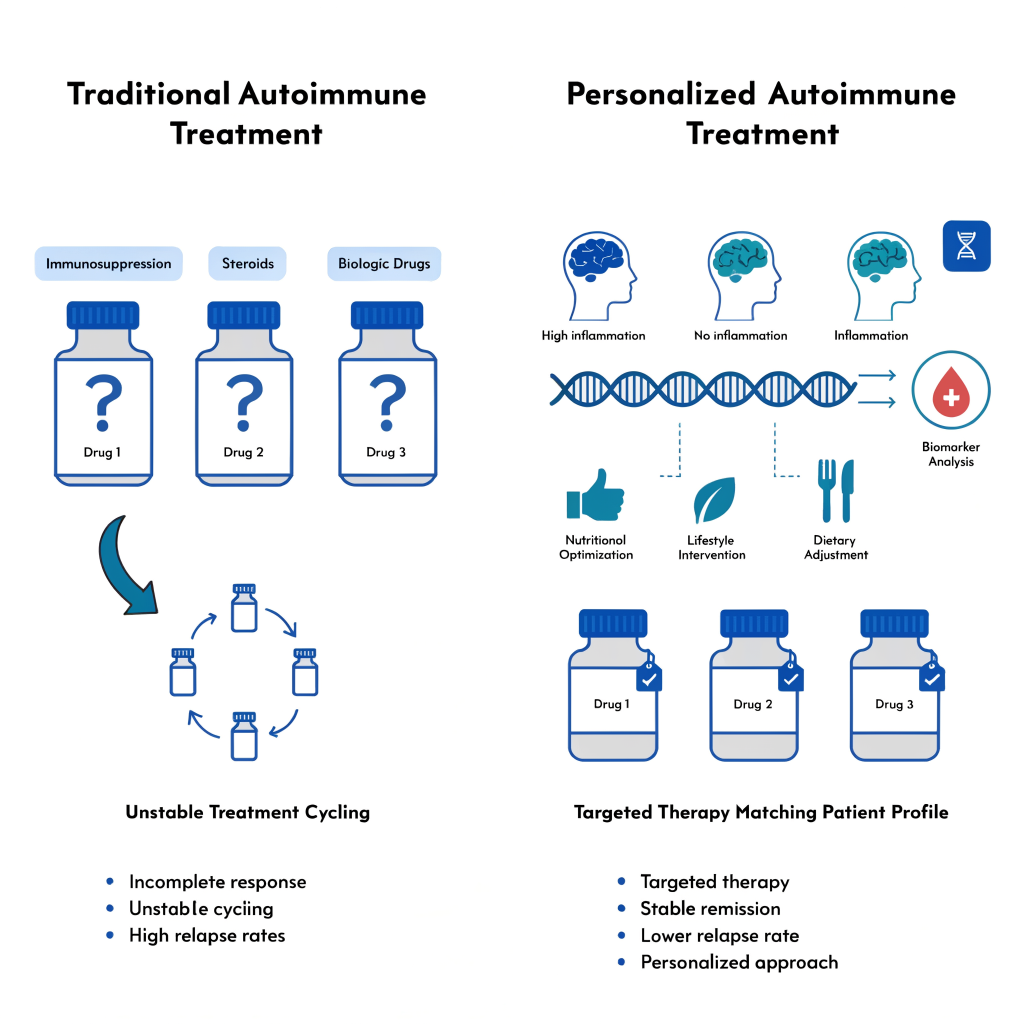
Understanding the difference between personalized and traditional autoimmune treatment helps clarify why precision approaches produce better outcomes. The following comparison highlights the most significant distinctions.
| Aspect | Traditional Treatment | Personalized Treatment |
|---|---|---|
| Approach | One-size-fits-all | Tailored to individual biology |
| Starting Point | Standard protocols based on diagnosis alone | Comprehensive biomarker, genetic, and lifestyle assessment |
| Drug Selection | Trial-and-error cycling through therapies | Data-driven selection based on molecular profiling |
| Monitoring | Symptom tracking and periodic blood work | Continuous biomarker monitoring and adaptive adjustments |
| Side Effect Management | Reactive: address side effects after they occur | Proactive: avoid drugs unlikely to work for that patient |
| Cost Efficiency | High due to failed treatments and prolonged disease activity | Higher upfront testing cost but lower long-term waste |
| Success Rate | Approximately 40% to 60% response to first biologic | Predicted improvement of 30%+ with biomarker guidance |
| Patient Role | Passive: follow doctor’s orders | Active partner in personalized care plan |
The most important takeaway from this comparison is the shift from reactive to proactive care. Traditional treatment waits for side effects or treatment failure before adjusting course. Personalized medicine anticipates problems before they occur, selecting therapies that are most likely to work and avoiding those that are not. This proactive approach saves time, reduces suffering, and ultimately produces better long-term outcomes for patients living with autoimmune conditions.
While personalized medicine principles are increasingly adopted in conventional settings, integrative and naturopathic medicine offers a uniquely comprehensive framework for personalized autoimmune care. This is where Infusion Health’s approach stands apart.
Integrative medicine is a natural fit for personalized care because it treats the whole person, not just the disease. Naturopathic doctors (NDs) are specifically trained to identify root causes and individualize treatment plans. Rather than relying solely on pharmaceutical interventions, integrative practitioners consider the full spectrum of factors that influence autoimmune disease: genetics, gut health, nutrient status, hormone balance, stress, sleep, and environmental exposures.
Specialized lab testing is a cornerstone of this approach. Advanced autoimmune panels, food sensitivity testing, hormone analysis, and gut microbiome evaluation provide the data needed to create a truly personalized plan. These tests go far beyond what a standard annual physical includes, revealing hidden triggers and imbalances that conventional testing often misses.
IV therapy plays a valuable role in delivering customized nutrient protocols for autoimmune support. When gut absorption is compromised or when specific nutrient deficiencies are identified through testing, intravenous delivery ensures that the body receives what it needs in bioavailable form. This is particularly relevant for autoimmune patients who may have compromised gut function or high nutrient demands due to chronic inflammation.
Peptide therapy represents an emerging personalized regenerative treatment for autoimmune conditions. Specific peptides can modulate immune function, reduce inflammation, and support tissue repair. Because different patients have different needs, peptide protocols are inherently personalized, adjusted based on lab results and clinical response.
Lifestyle medicine forms the foundation of any personalized autoimmune plan. Anti-inflammatory nutrition, stress management strategies, and sleep optimization are not optional add-ons. They are essential components that directly influence disease activity and treatment outcomes.
Perhaps most importantly, telemedicine makes personalized autoimmune care accessible across the United States. Infusion Health brings the integrative approach to patients regardless of location. Unlike conventional clinics that may rush through appointments, integrative telemedicine allows for the thorough, unhurried assessment that personalized care requires. This means deeper conversations, more comprehensive evaluations, and treatment plans that truly reflect each patient’s unique situation.
Personalized medicine is not an abstract concept. It is already being applied to specific autoimmune conditions with measurable results. Here is how precision approaches are making a difference for patients with some of the most common autoimmune diseases.
Rheumatoid Arthritis
Biomarker tests like anti-CCP and rheumatoid factor help guide initial treatment decisions. The PrismRA molecular test predicts TNF inhibitor response, allowing clinicians to avoid medications that are unlikely to work. The STRAP trial demonstrated that synovial biopsy gene signatures can predict response to different biologics with 79% to 85% accuracy, a breakthrough that moves RA treatment far beyond the traditional trial-and-error model.
Lupus (SLE)
The type I interferon gene signature helps select patients who are likely to respond to anifrolumab, a targeted biologic therapy. Anti-dsDNA levels and complement measurements guide ongoing treatment decisions, allowing for adjustments as disease activity changes. NIAID research continues to refine precision approaches for lupus, which is notoriously difficult to treat with standard protocols.
Hashimoto’s and Autoimmune Thyroiditis
Thyroid autoantibodies such as TPO and TgAb predict disease activity and guide treatment intensity. Personalized thyroid hormone replacement accounts for individual conversion rates, the process by which the body converts T4 to active T3. Patients with Hashimoto’s versus Graves’ disease require distinctly different personalized approaches, and understanding these differences is essential for effective treatment.
Multiple Sclerosis
Serum neurofilament light chain (NfL) serves as a biomarker for therapy escalation decisions in MS. HLA genotyping helps predict disease progression and guides therapy selection. These biomarkers allow MS specialists to make more informed decisions about when to escalate from first-line therapies to more aggressive treatments.
Inflammatory Bowel Disease (Crohn’s, UC)
TPMT and NUDT15 genotyping is essential before initiating thiopurine therapy, preventing severe adverse reactions in patients with specific genetic variants. Fecal calprotectin monitoring enables personalized treatment adjustment, allowing clinicians to assess gut inflammation levels and modify therapy accordingly without relying solely on symptom reporting.
These examples illustrate a broader truth: personalized medicine is not a single technique or test. It is a framework that adapts to the specific needs of each condition and each patient. Whether through genetic testing, biomarker monitoring, or comprehensive lifestyle assessment, the goal remains the same: matching the right treatment to the right patient at the right time. Early detection of silent autoimmune signs can accelerate this process, allowing personalized interventions before significant damage occurs.
The next frontier of personalized autoimmune treatment is being shaped by artificial intelligence, cellular therapies, and technologies that were unimaginable just a decade ago. These innovations promise to make precision approaches even more effective and accessible.
AI and Machine Learning are already transforming how autoimmune diseases are diagnosed and treated. AI models that analyze multi-dimensional patient data, including genetic, molecular, lifestyle, and clinical information, are achieving remarkable predictive accuracy. A 2025 study published in PMC demonstrated that the ImmunoNet system achieves 98% accuracy in predicting autoimmune disorders. Machine learning algorithms can identify which patients will respond to specific therapies before treatment begins, reducing the trial-and-error period from months to days.

CAR T-Cell Therapy represents what many researchers are calling a potential paradigm shift for autoimmune treatment. Chimeric antigen receptor T-cell therapy targeting CD19 has shown dramatic results in B-cell-driven autoimmune diseases. A 2024 case series published in the New England Journal of Medicine demonstrated remarkable clinical and serological improvement in patients with severe autoimmune conditions who had failed multiple prior therapies. This approach, originally developed for cancer treatment, is now being adapted to reprogram the immune system itself.
Digital Twins are virtual patient models that allow clinicians to simulate treatment responses before prescribing. By creating a computational replica of a patient’s biology, doctors can test different therapeutic approaches in silico, identifying the optimal strategy before the patient ever takes a medication. This technology is already being explored for personalized medication selection in autoimmune care.
Multi-Omics Integration goes beyond single biomarkers to combine genomics, transcriptomics, proteomics, and metabolomics into a comprehensive biological profile. This approach captures the full complexity of autoimmune disease, which involves interactions across multiple biological systems rather than isolated pathways.
Epigenetic Therapies, including HDAC inhibitors and BET inhibitors, are showing potential for modulating immune responses in autoimmune and inflammatory diseases. These therapies target the regulatory mechanisms that control gene expression, offering a new level of precision in immune modulation.
N-of-1 Trials represent perhaps the ultimate expression of personalized medicine: single-patient trial designs where treatment is tested against placebo within the same individual. This approach provides evidence for truly personalized decisions, eliminating the need to extrapolate from population-level studies.
While many of these technologies are still emerging, they share a common trajectory: moving further away from population-based protocols and closer to treatments designed for the individual patient. The future of autoimmune care is not just personalized. It is predictive, preventive, and precisely targeted.
What is personalized medicine for autoimmune diseases?
Personalized medicine for autoimmune diseases is a treatment approach that tailors therapies to your unique genetic profile, biomarkers, lifestyle, and disease characteristics. Instead of a one-size-fits-all protocol, your treatment plan is designed specifically for your biology, using diagnostic tests to identify the most effective therapies for your individual condition.
How does precision medicine help autoimmune patients?
Precision medicine helps by identifying the specific biological mechanisms driving your autoimmune condition through advanced biomarker and genetic testing. This allows your healthcare provider to select therapies most likely to work for you, reducing the trial-and-error process and getting you to effective treatment faster.
What are the benefits of personalized autoimmune treatment?
Benefits include reduced trial-and-error cycling through ineffective drugs, fewer side effects from medications unlikely to help, faster symptom relief, lower long-term healthcare costs, and treatment plans that adapt as your condition evolves. Personalized approaches also consider lifestyle factors like diet, stress, and sleep for whole-person care.
What biomarkers are used in personalized autoimmune treatment?
Common biomarkers include anti-nuclear antibodies (ANA) for lupus and Sjogren’s, anti-CCP for rheumatoid arthritis, anti-dsDNA for lupus, thyroid autoantibodies (TPO, TgAb) for autoimmune thyroiditis, and inflammatory markers like CRP and ESR. Emerging biomarkers include gene expression signatures, synovial tissue profiles, and multi-omics panels that combine genomic, transcriptomic, and proteomic data.
Is personalized medicine available for autoimmune diseases now?
Yes, many aspects of personalized medicine are available today. This includes biomarker-guided therapy selection for rheumatoid arthritis, genetic testing for medication safety like TPMT and NUDT15 genotyping for inflammatory bowel disease, and comprehensive autoimmune lab panels offered by integrative clinics like Infusion Health. Telemedicine consultations make these services accessible regardless of your location.
How is AI used in personalized autoimmune treatment?
AI analyzes complex patient data, including genetic, molecular, lifestyle, and clinical information, to identify patterns that predict treatment responses. Machine learning models can achieve over 80% accuracy in predicting which biologic therapy will work for a given patient, dramatically reducing the time and suffering associated with trial-and-error treatment selection.
You do not have to accept the frustration of trial-and-error autoimmune care. Personalized medicine for autoimmune treatment offers a better path, one grounded in your unique biology, guided by advanced diagnostics, and supported by integrative care that treats the whole person.
The future of autoimmune treatment is not some distant promise. It is here, tailored to you, your biology, and your life. Infusion Health’s integrative and naturopathic approach combines advanced lab testing with personalized treatment plans designed to address the root causes of your condition, not just manage its symptoms.
Whether you are newly diagnosed or have been cycling through treatments for years, exploring personalized care options is a powerful next step. You deserve a treatment plan that was designed with your body in mind.
Schedule a telemedicine consultation to discuss how personalized autoimmune care can work for you. Infusion Health’s integrative team is ready to help you move beyond trial-and-error and into a treatment approach built around your unique needs.
You can also explore additional resources on complementary care for autoimmune support or learn about the global rise of autoimmune diseases to better understand the broader context of your condition. Your journey toward personalized care starts with understanding, and understanding starts with the right information.