30+ Years
of Medical Experience

You have been to the doctor. You are exhausted every morning, gaining weight no matter what you try, losing hair, and struggling to think clearly. Your thyroid lab results come back and your doctor says, “Everything looks normal.” But nothing about how you feel is normal.
If this sounds familiar, you are not alone. Research published in the Journal of Family Medicine and Primary Care found that 54.5% of hypothyroid patients had significantly higher perceived stress levels compared to healthy controls. Many of these patients were told their labs were fine, even as chronic stress quietly disrupted their thyroid function behind the scenes.
This is the chronic stress thyroid health blind spot. Standard thyroid panels focus on TSH, but that single marker misses a complex biochemical picture. In this article, we will break down how chronic stress affects your thyroid, why standard testing fails to catch it, and what comprehensive testing reveals. For a broader overview, read our guide on the stress-thyroid cascade in more detail. This article takes a different angle, focusing on the laboratory testing blind spot.
A patient in their 30s or 40s feels persistently fatigued. They have gained weight despite eating well and exercising. Their doctor says, “Your TSH is 2.1. That is normal. There is nothing wrong with your thyroid.”
But something is wrong. TSH measures the pituitary’s signal to the thyroid, not whether your body is actually using the hormones it produces. When chronic stress is present, cortisol can suppress TSH even while your cells are starved for active thyroid hormone.
A 2024 cross-sectional study in Cureus found that chronic stress was associated with altered TSH, T3, and T4 levels in women of reproductive age, even when individual markers appeared within the standard reference range. The standard TSH range (0.5 to 4.5 mIU/L) is wide, and “normal” does not always mean optimal.
Acute stress is a survival tool. The hypothalamic-pituitary-adrenal (HPA) axis floods your system with cortisol and adrenaline for a short-term response. Once the threat passes, cortisol returns to baseline.
Chronic stress is the sustained activation of that same system, day after day, with no clear endpoint. Cortisol remains elevated not for minutes, but for months or years. Your body shifts into survival mode, prioritizing short-term functions over long-term health. Digestion slows, reproductive function is suppressed, and thyroid function gets caught in the crossfire.
Think of it like driving with the emergency brake engaged. The engine is working, the wheels are turning, but something is holding everything back. That is what chronic stress does to your metabolic engine: your thyroid.
Chronic stress disrupts thyroid function through three distinct biological pathways. Understanding them is key to understanding why standard lab testing misses the problem.
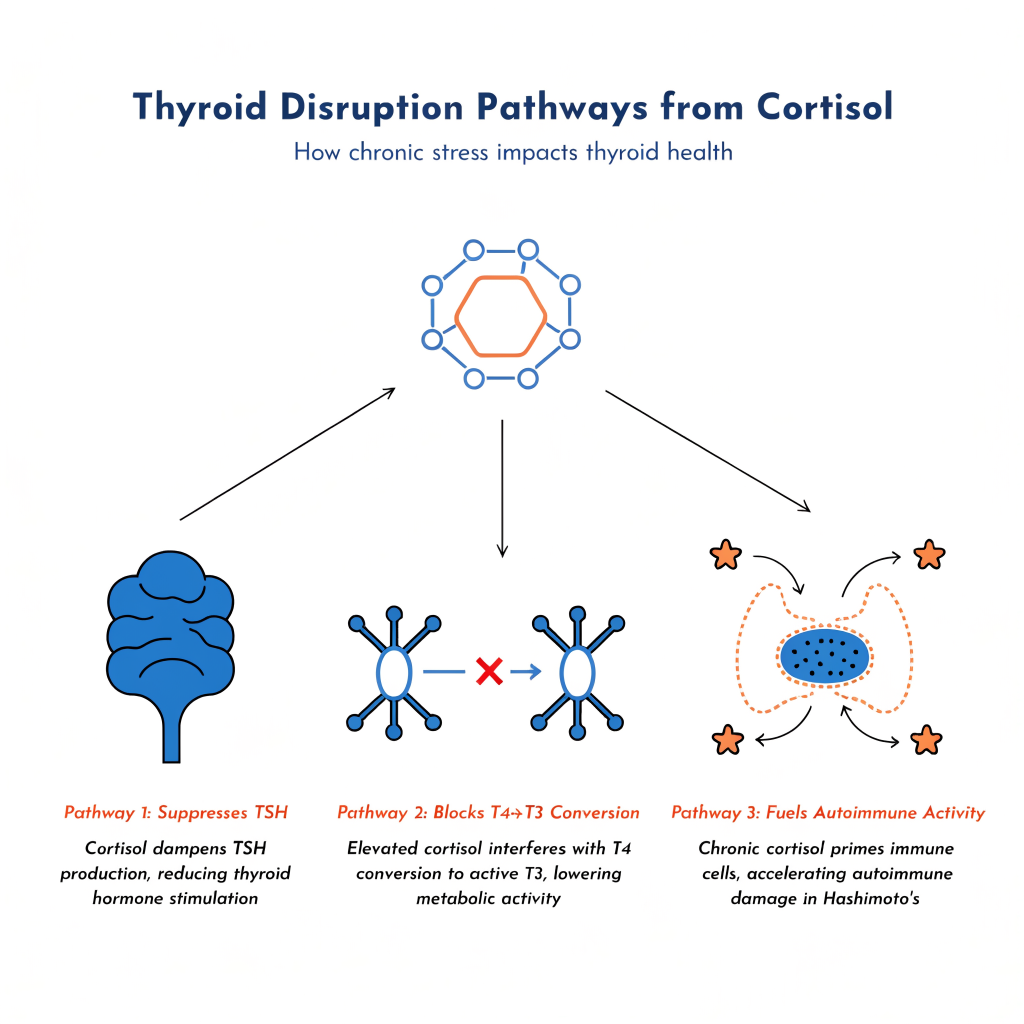
Your thyroid takes orders from the hypothalamus and pituitary gland via the HPT axis. When cortisol is chronically elevated, it directly suppresses both TRH and TSH secretion. A 2026 review in Endokrynologia Polska confirmed that cortisol inhibits TRH and TSH, disrupting the normal circadian rhythm of TSH secretion. Your brain sends fewer signals to your thyroid, even when the gland itself is healthy.
This is the pathway most responsible for the lab testing blind spot. Your thyroid primarily produces T4, an inactive storage hormone. For T4 to become useful, enzymes called deiodinases convert it into T3, the active metabolic hormone that drives energy production, brain function, and virtually every cell process in your body.
D1 and D2 enzymes convert T4 to active T3. D3 converts T4 to reverse T3 (rT3), an inactive form that blocks T3 from binding to its receptors. The 2026 Gierach review found that cortisol inhibits D1 and D2 while increasing D3 activity, creating a double hit: less active T3 produced, more reverse T3 blocking what remains.
Your TSH may still read as normal during this process. The pituitary sees adequate T4 and does not know conversion is impaired. This is why patients can have a “normal” thyroid panel while experiencing every symptom of hypothyroidism. Learn how selenium, which supports deiodinase enzyme activity, can help.
Beyond direct hormonal disruption, chronic stress dysregulates the immune system, shifting the balance between regulatory T cells and inflammatory T cells. In susceptible individuals, this can trigger or worsen autoimmune thyroid disease, including Hashimoto’s thyroiditis.
A randomized controlled trial in the Journal of Molecular Biochemistry found that an 8-week stress management program reduced anti-thyroglobulin antibodies in women with Hashimoto’s. This provides direct evidence that stress management can measurably influence autoimmune thyroid activity. Understanding the thyroid-adrenal axis connection helps explain why managing stress is essential for thyroid health.
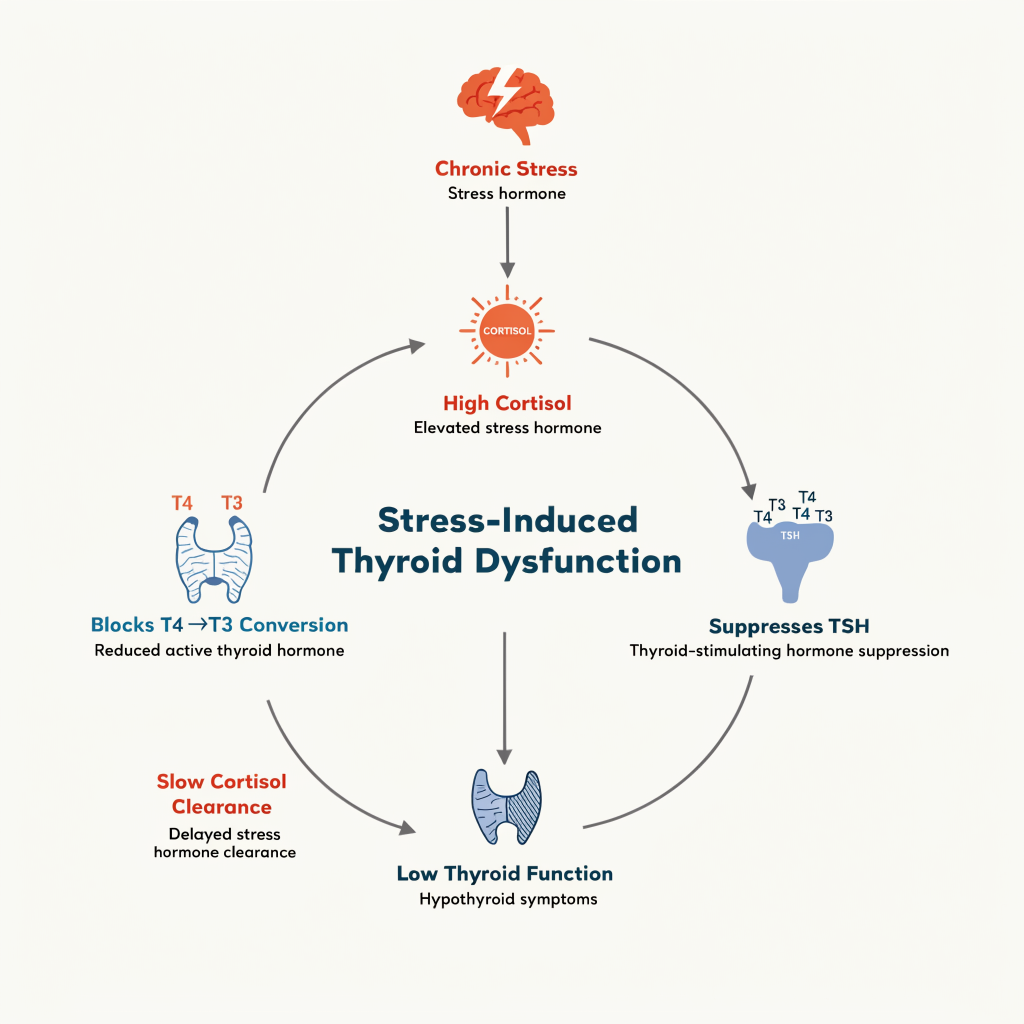
The relationship between chronic stress and thyroid dysfunction is not a one-way street. It is a self-reinforcing cycle that becomes progressively harder to break.
Chronic stress elevates cortisol, which suppresses TSH and blocks T4-to-T3 conversion. But thyroid hormones also help clear cortisol from the body. When thyroid function drops, cortisol clearance slows. So more cortisol impairs thyroid conversion, and lower thyroid function means cortisol stays elevated even longer.
The downstream effects compound the problem. Lower metabolism means less energy to cope with the stressors that started the cycle. More perceived stress means more cortisol production. The loop tightens. This is why generic advice like “just relax” often falls short: the cycle is biochemical, not just behavioral. For a deeper look, see our guide on comprehensive thyroid testing beyond TSH.
One of the most frustrating aspects of stress-driven thyroid dysfunction is that the symptoms look like stress itself. That overlap is the trap. Key signs to watch for:
The critical clue is persistence. If these symptoms appeared gradually during a period of sustained stress and have lasted weeks or months, the cause may not be “just stress.” If weight changes are a particular concern, our guide on managing weight with hypothyroidism offers practical strategies.
When chronic stress is present, a standard thyroid panel focused on TSH creates a blind spot. Cortisol suppresses TSH, so it may read low-normal even when the thyroid is underperforming. Free T4 may appear normal because the gland is still producing hormones. The problem is downstream: T4 is not being converted to active T3. A panel checking TSH and Free T4 misses both issues.
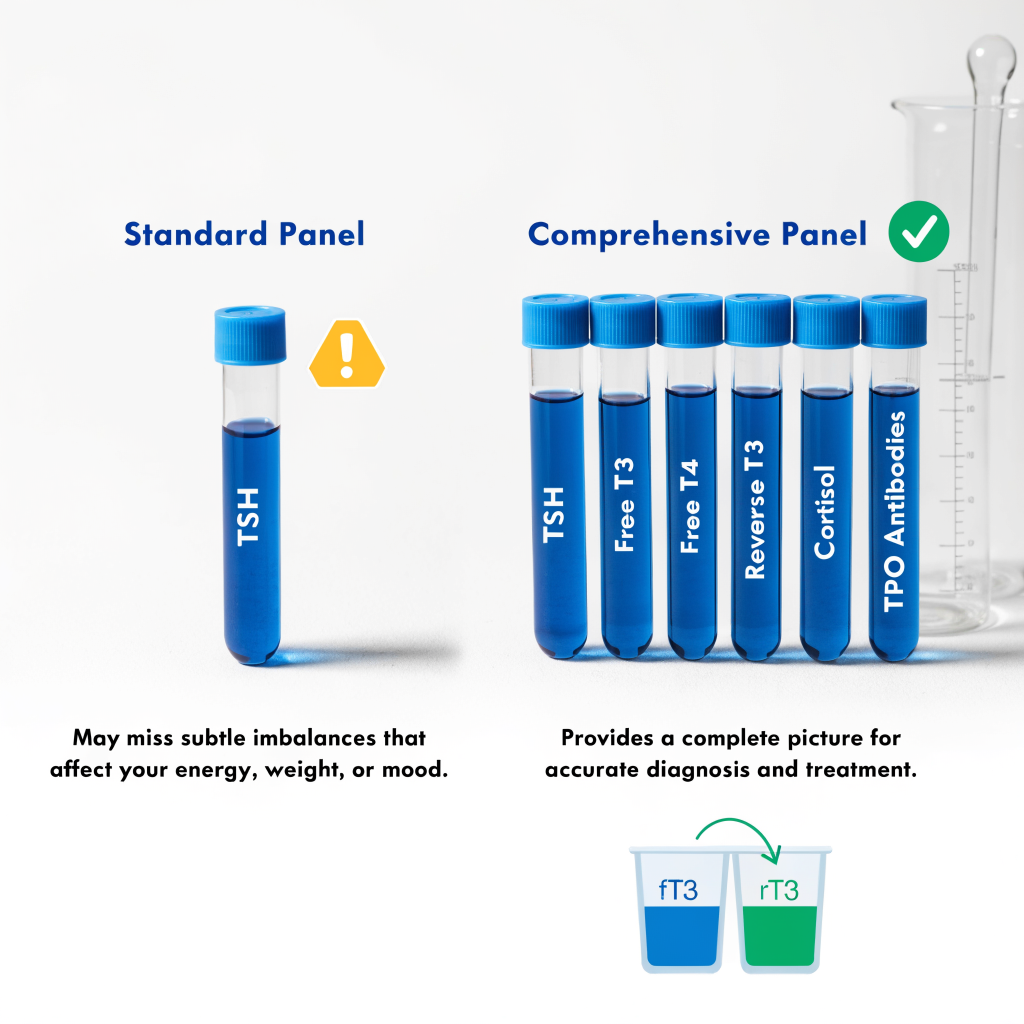
Here is the comprehensive panel that tells the real story:
| Marker | What It Tells You | Pattern Under Chronic Stress |
|---|---|---|
| TSH | Pituitary signal to the thyroid | May be low, normal, or mildly elevated; unreliable alone |
| Free T4 | Inactive storage hormone | Often within normal range |
| Free T3 (fT3) | Active metabolic hormone | Low or low-normal; the conversion block |
| Reverse T3 (rT3) | Inactive blocking hormone | Elevated; body shunting T4 away from T3 |
| fT3:rT3 Ratio | Conversion efficiency | Low ratio (below 15-20) indicates impaired conversion |
| TPO Antibodies | Autoimmune attack marker | May be elevated if stress triggered Hashimoto’s |
| Cortisol (salivary) | Stress hormone profile | Diurnal rhythm disruption, elevated evening levels |
The fT3:rT3 ratio is one of the most informative calculations in thyroid testing. An optimal reverse T3 should be below 15 ng/dL, and an optimal fT3:rT3 ratio should be above 20. A 2025 study in PLoS One found that 20.9% of patients on T4-only therapy had elevated reverse T3 above the normal range. Even patients already taking thyroid medication may be affected.
This is not fringe medicine. It is well-documented physiology missed by standard screening protocols. To learn more, see why TSH alone is not enough, or explore our comprehensive lab testing services.
Once you have the right lab markers, patterns emerge. Here are three common patterns chronic stress creates on comprehensive thyroid panels:
Labs: Low-normal TSH, low Free T3, normal Free T4, elevated reverse T3. Interpretation: Cortisol is suppressing the HPT axis signal while blocking T4-to-T3 conversion. This is the classic functional hypothyroidism pattern. What to do: Address stress physiology first, with nutritional support for deiodinase enzyme function (selenium, zinc).
Labs: Elevated TSH (4 to 10 mIU/L), normal Free T4, normal or low Free T3, elevated reverse T3. Interpretation: The thyroid is being pushed harder but conversion is impaired. What to do: Comprehensive workup combining thyroid support and stress management simultaneously.
Labs: Normal or elevated TSH, positive TPO or thyroglobulin antibodies, low Free T3. Interpretation: Chronic stress may have triggered or worsened Hashimoto’s thyroiditis. What to do: Immune support, stress reduction, and comprehensive thyroid care from a practitioner who understands both components.
Interpreting lab results requires a qualified healthcare practitioner who understands the full picture. These patterns are starting points for clinical conversation, not self-diagnosis.
Breaking the stress-thyroid cycle requires addressing both sides: managing the stress response and supporting thyroid function directly.

Certain micronutrients are essential for deiodinase enzyme function. The 2026 Gierach review noted that optimization of micronutrient status may complement standard thyroid therapy.
Learn more about selenium, iodine, and zinc for thyroid support, and explore thyroid-supporting foods.
Blood sugar instability worsens HPA axis dysfunction. When blood sugar spikes and crashes, cortisol is released, adding to the existing cortisol burden. Prioritize protein at breakfast, eat regular meals, and reduce refined carbohydrates.
Most T4-to-T3 conversion occurs during deep sleep. Cortisol clearance also happens primarily during sleep. Poor sleep perpetuates the cycle. Practical strategies include consistent sleep timing, limiting screen exposure in the evening, and maintaining a cool sleeping environment.
Not all stress management is equally effective for thyroid health. The key is activating the parasympathetic nervous system to counterbalance chronic HPA axis activation.
For a detailed guide, see our article on yoga for thyroid support.
Self-management has limits. Seek professional guidance if you experience:
Infusion Health takes a different approach. We do not stop at TSH. Our comprehensive hormone panel includes Free T3, Free T4, reverse T3, cortisol, and thyroid antibodies. Our naturopathic providers understand the stress-thyroid connection and create individualized plans addressing both sides of the cycle.
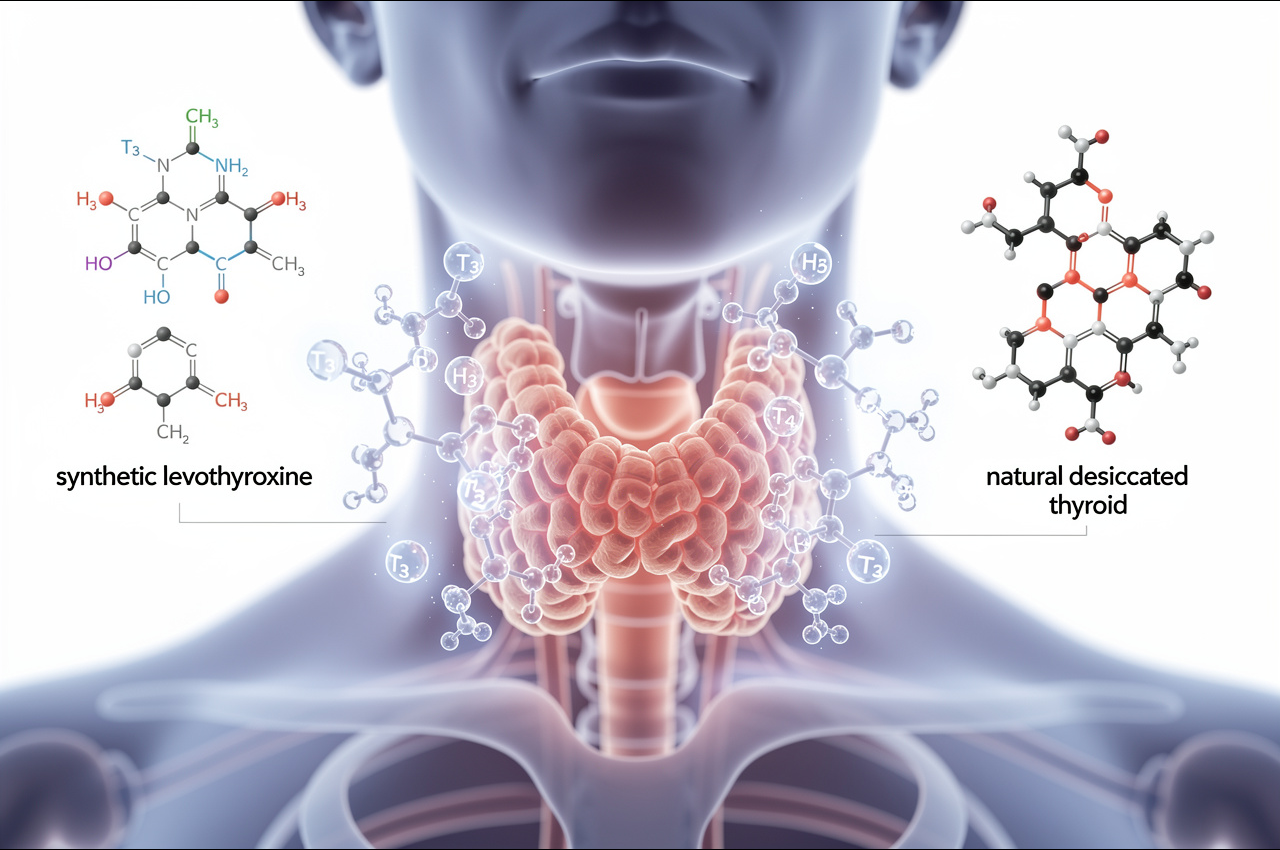
If you are considering options beyond synthetic T4, our comparison of synthetic vs natural thyroid hormone options can help inform your conversation.
Ready to get the full picture? Book a telemedicine consultation with Infusion Health to discuss your symptoms and explore comprehensive testing.
Chronic stress and thyroid health are deeply connected, and the relationship is more complex than most standard lab panels reveal. Here are the key points:
You do not have to figure this out alone. Comprehensive testing and a provider who understands the stress-thyroid connection can make the difference between being told “your labs are fine” and getting the answers you need. Reach out to Infusion Health for a consultation.