30+ Years
of Medical Experience

If you are living with a thyroid condition, you know how much it affects your daily life, from your energy levels and mood to your weight and sleep quality. The good news is that yoga for thyroid support is a well-researched, accessible practice that can complement your medical treatment and help you feel more balanced, both physically and emotionally. Whether you have been recently diagnosed or have been managing your condition for years, these mind-body practices offer real, evidence-based benefits. In this guide, we will walk you through the science, the best poses, breathing techniques, and mindfulness practices that can make a meaningful difference in your thyroid wellness journey.
Your thyroid is a small, butterfly-shaped gland at the base of your neck, and despite its size, it plays an enormous role in regulating metabolism, energy, growth, and development. When it is not functioning properly, whether underactive (hypothyroidism) or overactive (hyperthyroidism), the effects ripple through nearly every system in your body.
One of the most significant factors influencing thyroid health is chronic stress. When you are stressed, your body activates the hypothalamus-pituitary-adrenal (HPA) axis, which can interfere with thyroid-stimulating hormone (TSH) production and disrupt the conversion of T4 to T3, the active form of thyroid hormone. Yoga for thyroid support addresses thyroid health through multiple pathways: stress reduction, improved blood circulation to the neck, nervous system regulation, and reduced systemic inflammation.
The National Institutes of Health has recognized yoga as a complementary mind-body therapy for thyroid disorders. It is important to note that yoga supports, rather than replaces, medical treatment. Think of it as a powerful addition to your existing care plan, not a substitute for prescribed medication.
The evidence supporting yoga for thyroid health is compelling. A 2024 systematic review examined 11 studies involving 516 participants and found that yoga improved thyroid function, mental health, quality of life, and pulmonary function in individuals with hypothyroidism.
Specific clinical findings include:
These results show that yoga helps regulate the HPA axis and improves sympathovagal balance. Certain poses also promote blood flow to the thyroid gland through mechanical effects when the neck is in flexion or extension.
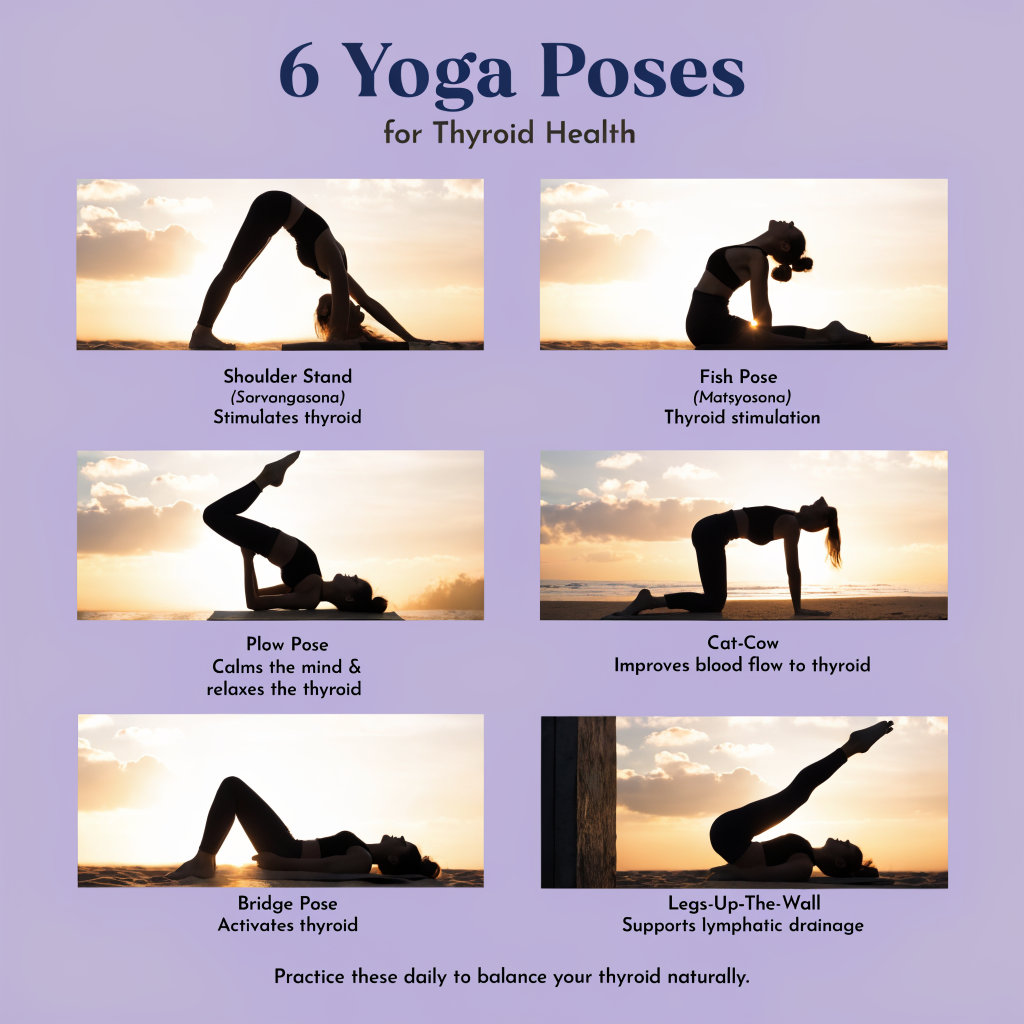
The yoga poses most recommended for thyroid health work by increasing blood flow to the neck, stimulating the thyroid through gentle compression or extension, and activating the parasympathetic nervous system. Here are the six best yoga poses for thyroid support:
1. Supported Shoulder Stand (Salamba Sarvangasana) is the most frequently cited pose for thyroid health. This inversion directs blood flow toward the neck and provides gentle stimulation to the thyroid gland. Use a folded blanket under your shoulders for support if you are new to this pose.
2. Fish Pose (Matsyasana) opens the throat and chest, creating a gentle stretch that stimulates the thyroid. It is an excellent counter-pose to shoulder stand and can be practiced on its own.
3. Plow Pose (Halasana) involves a forward bend that compresses the throat area, providing thyroid stimulation. This is a more advanced pose, so approach it with guidance.
4. Cat-Cow (Marjaryasana-Bitilasana) is a gentle, rhythmic movement that alternately flexes and extends the neck, promoting blood flow to the thyroid. It is one of the safest poses for beginners and can be done daily.
5. Bridge Pose (Setu Bandhasana) is a mild backbend that opens the throat, stimulates the thyroid, and strengthens the spine. It is accessible for most levels.
6. Legs-Up-the-Wall (Viparita Karani) is a calming, restorative inversion safe for all levels. It supports the nervous system without neck pressure, making it especially helpful during periods of fatigue.
Condition-specific guidance: For hypothyroidism, focus on stimulating poses (shoulder stand, fish, bridge) with longer holds. For hyperthyroidism, prioritize grounding, calming poses (legs-up-the-wall, child’s pose, corpse pose) and avoid vigorous inversions. Always skip shoulder stand and plow pose if you have high blood pressure, and avoid strong neck compression with palpitations.
Pranayama, the yogic practice of breath control, is one of the most accessible ways to support thyroid health. Research shows that pranayama reduces stress, balances the autonomic nervous system, improves vagal tone, and lowers inflammation. A 2025 systematic review found that pranayama improved pulmonary function and psychological well-being in hypothyroid patients.
Ujjayi (Ocean Breath) involves gentle throat constriction during breathing, which stimulates the vagus nerve and promotes relaxation. Research has shown that 90 days of Ujjayi practice can reduce BMI and TSH levels (SOMA Breath). Practice 5 to 10 rounds, two to three times per day.
Nadi Shodhana (Alternate Nostril Breathing) balances the nervous system by alternating airflow between nostrils. Clinical trials demonstrate its effectiveness for reducing stress and enhancing parasympathetic activity, which supports thyroid regulation.
Bhramari (Humming Bee Breath) creates a gentle vibration in the throat and head, calming the nervous system. It is particularly effective for hypothyroidism and helps reduce anxiety and depression.
Sheetali (Cooling Breath) is especially beneficial for hyperthyroidism due to its cooling effect, helping manage heat intolerance and anxiety. This technique is simple to learn and can be practiced anywhere.
Pranayama is especially valuable if fatigue or mobility limitations make physical yoga challenging. Breathing techniques offer a gentle entry point that still delivers meaningful benefits. Remember, pranayama supports but does not replace your medical treatment.

Stress is widely recognized as a core trigger for Hashimoto’s disease onset and flare-ups. Mindfulness-Based Stress Reduction (MBSR) has been shown to reduce cortisol levels, lower inflammation markers like C-reactive protein (CRP), and enhance immune function. Meditation also boosts serotonin, GABA (a calming neurotransmitter), DHEA, growth hormone, and melatonin, all of which support endocrine balance.
Body Scan Meditation involves slowly bringing attention to each part of your body over 10 to 15 minutes. This practice increases interoceptive awareness, helping you identify symptom patterns and areas of tension.
Loving-Kindness (Metta) Meditation focuses on sending compassion first to yourself, then to others. Living with a chronic thyroid condition can bring frustration and self-judgment. This practice reduces that emotional burden and fosters a more nurturing relationship with your body.
Yoga Nidra (Yogic Sleep) is a deep relaxation practice lasting 20 to 30 minutes. Research has shown it effectively reduces anxiety and depression, and it is accessible for all physical abilities. You simply lie down and follow guided instructions, making it ideal for low-energy days.
Meditation specifically supports thyroid health by lowering cortisol, reducing systemic inflammation, and improving sleep quality. Whether you are just beginning your thyroid wellness journey or looking to deepen an existing practice, starting with small, consistent steps can create lasting benefits over time. Free guided meditations are available through apps like Insight Timer, YouTube, and structured MBSR programs.

The best yoga practice depends on your specific thyroid condition. One size does not fit all, and understanding the differences helps you get the most benefit while staying safe.
Hypothyroidism often presents with fatigue, weight gain, cold intolerance, slow metabolism, and depression. A gentle to moderate flow with stimulating poses works best. Include sun salutations, backbends, and inversions with modifications, and aim for longer holds. Build intensity gradually to avoid worsening fatigue.
Hashimoto’s has an autoimmune component, meaning inflammation management is key. Gentle Hatha or Yin Yoga styles are recommended, along with anti-inflammatory breathing practices. Avoid high-intensity sessions during flare-ups and prioritize stress reduction as your primary mechanism.
Hyperthyroidism often presents with anxiety, rapid heartbeat, heat intolerance, weight loss, and tremors. Grounding, cooling, and restorative poses are most appropriate: forward folds, legs-up-the-wall, child’s pose, and corpse pose. For breathwork, focus on Sheetali (cooling breath), long exhalations, and slow Nadi Shodhana. Avoid vigorous flows, hot yoga, and stimulating inversions.
Regardless of your condition, always consult your endocrinologist before starting. Practice at a level that feels supportive, not exhausting.
Consistency matters more than intensity when it comes to thyroid support through yoga. Research suggests that practicing four to six days per week, for 20 to 40 minutes per session, yields meaningful benefits. Even 10 minutes daily makes a difference if that is what feels sustainable for your lifestyle and energy levels.
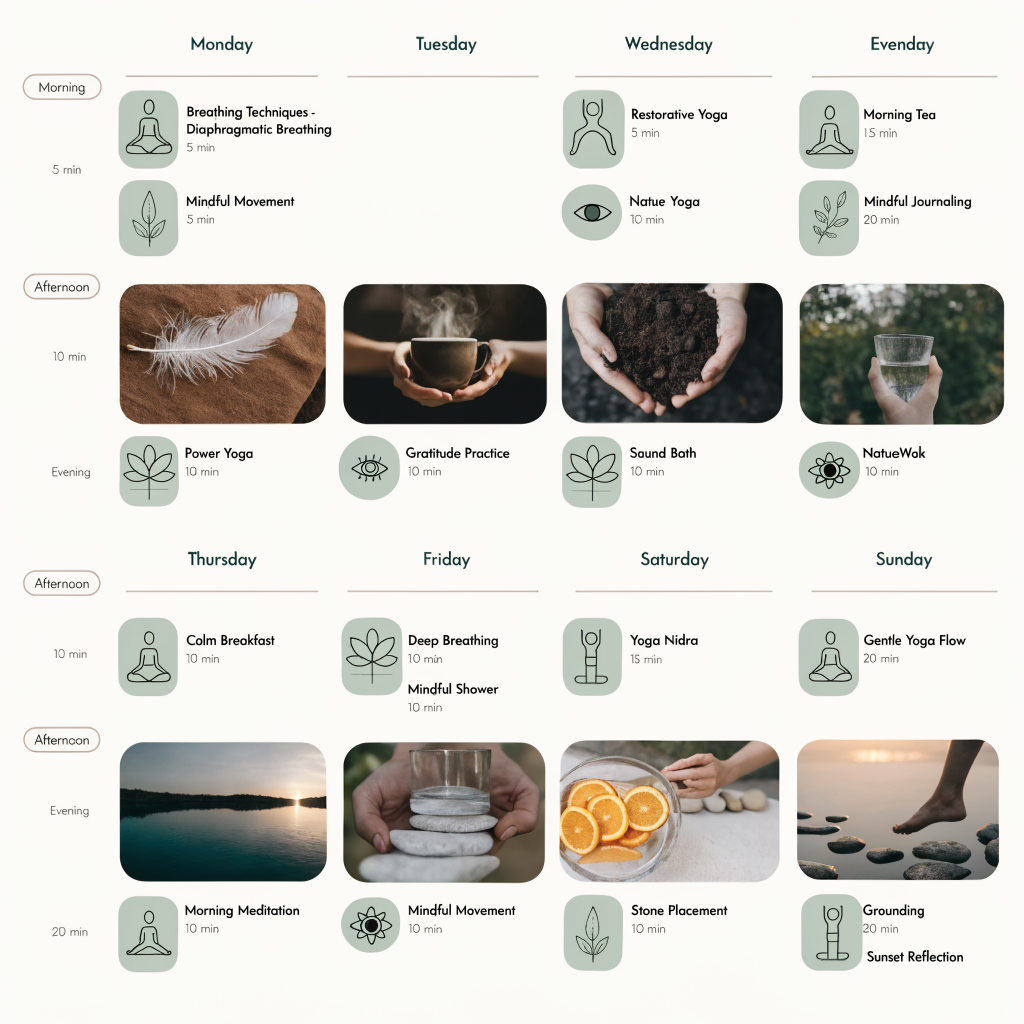
Here is a sample weekly routine combining yoga poses, pranayama, and meditation:
| Day | Practice | Duration |
|---|---|---|
| Monday | Gentle yoga (cat-cow, bridge, fish pose) + Nadi Shodhana | 25 min |
| Wednesday | Yoga flow (sun salutations, shoulder stand variation, legs-up-the-wall) + body scan meditation | 30 min |
| Friday | Pranayama (Bhramari, Ujjayi) + Yoga Nidra | 30 min |
| Sunday | Gentle stretches + loving-kindness meditation | 25 min |
Fill in off-days with shorter 10 to 15 minute practices, such as a brief pranayama session or a quick body scan. Track your symptoms in a journal to identify which practices help most. Pair your yoga practice with proper nutrition, adequate sleep, and adherence to prescribed medication. For more guidance, check out our article on foods for thyroid health.
Yoga and mindfulness are complementary, not alternative, therapies. They work best alongside your medical treatment. Systematic reviews consistently frame yoga as an add-on therapy, and a randomized controlled trial found that yoga reduced levothyroxine dependence, suggesting it may help optimize thyroid function alongside medication.
At Infusion Health, we take a comprehensive approach to thyroid wellness. Our Hormone Optimization program provides evidence-based thyroid hormone management. Nutritional deficiencies in selenium, zinc, iodine, and vitamin D can impair thyroid function, and our IV Therapy and Vitamin and Mineral Infusions can help address these gaps. For hypothyroid-related weight challenges, our Medical Weight Loss program pairs well with regular yoga practice.
Mind-body practices address the lifestyle factors that medication alone cannot fully resolve: chronic stress, poor sleep, and emotional well-being. When you combine clinical care with yoga, pranayama, and meditation, you create a holistic foundation that supports your thyroid from every angle. Learn more about natural options to support thyroid health and how they fit into a comprehensive wellness plan.
Yoga, pranayama, and meditation each offer unique, evidence-based benefits for thyroid health, and together they create a comprehensive mind-body support system. A 2024 systematic review of 516 participants confirmed that yoga improves thyroid function, quality of life, and mental health in hypothyroidism. Choose practices that match your specific condition: stimulating poses for hypothyroidism, calming practices for hyperthyroidism. Even 10 to 20 minutes daily can make a meaningful difference.
These practices complement but do not replace medical treatment. Ready to take the next step? Explore Infusion Health’s evidence-based thyroid services.