30+ Years
of Medical Experience

Most men never give their pelvic floor a second thought: it quietly does its job until something changes. Pelvic floor dysfunction in men is common, under-recognized, and widely assumed to be a women’s issue. This post covers what the male pelvic floor does, why problems go unnoticed, and what evidence-based care involves.
The pelvic floor is a group of muscles and connective tissue at the base of the pelvis, stretching from the pubic bone to the tailbone. In men, these muscles support the bladder, bowel, and prostate, and they form the foundation of core and postural stability. Most men never think about this muscle group until something stops working, but its role is broader than commonly understood.
The pelvic floor works as part of the sphincter system. The muscles contract to hold urine and stool, then relax to allow release, so coordination matters as much as strength.
Post-void dribble, the few drops that escape after urination, is one of the earliest and most common signs men notice. It is not dangerous, but worth mentioning to a healthcare provider. The same muscle group supports bowel function, so straining, constipation, and urgency can relate to pelvic floor coordination, not only to the prostate or diet. One cross-sectional study of 199 men found only 21% had completely normal pelvic floor muscle function (published findings in PMC).
The pelvic floor contributes to erectile function and to ejaculatory coordination. These muscles also act as the base of the deep core, partnering with the diaphragm and deep abdominal and back muscles to stabilize posture and manage abdominal pressure.
A pelvic floor that is either too weak or too guarded can affect all three areas at once: bladder control, bowel control, and sexual function.

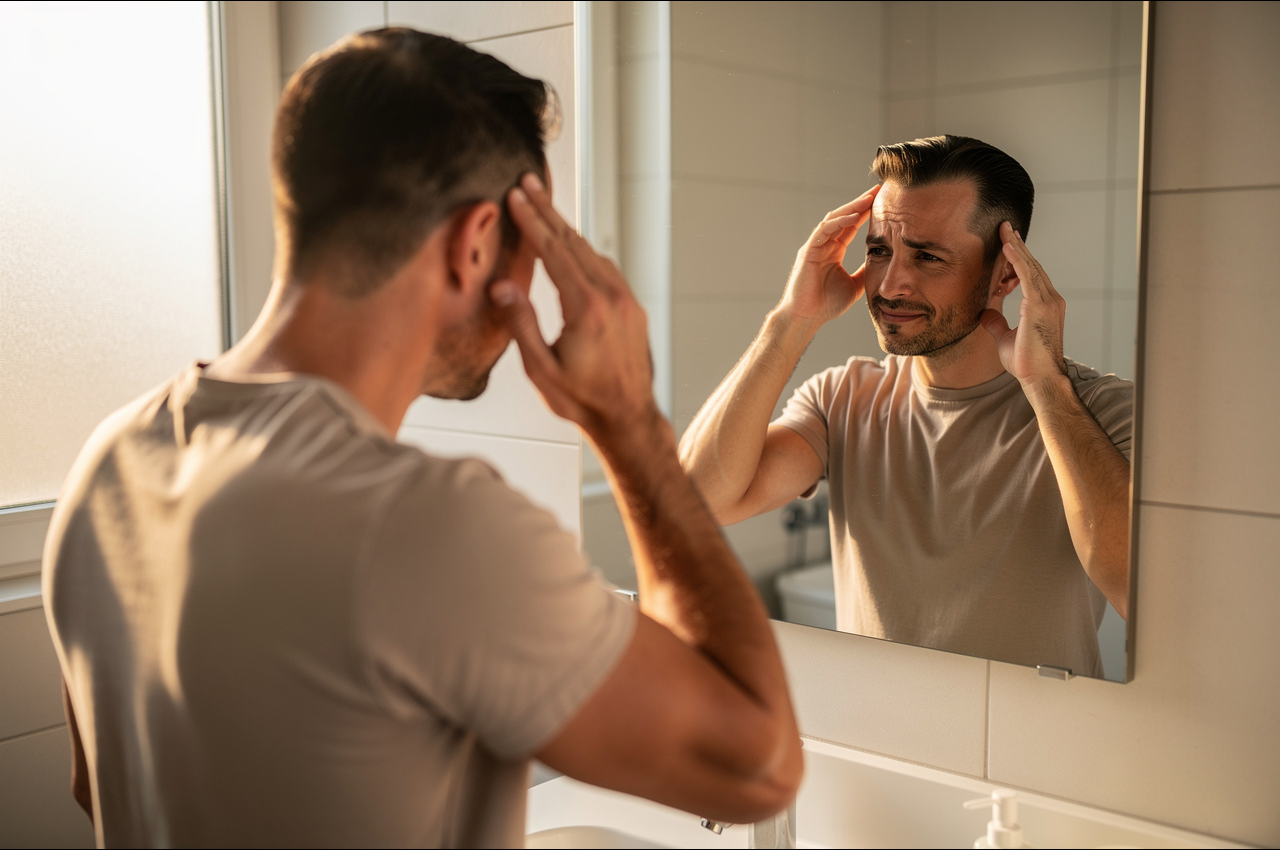
Men are not routinely screened for pelvic floor dysfunction. When symptoms do come up, they are often normalized or blamed on aging, stress, diet, or the prostate. Pelvic floor health is also culturally framed as a women’s concern, so many men never recognize the signs in themselves.
Pelvic floor health messaging overwhelmingly targets women: pregnancy, postpartum recovery, menopause. Most men first encounter the topic through Kegel exercises aimed at women (our women’s pelvic floor guide is written for that different reader and anatomy).
The result is predictable. A man who notices post-void dribble, urinary urgency, or pelvic pain often assumes it is normal, age-related, or simply how things are.
Chronic stress shows up in the body as tension, and in many men that tension settles into the pelvic floor, where the muscles stay partially braced even at rest. Over months and years, that holding becomes habitual, producing what clinicians call a hypertonic or overactive pelvic floor: not weak, but locked in tension that interferes with normal relaxation and release.
This is not a character flaw or a psychological failing. It is a physiological adaptation to stress, and it is addressable with professional support. For the wider picture, our post on chronic stress and hormonal imbalance in men covers how stress affects men’s health.
Prostate surgery, particularly prostatectomy, can affect the nerves and structural support around the pelvic floor. Some men first notice their pelvic floor after surgery, when leakage, urgency, or discomfort appears.
Recovery after this kind of surgery is clinician-led, and outcomes vary from person to person. Pelvic floor physical therapy is part of the clinical conversation after surgery; for the wider picture, see our prostate health guide. The American Urological Association’s 2025 guideline on chronic pelvic pain in men also covers pelvic pain after prostate surgery (AUA guideline).

The signs below are for recognition, not self-diagnosis; several overlap with other conditions. Their value is simple: something concrete to discuss with a healthcare provider.
Chronic pelvic pain syndrome is defined as persistent pain in the pelvic region, lower abdomen, or perineum (the area between the scrotum and the anus) without an identifiable infection. The AUA reports that chronic pelvic pain affects millions of men in the United States (AUA press release, 2025).
It can present as a dull ache, a sharp sensation in certain positions, or pressure that comes and goes. It is not always linked to the prostate, so a proper assessment matters.
Urinary urgency (a sudden strong need to go), increased frequency, and post-void dribble are among the most reported pelvic floor symptoms in men. These overlap with prostate-related symptoms, but a pelvic floor that cannot coordinate relaxation and contraction plays its own role too.
Bowel signs can be part of the picture too: straining, a sense of not being fully empty, or urgency. A review of male urinary incontinence put worldwide prevalence at 1% to 39%, depending on definition and population (review in PMC).
Pain during or after sex can reflect pelvic floor muscle dysfunction, whether from excessive tightness or from poor coordination. Changes in erectile function or ejaculatory control can involve the pelvic floor as well, though these concerns are usually multifactorial and deserve a proper evaluation rather than one assumed cause.
It is worth stating plainly: these symptoms come up for a lot of men, they say nothing about who you are, and they are reasonable things to bring up with a clinician. For wider context, our men’s health and fertility guide covers that ground.
Prevalence studies give a useful sense of scale. In a cross-sectional study of 199 men, only 21% had completely normal pelvic floor muscle function. The remaining 79% showed some degree of impairment, including men who reported no pelvic floor symptoms at all (study findings in PMC). That does not mean 79% of men need treatment. It means function varies widely and is rarely measured.
Male urinary incontinence, one slice of pelvic floor dysfunction, has a reported worldwide prevalence of 1% to 39% depending on definitions and populations (prevalence review). The AUA, meanwhile, states that chronic pelvic pain affects millions of men in the United States (AUA, 2025).
Estimates vary because the condition is under-screened and under-reported. The useful point is not an exact percentage. It is that pelvic floor dysfunction in men is a real, common issue that receives far less attention than it deserves. That gap between prevalence and awareness is the whole reason this post exists.
Search for pelvic floor advice and you will mostly find one instruction: squeeze more. But pelvic floor dysfunction is not always a weakness problem, and strengthening is not automatically the right move. Two different patterns call for two different approaches, and only an assessment tells them apart.
In some men, the pelvic floor muscles lack adequate tone and contractile force. That can contribute to leakage, post-void dribble, and reduced support for the pelvic organs.
When this is the pattern, targeted retraining under professional supervision may involve progressive activation work. It starts with an assessment: a pelvic floor physical therapist can determine whether this is the pattern and which approach fits your situation.
An overactive (hypertonic) pelvic floor is a different problem. The muscles are working too hard and not relaxing fully, which creates pain, urgency, and dysfunction of its own.
For a guarded floor, strengthening alone can worsen the situation by increasing tension on an already tight muscle group. The clinical approach for this pattern centers on relaxation training, breathing work, manual release, and progressive desensitization rather than more squeezing. Research on men with chronic pelvic pain syndrome has documented an impaired ability to relax the pelvic floor (research in PMC), and the AUA guideline notes that manual physical therapy techniques such as myofascial release may be offered (Conditional Recommendation, Evidence Level Grade C).

A first step can be a primary care visit, a urology consultation, or a naturopathic telemedicine appointment. If you would rather start from home, our telemedicine consultation service offers a discreet first conversation without a waiting room.
The clinician takes a history: what you have noticed, for how long, and what has changed. They may perform or refer you for a physical assessment of pelvic floor muscle function. Unless there is a specific reason, that assessment does not automatically mean a rectal exam, and anything planned is explained and done with your consent.
Assessment tools may include real-time ultrasound (which shows muscle movement on a screen), biofeedback sensors, or manual assessment by a trained pelvic floor physical therapist. These sound more invasive than they usually are. The goal is straightforward: to understand whether the muscles are underactive, overactive, or uncoordinated. Our naturopathic services overview lists the wider options, and our men’s preventive screenings guide covers when this is worth raising at a routine checkup.
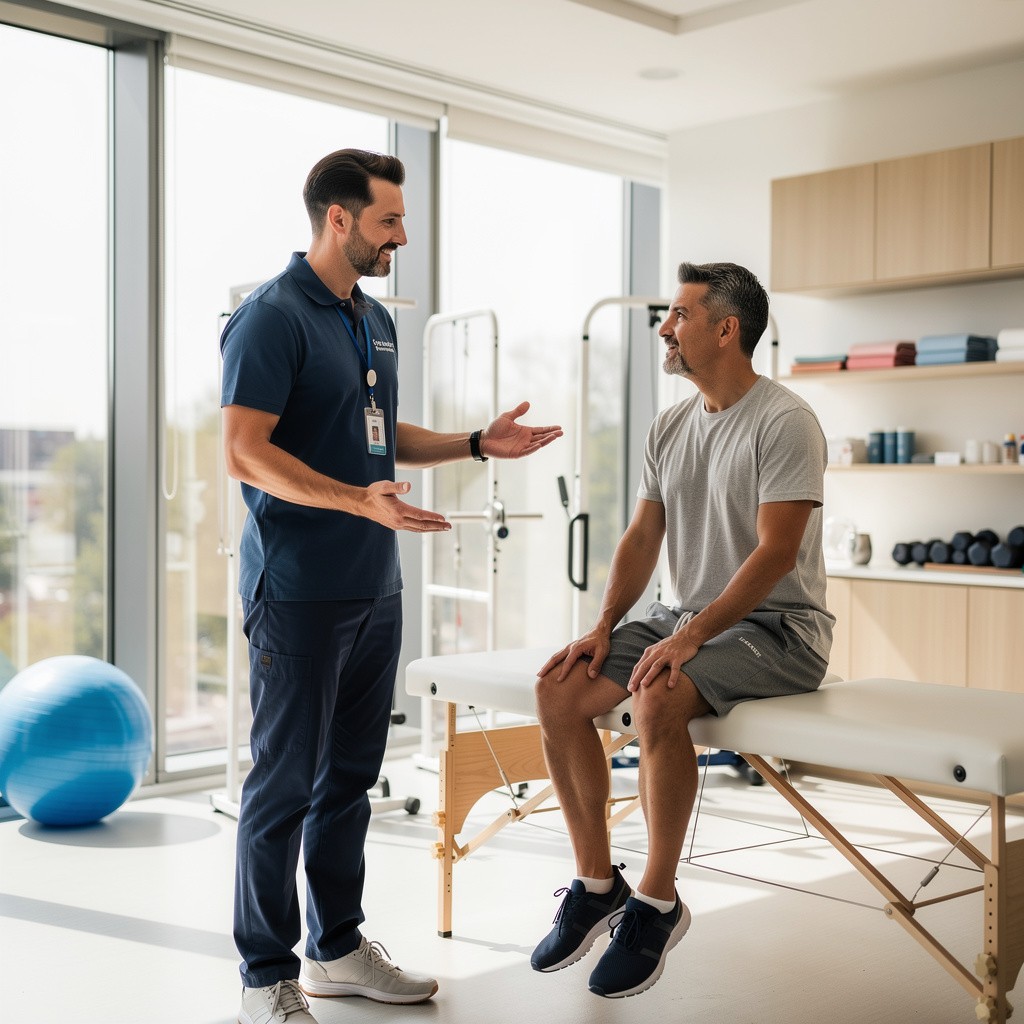
Many men have never considered pelvic floor physical therapy, and the unknowns cause the most hesitation. Here is what the process looks like.
Sessions often begin with breathing. The therapist guides you through diaphragmatic breathing patterns that encourage the pelvic floor to lengthen and release, the opposite of bracing.
Manual release may be used for a guarded or painful floor, externally and internally. The AUA guideline specifically lists this option: clinicians \”may offer individualized manual physical therapy techniques (e.g., myofascial release of affected tissues both internally and externally)\” (Conditional Recommendation, Evidence Level Grade C) (AUA, 2025).
Biofeedback uses sensors to display real-time muscle activity on a screen. You and the therapist can see whether the correct muscles are contracting and relaxing, and whether you are compensating with the abdominals, glutes, or inner thighs.
It is a learning tool rather than a fitness test, and many men are surprised to discover they have been holding tension in the pelvic floor without realizing it. In a prospective study of a pelvic floor PT program for men with idiopathic chronic pelvic pain (a study without a control group), the authors concluded it \”may be an effective treatment option for select patients\” (Masterson et al., in PMC).
Pelvic floor physical therapy is not a one-session fix. Patients typically attend a series of visits over weeks or months, with a therapist-designed home practice component. The program progresses on reassessment rather than a calendar, and the goal is sustainable function, not a finish line.
Early research is promising but modest in scale. In a randomized feasibility trial of myofascial physical therapy for urological chronic pelvic pain (48 patients, 23 of them men), the response rate was 57% in the therapy group versus 21% in the comparison group (p = 0.03) (Peters et al., in PMC). That is pilot data rather than a definitive result.
An honest summary starts with grades. The AUA 2025 guideline lists pelvic floor physical therapy for pelvic floor myalgia as a Conditional Recommendation with Evidence Level Grade C. In plain terms, the panel judged that the option may be offered, not that it works for everyone.
The Masterson study’s own words were \”may be an effective treatment option for select patients,\” and that study had no control group. The Peters trial found a statistically significant difference, but from a small sample. The finding that 79% of men in one study had some degree of impairment describes population variation, not a treatment mandate.
The evidence base is growing and not yet settled. Presenting it honestly builds more trust than confident promises, and no study can guarantee an outcome for any individual.
A few points worth carrying with you:
If you would rather begin with a conversation from home, our telemedicine consultation page makes that simple. The information here is general, and a clinician can help you work out what applies to your situation.