30+ Years
of Medical Experience

If you are taking semaglutide or thinking about it, you have probably heard the semaglutide muscle loss conversation already: people online insisting the weight you lose is “all muscle,” and just as many voices calling the worry overblown. Neither end leaves much room for a calm, honest answer. This article is that answer.
We will cover: what the trial data says about semaglutide muscle loss, why lean mass matters, what is still uncertain, and the practical things that may help support your body along the way. We will also look at how legitimate naturopathic support fits in, working with your prescriber rather than around them.
A quick note on scope: this is general health information, not medical advice for your situation. Nothing here is a reason to start, stop, or change any medication. Your prescribing clinician makes those decisions, and the best use of an article like this is bringing your questions to them.
Let us start where most people start: “I have heard semaglutide can cause muscle loss. Is that true?” The short answer: some loss of lean tissue during rapid weight loss is real and documented; the longer answer is that the details matter more than the headline. For the wider picture of how semaglutide works on appetite and fullness, see our appetite regulation explainer.
The clearest numbers come from the STEP 1 trial, published in the New England Journal of Medicine in 2021. Participants lost an average of 14.9% of their body weight over 68 weeks. A body-composition substudy measured what that loss was made of: about 6.92 kg of the total was lean mass, roughly 40% of the weight lost (Wilding et al., NEJM 2021).
That 40% figure is the number that circulates online, and it deserves both respect and context.
The scan used in these trials is DXA, and DXA “lean mass” is not the same thing as skeletal muscle. It includes water, organs, and connective tissue, all of which shrink when food intake drops, especially in the first weeks. So the actual amount of muscle lost is likely lower than the lean mass number suggests.
A 2026 meta-analysis of GLP-1 studies puts the muscle share of weight lost between 8.5% and 24.5%, a wide range that mostly reflects how differently studies measure (PMC narrative review, 2026). A separate 2026 meta-analysis focused on semaglutide found an average lean mass reduction of about 9.9% (PubMed, 2026).
What remains genuinely uncertain: most trials did not measure skeletal muscle directly, and very few tracked long-term function, such as strength, mobility, or day-to-day capacity. We do not have great data on what these composition changes mean for how people feel and perform years later. That is an honest gap, not a reassurance and not a warning.
For the full benefits and side effects picture, see our benefits and risks overview.
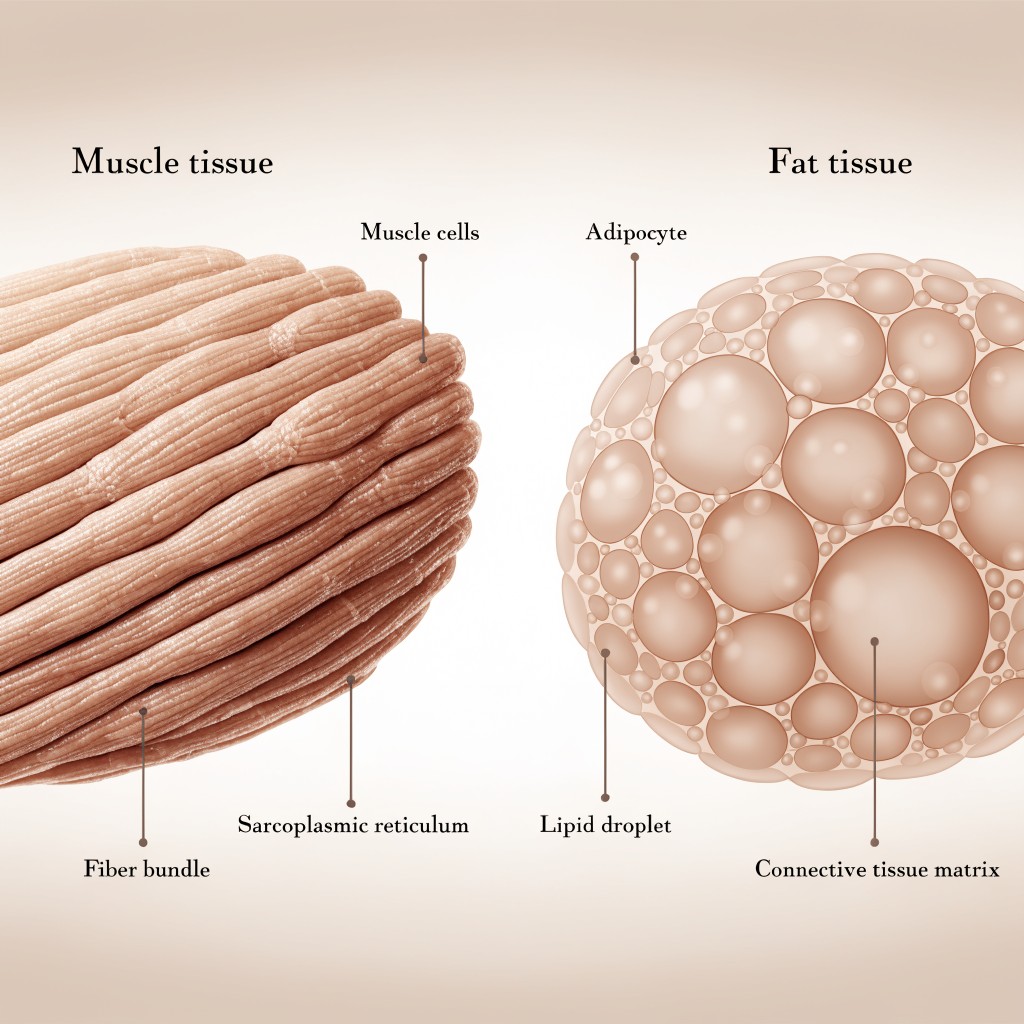
Muscle is active tissue: it burns more energy at rest than fat does, supports your metabolism, and underpins balance, strength, and everyday function. When someone loses a meaningful amount of muscle along with fat, resting energy expenditure can dip, which is one reason weight management gets harder over time.
There is also a pattern clinicians call sarcopenic obesity: carrying excess body fat at the same time as lower-than-ideal muscle mass. It is associated with poorer metabolic health and physical outcomes, and it is why practitioners increasingly look beyond the number on the scale, including when they review long-term health considerations for semaglutide.
The proportional view is worth holding onto. In the STEP 1 body-composition substudy, fat mass fell by 19.3% while lean mass fell by 9.7%, and visceral fat dropped by 27.4% (J Endocrine Society substudy, 2021). Lean mass as a share of total body weight actually went up.
Some lean loss is a normal part of losing a large amount of weight, on this medication or any other, and the useful question is how to tilt the ratio toward fat. That question is not unique to semaglutide, which is why researchers keep debating whether lean mass loss is a clinical concern or a physiological adaptation.
This is the part where we get practical, and where we stay honest: nothing below guarantees that you will avoid muscle loss. The evidence suggests these habits may help support lean mass while you lose weight, and they are the same general wellness practices a clinician or dietitian would encourage for almost anyone.
Protein is the nutrient most directly tied to maintaining muscle, and reviews of this literature generally point to a range of about 1.2 to 1.5 grams per kilogram of body weight per day as a sensible discussion point for adults losing weight (PMC strategies review, 2025). Please read that as a starting point for a conversation, not a target to hit on your own: your clinician or dietitian can tell you what is appropriate for your body and your situation.
The honest difficulty: semaglutide works by turning down appetite, so eating enough protein becomes a genuine challenge rather than a discipline problem. A food-first approach helps: eggs, fish, chicken, Greek yogurt, tofu, legumes, and nuts all count, and protein-forward snacks are easier to face than large plates when fullness arrives early. Adequate protein intake may help support lean mass during weight loss, and it is one piece of the picture.

If protein is the building material, resistance training is the signal that tells your body to keep the material. General physical activity guidance for adults includes regular muscle-strengthening activity, and reviews of lean mass preservation during GLP-1 therapy point to resistance training two to three times per week as the pattern most often studied (PMC lean mass review, 2026).
You do not need a gym or heavy lifting. Bodyweight movements such as squats, push-ups against a wall, and lunges count, as do resistance bands and light dumbbells. Walking counts as a valuable baseline for anyone starting from zero.
The framing that matters: this is general wellness guidance, the same kind of movement a healthcare professional would encourage for anyone managing their health. It may help support lean mass, and it does not promise anything.
One firm rule: clear it with your clinician first if you have any condition that might affect your ability to exercise safely. If you have been largely inactive, mention that too. Our semaglutide weight management program page describes how a structured, supervised approach to movement and nutrition is built around individual needs.
A loose meal plan takes the pressure off decision-making when appetite is low. Some people plan three modest meals plus one or two protein-forward snacks, so eating happens regularly rather than only when hunger shows up.
Keeping fluids steady matters too: hydration supports energy and digestion, and some people find an electrolyte-containing drink helpful on low-appetite days. Mention any electrolyte product to your clinician first, particularly if you have a heart or kidney condition or take other medications.
Nausea is the side effect people mention most often when starting semaglutide, and it is the one a support plan can most directly address. This section is not a full side effects catalog: that lives in our benefits and risks overview. What follows is the companion version, the practical stuff people find useful while living with the medication.
Research suggests nausea affects roughly half of patients, and its pattern often tracks the titration schedule (Frontiers in Endocrinology, 2026). Habits many people find helpful: small, frequent meals instead of large ones, bland easy-to-digest foods on hand around a dose change, ginger tea or ginger chews, and steady hydration. Worth asking your prescriber whether timing your dose for the evening makes sense for you: some people find the worst passes overnight, and your prescriber knows your history.

It also helps to know what to bring up at appointments: when the nausea happens relative to your dose, whether it interferes with eating or drinking, any weight loss that concerns you, and whether it improves or worsens over time. The NHS guide to semaglutide is a solid, plain-language reference for the common side effect picture.
Some symptoms need a professional, not a home remedy. Severe or persistent abdominal pain, vomiting that will not stop, or signs of an allergic reaction such as hives, swelling of the face or throat, or difficulty breathing mean you should contact your prescriber or seek urgent medical attention now. Stated plainly because it matters, not to scare anyone.
One sourcing note: the FDA has issued safety warnings about compounded copies of semaglutide, noting that some compounded versions may not contain the same active ingredient and may not be sterile. Sourcing quality is part of the conversation worth having with your prescriber.
Everything so far is easier to sustain with support around it. This is the layer most semaglutide content skips, and it is the layer our clinic works in every day: adjunct care that sits alongside your prescription rather than competing with it. Done well, it looks like the following.
Nutrition planning. A dietitian or naturopathic provider can help shape a meal pattern that supports protein adequacy, nutrient density, and digestive comfort while respecting the appetite-suppressing effect of the medication. Our naturopathic services cover this kind of ongoing nutrition support, and a telemedicine consultation is often the easiest way to start.
Body-composition conversations. A provider who looks at composition, not just weight, can help you interpret what the numbers mean: is the weight you are losing mostly fat, is lean mass holding reasonably steady, is your strength trending where you would expect? These are questions a supportive care team can answer without making the scale the whole story.
Honest supplement evaluation. Some supplements have been studied in the context of muscle health during weight loss, including creatine, vitamin D, vitamin B12, and electrolyte products. The honest framing: there is some evidence these may help support muscle health, and you should ask your clinician before starting any of them to make sure they are right for you.
Food comes first: no supplement replaces a meal pattern, and anything that promises a shortcut is the thing to walk away from.
Coordination with your prescriber. With your permission, an adjunct provider communicates with the clinician who prescribes your medication so that everyone is working from the same picture. Coordinated care, not siloed care.

Clear boundaries matter. Adjunct support is not a reason to stop, delay, or change your semaglutide dose: only the prescribing clinician makes decisions about your medication. It is not a replacement for your prescriber or a shadow second opinion.
It is not miracle products, and no meal plan, supplement, or protocol can guarantee that you will keep every pound of muscle or hit any particular result.
It is also not a substitute for medical supervision of the medication itself. If you are pregnant, planning to become pregnant, or managing a history of disordered eating, these conversations belong with your clinician or a dietitian from the start, and your support plan should be built with them rather than around them.
One more honest piece, observationally: weight regain after stopping semaglutide is well documented. Analyses suggest people regain around 60% of the weight they had lost within about 52 weeks of stopping, while a minority keep most of it off (Lancet eClinicalMedicine, 2026). A separate meta-analysis estimated regain at roughly 0.4 kg per month, trending back toward baseline over about a year and a half (PMC meta-analysis, 2025).
This is not a reason for alarm, and it is certainly not advice about whether or how to stop any medication; that decision belongs entirely to you and your prescriber. The point is preparation.
If you know regain is a documented possibility, you can build habits around nutrition, movement, and body-composition check-ins that you keep whether or not your medication chapter changes. Ongoing support matters most at these moments, which is why the semaglutide weight management program is designed as sustained care rather than a short intervention.
Semaglutide-associated weight loss does include some loss of lean mass: about 40% of the weight lost in STEP 1 was lean tissue by DXA scan, though actual muscle loss is likely lower, and the long-term functional picture is not fully known. Neither panic nor dismissal fits the evidence.
What helps is unglamorous: discuss your personal protein needs with your clinician or dietitian, add beginner-friendly resistance training once cleared, keep meals and hydration steady, and raise nausea early. Naturopathic support complements your prescriber rather than replacing them: nutrition planning, body-composition context, honest supplement evaluation, and coordinated care.
The most useful next step is an informed conversation with your care team. Bring this article with you and ask about your muscle-loss considerations, your protein needs, and whether structured support could help you stay strong. For more evidence-based reading, visit our blog or explore our semaglutide resources.