30+ Years
of Medical Experience

This content is for informational purposes only and does not constitute medical advice. Always consult with a qualified healthcare provider before making decisions about your fertility health.
Trying to conceive can be one of the most emotional journeys you will ever experience. Whether you have just started thinking about growing your family or you have been trying for months, the uncertainty of not knowing exactly when your body is most fertile can feel overwhelming. You are not alone in this. The reality is that only about 30% of couples conceive in their first cycle of trying, according to the American Pregnancy Association. That statistic might sound discouraging, but here is the good news: modern fertility tracking technology is changing the game, giving you a data-driven edge that previous generations simply did not have.
In this guide, we will walk you through a range of apps, wearable devices, and smart methods available today. Whether you prefer a hands-off approach or love diving into data, there is a fertility tracking solution designed to fit your lifestyle and help you understand your body like never before.
Many people assume that getting pregnant is simply a matter of timing intercourse around the middle of their cycle. In reality, the fertile window, according to the American College of Obstetricians and Gynecologists (ACOG), is only about six days: the five days before ovulation and ovulation day itself. Outside of that window, conception is biologically unlikely. This means that even couples who are actively trying can miss their optimal window month after month without realizing it.
Fertility tracking technology helps take the guesswork out of this equation. Instead of relying on calendar math or generic cycle predictions, today’s tools analyze your unique biological signals to pinpoint your most fertile days with increasing precision. The result? More confidence, less anxiety, and a significantly better chance of conceiving in any given cycle.
Before diving into the technology, it helps to understand the basics of what you are tracking. Every menstrual cycle unfolds in distinct phases. The follicular phase begins on the first day of your period and continues until ovulation. During this time, your body prepares an egg for release. Ovulation is the pivotal moment when a mature egg is released from the ovary, and it is the single event that determines your fertile window. After ovulation, the luteal phase begins, during which progesterone rises and your body prepares for either implantation or your next period.
The fertile window spans approximately six days because sperm can survive in the reproductive tract for up to five days, while the egg remains viable for roughly 12 to 24 hours after release. If you want a deeper understanding of how your cycle works, check out our guide to ovulation awareness. For our purposes here, the key takeaway is that every piece of fertility tracking technology, from the simplest app to the most advanced wearable sensor, exists for one purpose: to help you identify that fertile window with greater accuracy.
Just a decade or two ago, fertility tracking meant a paper calendar, a basic thermometer, and a lot of educated guessing. Couples would mark cycle dates on a wall calendar and hope for the best. Basal body temperature (BBT) charting, while effective in theory, required waking at the exact same time every morning, measuring temperature before getting out of bed, and manually plotting data points on graph paper. One disrupted night of sleep could throw the entire chart off.
Today, the landscape looks entirely different. Fertility tracking apps use algorithms trained on millions of cycles to predict ovulation. Wearable sensors collect temperature, heart rate, and even hormone data around the clock without any effort on your part. Smart devices can scan ovulation test strips and log results automatically. What used to require discipline and guesswork now happens passively, letting you focus on what really matters: your health and your relationship.
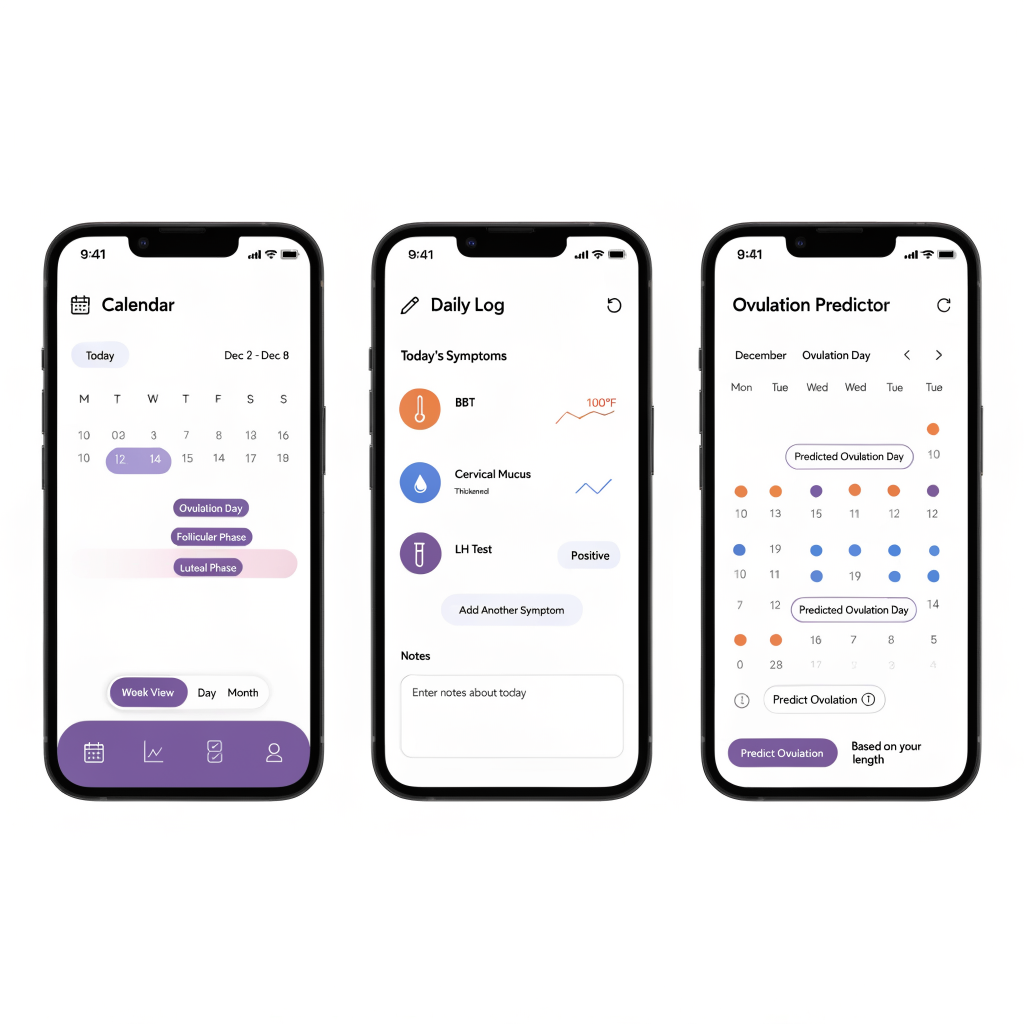
Fertility tracking apps are often the first stop for anyone beginning their conception journey. These apps work by collecting data you enter, such as period start dates, cervical mucus observations, symptoms, and results from ovulation predictor kits (OPKs). The app then uses algorithms to identify patterns in your cycle and predict your fertile window.
Fertility tracking apps generally fall into a few categories. Comprehensive trackers like Flo, Clue, and Ovia Fertility offer broad cycle management alongside fertility-specific predictions. BBT-focused apps like Fertility Friend and Kindara specialize in temperature charting and ovulation detection. For those who want medical-grade integration, apps like Premom work with physical LH (luteinizing hormone) test strips, scanning and logging results automatically.
It is important to understand that not all apps are created equal. A 2023 study published in JMIR mHealth and uHealth found that top fertility tracking apps can predict ovulation within one to two days of the actual event in regular cycles. However, accuracy drops significantly for those with irregular cycles or conditions like PCOS. The ACOG also notes that while app-based tracking can be a helpful tool for identifying fertile windows, it should not be used as a sole method for contraception or conception in cases of irregular cycles.
The bottom line: apps are a powerful starting point, but they are only as accurate as the data you consistently input. If you tend to forget to log information, a wearable device that collects data passively might serve you better.
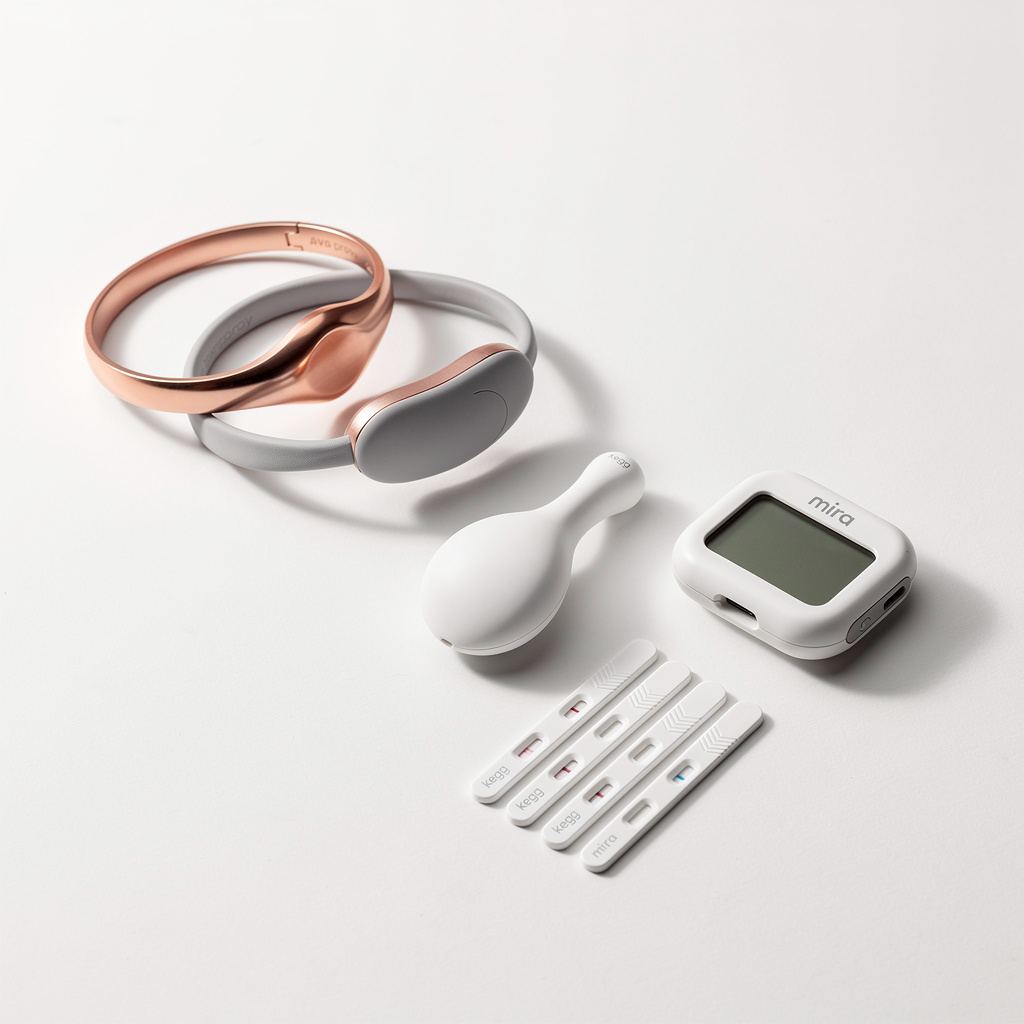
Wearable fertility devices represent a significant leap forward because they collect physiological data continuously and passively. Instead of remembering to log your temperature every morning or record symptoms throughout the day, you simply wear the device and let it do the work.
The wearable fertility market has grown rapidly, and there are now several types of devices to consider:
| Device Type | Examples | What It Tracks |
|---|---|---|
| Wrist/arm wearables | Ava, Tempdrop | Skin temperature, heart rate, respiratory rate, sleep |
| Vaginal biosensors | Kegg, Daysy | Cervical fluid impedance, basal body temperature |
| Urine analyzer devices | Mira, Premom (with analyzer) | Quantitative LH, E3G, PdG hormone levels |
The key advantage of wearables is early detection. Many can identify ovulation signs two to three days earlier than manual tracking methods on average. For example, peer-reviewed research published in Fertility and Sterility has shown that the Ava wearable achieves approximately 89% accuracy in detecting the fertile window across all cycle types. Tempdrop has been validated against rectal BBT measurements, showing accuracy within 0.1 degrees Fahrenheit.
It is worth noting that most wearables are currently FDA-cleared as wellness devices rather than medical devices. This means they are excellent tools for understanding your cycle and identifying fertile windows, but they are not diagnostic devices. Managing this expectation will help you get the most value from your wearable.
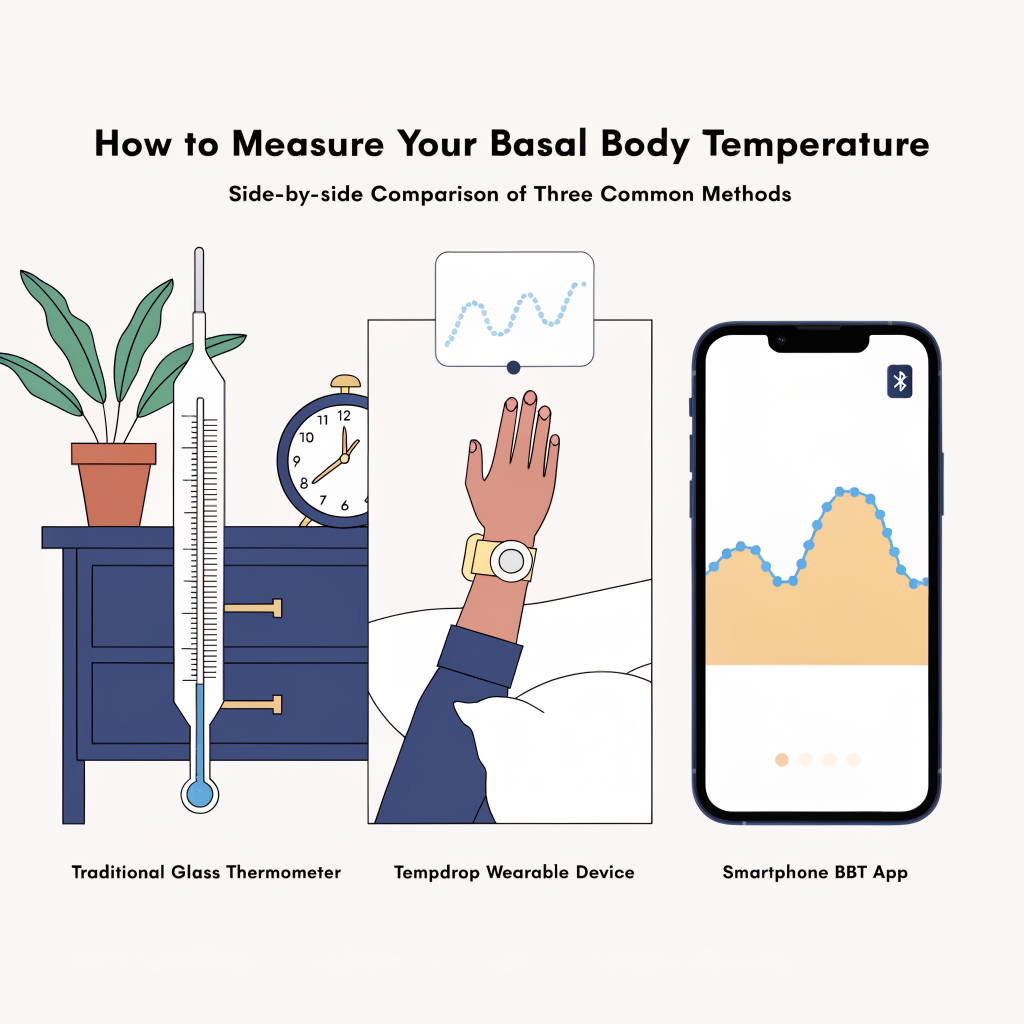
Basal body temperature tracking remains one of the most reliable methods for confirming that ovulation has occurred. The science is straightforward: after ovulation, the corpus luteum produces progesterone, which raises your resting body temperature by approximately 0.5 to 1.0 degrees Fahrenheit. If this elevated temperature is sustained for three or more days, it confirms that ovulation took place.
Traditional BBT charting, however, comes with significant limitations. Manual thermometers require you to measure at the exact same time each morning, before getting out of bed, after at least three uninterrupted hours of sleep. One restless night can produce a misleading reading.
Modern BBT tracking technology solves these problems. Wearable sensors like Tempdrop and Ava continuously monitor your temperature throughout the night, using algorithms to filter out disruptions and calculate your true basal temperature. Here is how the methods compare:
| Method | Accuracy | Convenience | Approx. Cost |
|---|---|---|---|
| Manual BBT thermometer | Moderate (if taken consistently) | Low (must measure before rising) | $8-15 |
| Wearable BBT sensor (Tempdrop, Ava) | High (continuous readings) | High (wear while sleeping) | $150-350 |
| Oral BBT with app logging | Moderate | Medium | $10-20 |
The most important takeaway here is that continuous wearable sensors eliminate the so-called “three-hour sleep rule” that makes manual BBT tracking so inconvenient. You get the same data, or better, with zero disruption to your morning routine.
With so many options available, it is natural to wonder which approach is best. The honest answer is that there is no single “best” method. The right choice depends on your lifestyle, budget, and what kind of data you want to collect. Here is a simple decision framework to help you narrow it down:
| If you are… | Consider… | Why it works |
|---|---|---|
| Tech-savvy and want hands-off tracking | A wearable + app combo | Continuous data, minimal daily effort |
| On a budget or want simplicity | A well-rated app + BBT thermometer | Effective basics for under $50 |
| Dealing with irregular cycles | A quantitative monitor (Mira) | Measures actual hormone levels, not just patterns |
| Prefer a natural or minimalist approach | Fertility awareness method + paper charting | Zero tech dependency (but may have lower accuracy) |
Research consistently shows that combining methods tends to produce stronger outcomes. A multi-sensor approach, pairing an app with a wearable and ovulation predictor kit, achieves higher per-cycle conception rates than any single method used alone. The combination works because each tool captures different biological signals, giving you a more complete picture of your fertility.
And remember, any tracking is better than no tracking. If a wearable device feels overwhelming but you can commit to logging your period dates in a simple app, that is a meaningful step forward. You can always add more tools as you go. If you would like personalized guidance on building your tracking routine, the team at Infusion Health’s fertility support program can help you create a plan tailored to your specific needs.

Fertility tracking is a powerful tool, but it is important to recognize when technology alone cannot address underlying health challenges. Some situations call for professional evaluation and medical support, and seeking help is a sign of strength, not failure.
Consider scheduling a consultation with a fertility specialist if you experience any of the following:
One of the most valuable things about fertility tracking is the data it generates. When you visit a specialist, bringing two to three cycles of tracking data gives your healthcare provider a head start. It can reveal patterns that a standard office visit might miss, leading to a more informed and efficient conversation about your reproductive health.
At Infusion Health, we offer comprehensive fertility support that works alongside your tracking efforts. From hormone optimization and testing to specialized lab testing, our naturopathic approach addresses the root causes of fertility challenges rather than just the symptoms. We also encourage you to explore how lifestyle factors affecting male fertility and lifestyle choices like alcohol and caffeine consumption can influence your chances of conception.
Technology has made fertility tracking more accessible, more accurate, and more empowering than ever before. Whether you start with a simple app or invest in a full wearable setup, the most important step is the one you take today. Knowledge about your body is always worth having.
But knowledge becomes most powerful when it is paired with expert guidance. The fertility tracking data you collect is not just for your own peace of mind. It is a roadmap that, in the hands of experienced practitioners, can reveal insights that lead to more targeted, effective care.
Here is what we recommend:
You do not have to navigate this journey alone. Our team is here to help you understand what your data means and how to turn that understanding into action.
Schedule a fertility consultation with Infusion Health today and take the first step toward a more informed, confident conception journey.
For more fertility and wellness content, explore our blog for expert insights and practical guidance.
This content is for informational purposes only and does not constitute medical advice. Always consult with a qualified healthcare provider before making decisions about your fertility health.
Written by: Zahara Sundermeyer and the Infusion Health clinical team. Infusion Health is a naturopathic wellness practice dedicated to evidence-based fertility support, hormone optimization, and whole-person health.