30+ Years
of Medical Experience

The scale worked in your favor for weeks, and then it stopped. Same routine, same schedule, nothing moves.
If you are wondering why weight loss stalls on semaglutide, the answer comes first: yes, it is normal to plateau on semaglutide. Plateaus are documented across weight loss generally, on medication or off it.
A stall does not mean the medication stopped working, and it does not mean you did something wrong.
So this article covers four layers: why plateaus happen physiologically, whether your stall is partly measurement noise, two practical levers summarized briefly, and the taper question handled honestly, with your prescriber centered in every medication decision. For the emotional side, our plateau mindset guide goes deeper; our job here is the science.
One scope note: this is general health information, not medical advice. Nothing here is a reason to start, stop, delay, increase, or decrease any medication. Every dosing decision belongs with your prescriber, so use this article to bring better questions to that conversation.
Here is a definition for your next appointment: a semaglutide plateau is several weeks in which body weight stops declining even though your routine has not changed. Physiologically it usually reflects adaptive thermogenesis: your body burns fewer calories at a lower weight, so the same routine produces a much smaller gap.
Adaptive thermogenesis is the extra drop in energy expenditure beyond what a smaller body alone predicts, and metabolic adaptation is the wider pattern of the body adjusting to a lower weight.
A review in the International Journal of Obesity describes how weight-reduced adults burn less energy than predicted while appetite signaling shifts toward regain (Rosenbaum and Leibel, 2010).
A 2012 review in the same journal links that drop to documented resistance to further fat loss that can persist over time (Tremblay and colleagues, 2012).
Context matters, because this layer gets oversimplified. These findings come from controlled metabolic research in weight-reduced adults, many living with obesity, and the effect size varies between people. The physiology is not semaglutide-specific; it appears with any meaningful weight loss, which is why some describe a plateau as the body defending a lower set point: a documented metabolic brake.
Expectations are the other half of the problem. In the STEP 1 trial (New England Journal of Medicine), adults with overweight or obesity without diabetes lost an average of 14.9% of their body weight over 68 weeks alongside lifestyle support (Wilding et al., 2021).
In the two-year STEP 5 trial, average loss reached 15.2% by week 104, and the authors report that the initial reduction plateaued after approximately week 60 and was then maintained (Garvey et al., 2022).
Read that pattern. Is a plateau a sign the medication stopped working? In these curves, flattening happens while people continue treatment, and weight then holds rather than bounces back.
Does it mean you are building tolerance? Tolerance is not what these curves describe.
The pattern is a steep early phase, a gradual slowdown, and then a maintenance phase where the job shifts from losing to holding.

A bathroom scale is a noisy instrument, so before treating a stall as a metabolic event, hold two possibilities at once: your fat loss may have genuinely slowed, and this morning’s number may have little to do with it.
Weight moves day to day for ordinary reasons: sodium, hydration, weigh-in time, and the hormonal cycle. Scale calibration adds further measurement error.
A 2019 PLOS ONE analysis of frequent weigh-ins from 1,421 adults in a European weight-loss maintenance trial found within-week fluctuations averaging around 0.35% of body weight, higher at weekends (Silventoinen et al., 2019).
Water retention can hide fat loss for days. Some people notice a sudden drop after a flat stretch, often called the whoosh online; it is widely reported and not fully understood, so treat it as a possibility, not an explanation.
A flat week might be water, or a genuine slowdown, and neither should be waved off: calling a real stall “just water” dismisses it as readily as it inflates a noisy one.
A common working definition of a true plateau is weight holding within a pound or two for about a month while your routine stays consistent. How long does a plateau last? No honest clock exists; track the trend over weeks.
This is why a tape measure and a second, non-scale signal often tell you more than the scale alone. Waist circumference, how your clothes fit, or a progress photo can reveal changes the number misses, because body composition can shift while body weight sits still.
Could a plateau mean you are already at a stable, healthy weight? Sometimes that is part of the picture, and it is a question for your prescriber, who can weigh it against your health markers. Measurement should be a tool, never a punishment.
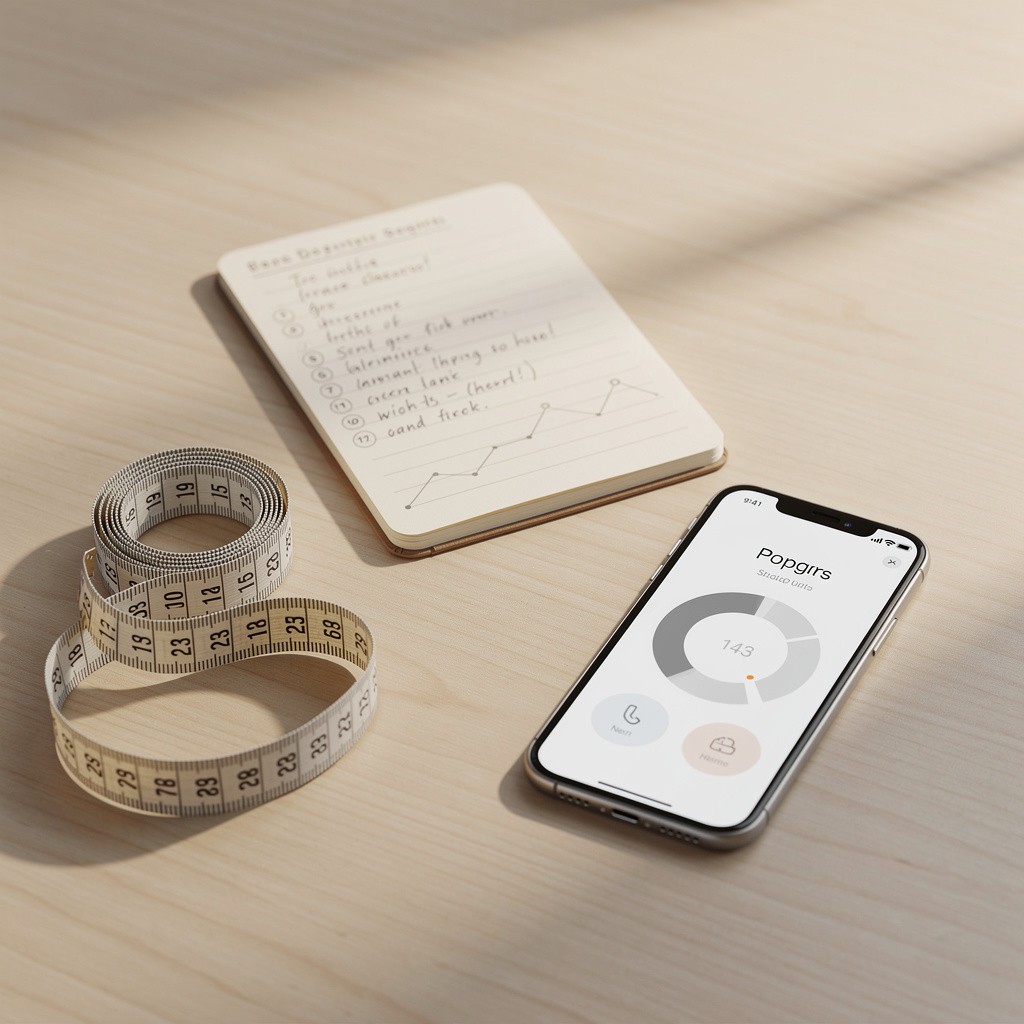
Every plateau conversation turns to protein and lifting. Both are standard weight-management guidance rather than semaglutide-specific fixes, and we keep each short: the evidence layer on muscle and resistance training lives in our detailed guide on semaglutide and muscle preservation.
Adequate protein is a standard nutrition consideration during meaningful weight loss, not a trick for breaking a stall.
The Harvard Nutrition Source frames protein as something to plan for as intake changes, with needs varying by body size, activity, and health status, so personal targets belong with your clinician or a registered dietitian. Getting enough protein may help support lean mass while you lose weight, which is the honest ceiling of the claim.
Resistance training is mainstream fitness guidance: the World Health Organization recommends muscle-strengthening activities involving major muscle groups on two or more days a week (WHO physical activity guidance).
Any new program should be clinician-cleared first. Regular strength work may help support body composition and metabolic health, but it is no guarantee against a plateau; the training depth belongs with our muscle preservation guide.

This is the layer most plateau articles skip, and careful wording matters most. Everything below is observational: what studies found, not a plan, a schedule, or a suggestion about your own treatment.
Titration is the gradual adjustment your prescriber schedules when treatment starts. It is a standard safety protocol set in advance, not a scoreboard that responds to how fast the scale moves. Because the plan is individual and prescriber-led, this article reproduces no schedules or numbers.
Firmly and kindly: a stall is never a reason to make a dose change on your own, and a plateau is not a signal that you need a higher dose.
People sometimes assume a flat stretch means the medication is wearing off; the trial data above points elsewhere, since curves flatten while treatment continues.
Should you increase your dose to break a plateau? No: that decision belongs with your prescriber, who reviews your progress, history, and goals before anything changes.
That pattern is why rebound weight gain after discontinuation is a standard part of the conversation, and why any taper or step-down question belongs in an appointment. These numbers describe studies, not your individual outcome. For more context, see our overview of semaglutide’s long-term benefits and risks.
Asking about this is normal and appropriate. You might say:
“I have been reading about what happens when people taper or stop semaglutide. Could we talk about what the research shows and whether any of it applies to my situation?”
That framing invites evidence instead of demand. If a visit is hard to arrange, our telemedicine consultation page explains how to start.

So what to do when the scale stops moving? This checklist makes your next appointment more useful. It is preparation for a conversation, not a promise: no checklist breaks a plateau, and nothing here changes your medication.
Swap daily weigh-ins for a weekly average; day-to-day noise adds stress without adding information. Add one second metric: waist measurement, how your clothes fit, or a progress photo.
If it suits you, a short food diary and symptom log for a week or two before the visit can surface patterns such as high-sodium days or poor sleep, not calorie counting.
If you have a history of an eating disorder, if you are pregnant or planning to become pregnant, or if you are changing nutrition for someone under 18, keep any tracking or nutrition change clinician- or dietitian-led.
Six items worth reviewing before the visit. The point is what you notice and report, not what you restrict.
Four reasons to make contact rather than wait for the next scheduled visit:
Contact your prescriber or seek urgent care now if any of those show up. They are practical signals to act on, not a reason to panic.
For the wider picture, our semaglutide resource center gathers the rest of the evidence-based reading, including a full overview of semaglutide benefits and considerations, and you can browse more from our blog.