30+ Years
of Medical Experience

Between work, family, and the everyday demands of life, it is easy to put off health screenings. But preventive health screenings for women are one of the most powerful tools for catching health issues early, when they are most treatable. This guide breaks down exactly which screenings every woman needs at every age, so you know what to ask for and when.
Looking for screening guidelines for the men in your life? Check our complete guide to men’s preventive health screenings by age.
Preventive screenings catch diseases early, when treatment is most effective and outcomes are best. The data backs this up: mammography reduces breast cancer mortality by 20 to 40 percent according to the U.S. Preventive Services Task Force (USPSTF). Heart disease remains the leading cause of death for women, making routine cardiovascular screening essential from your twenties onward.
Screening works. Cervical cancer incidence and mortality have dropped dramatically since the Pap smear was introduced. Women’s health screenings have transformed outcomes across multiple conditions, from cervical cancer to cardiovascular disease. In 2023, approximately 80% of women ages 50 to 74 were up to date with breast cancer screening, but only 75.4% of women ages 21 to 65 were current with cervical cancer screening. Meanwhile, a 2025 Aflac survey found that 59% of Americans skipped a recommended preventive screening.
Knowledge is power over your own health. Screenings are about empowerment, not fear. Understanding your body and catching changes early gives you control over your health trajectory.
A well-woman visit is recommended annually starting in adolescence and continuing across the lifespan, according to the Women’s Preventive Services Initiative (WPSI) and the American College of Obstetricians and Gynecologists (ACOG). Unlike an acute care visit when you are sick or injured, this visit is dedicated entirely to preventive health.
During a well-woman visit, your provider reviews your health history, checks your blood pressure, performs a physical exam, discusses risk factors, and recommends age-appropriate screenings. This is your time to ask questions and build a preventive care plan. Come prepared with questions and your family health history. For more on taking charge of your reproductive health, see our guide to proactive care for women’s reproductive health.
If you have not had your annual well-woman visit, consider this your reminder. For accessible options, a telemedicine consultation can help you get started from the comfort of your home.
Cervical cancer screening starts at age 21, regardless of sexual activity. The CDC recommends a Pap test every 3 years for women ages 21 to 29. HPV co-testing is not recommended for women under 30.
Blood pressure should be checked at every annual well-woman visit. Your twenties are the time to establish a baseline. A cholesterol screening (lipid panel) is recommended between ages 20 and 25 as a baseline, then every 4 to 6 years if results are normal, according to the American Heart Association. Earlier or more frequent screening is warranted if you have a family history of heart disease or high cholesterol.
Annual chlamydia and gonorrhea screening is recommended for sexually active women under 25, per CDC guidelines. HIV testing should occur at least once, then based on risk factors. If you have not received the HPV vaccination, discuss it with your provider; it is recommended through age 26. Depression and anxiety screening is also recommended for all adults (USPSTF Grade B), using tools like the PHQ-9 and GAD-7.
For women ages 30 to 65, three screening options are available. First, primary hrHPV testing every 5 years is now the preferred method, according to the HRSA 2026 guidelines. Second, Pap plus HPV co-testing every 5 years remains an option. Third, a Pap test alone every 3 years is still acceptable. A major 2026 update: self-collection for hrHPV testing is now an option for average-risk women ages 30 to 65, making screening more convenient and accessible.
Diabetes screening begins at age 35 for women with overweight or obesity, according to the USPSTF. If blood sugar is normal, repeat every 3 years. Earlier screening is appropriate if you have a family history of diabetes, a history of gestational diabetes, or other risk factors.
Thyroid disorders are more common in women, so discuss symptoms like fatigue, weight changes, hair thinning, and mood changes with your provider. TSH screening can be part of routine labs when symptoms are present. Learn more about thyroid health and women’s wellness.
Continue annual depression and anxiety screening. Peripartum depression screening is also recommended for pregnant and postpartum women (USPSTF Grade B).
The USPSTF updated its guidelines in 2024 to recommend biennial mammography starting at age 40 for all women at average risk (Grade B). The WPSI recommends initiating mammography no earlier than age 40 and no later than age 50, with screening at least every two years and as frequently as annually. Starting at 40 instead of 50 prevents approximately 1.3 additional deaths per 1,000 women. After the 2024 guideline change, mammography screening in women ages 40 to 49 increased from 29.8% to 48.5%, according to ASCO 2026 data.
Women with higher risk factors, such as a family history of breast cancer, BRCA mutations, or dense breasts, may need MRI screening or more frequent mammograms. Talk to your provider about what screening schedule is right for you.
Colorectal cancer screening should start at age 45 for average-risk women, per the USPSTF (Grade B for ages 45 to 49). Options include colonoscopy every 10 years, a fecal immunochemical test (FIT) every year, or multi-target stool DNA (mt-sDNA) every 3 years. Rising rates of early-onset colorectal cancer in adults under 50 make this screening critical. Colorectal cancer is now the second leading cause of cancer death in women under 50.
Continue blood pressure screening annually. A lipid panel every 4 to 6 years (or more often if risk factors are present) and blood glucose or A1C testing every 3 years round out the metabolic picture. In your mid-40s, if your provider assesses you as intermediate cardiovascular risk, a coronary artery calcium (CAC) scan may be worth discussing from an integrative perspective.
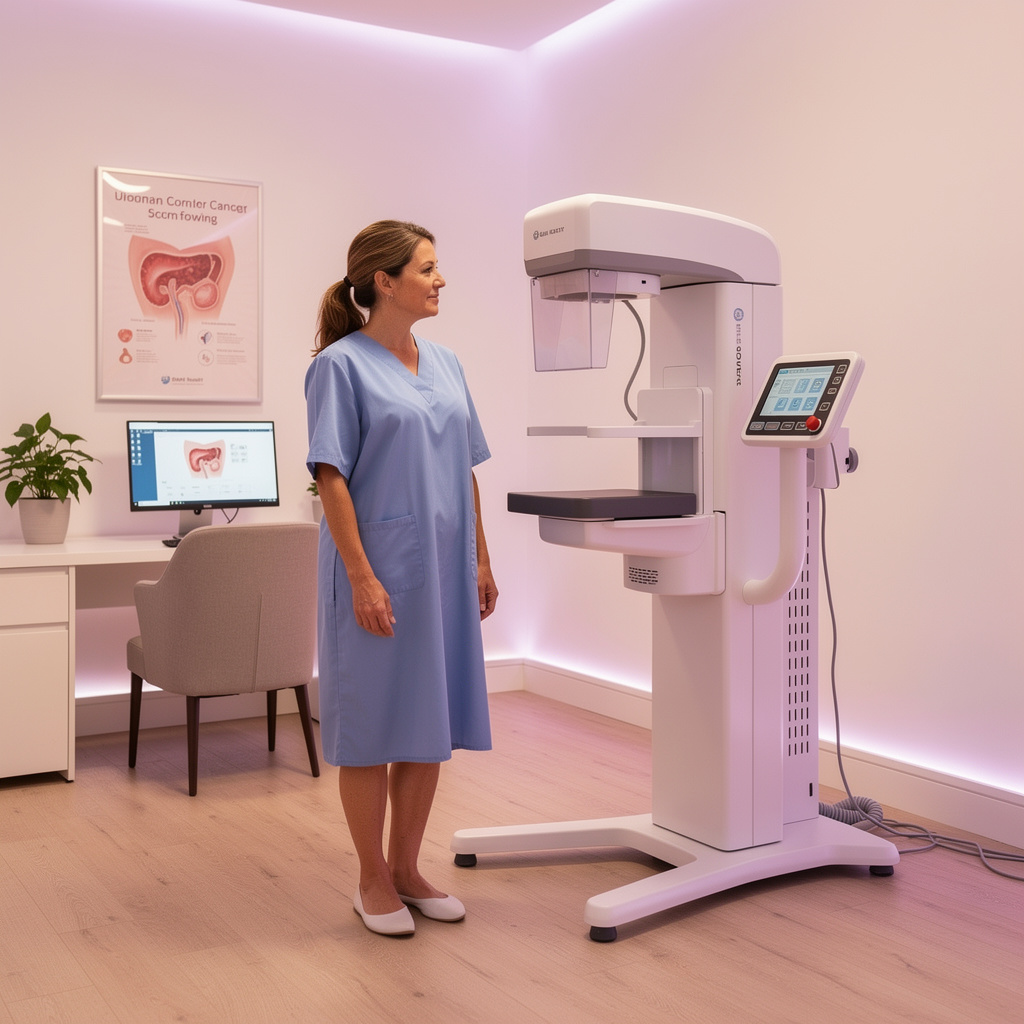
As women move through their 50s and beyond, several screenings become even more important.
Continue mammograms every 1 to 2 years through at least age 74. After 74, screening should be individualized based on your overall health status and life expectancy. Colorectal cancer screening should continue through age 75 (USPSTF Grade A for ages 50 to 75). For women ages 76 to 85, decisions should be individualized based on prior screening history, health status, and personal preference.
The USPSTF recommends bone density screening (DXA scan) starting at age 65 for all women (Grade B). Earlier screening is appropriate for postmenopausal women under 65 who have risk factors, including parental hip fracture, smoking, low body weight, excess alcohol use, or rheumatoid arthritis. One in three women over 50 will experience an osteoporosis-related fracture, making early detection critical.
Annual low-dose CT lung cancer screening is recommended for women ages 50 to 80 with a 20 pack-year smoking history who currently smoke or quit within the past 15 years (USPSTF). After menopause, cardiovascular risk increases significantly due to estrogen decline, making lipid panels, blood pressure monitoring, and blood glucose testing even more critical.
Use this table as a quick reference to know which screenings are due based on your age:
| Screening Test | Age to Start | Frequency | What It Checks |
|---|---|---|---|
| Blood Pressure | 18+ (at every visit) | Annually if normal | Heart health, stroke risk |
| Cholesterol (Lipid Panel) | 20-25 (baseline) | Every 4-6 years | Heart disease risk |
| Pap Smear (Cervical Cytology) | 21 | Every 3 years (ages 21-29) | Cervical cancer |
| hrHPV Testing | 30 | Every 5 years (preferred) | HPV-related cervical cancer risk |
| Pap + HPV Co-testing | 30 | Every 5 years | Cervical cancer |
| Mammogram | 40 | Every 1-2 years | Breast cancer |
| Colorectal Cancer Screening | 45 | Colonoscopy every 10 years or stool test every 1-3 years | Colon cancer |
| Diabetes Screening (Blood Glucose/A1C) | 35 (sooner if risk factors) | Every 3 years | Blood sugar, diabetes risk |
| Bone Density (DXA) | 65 (sooner if risk factors) | Every 2 years | Osteoporosis |
| Lung Cancer (Low-Dose CT) | 50 (for smokers) | Annually | Lung cancer |
| Depression/Anxiety Screening | Adolescence+ | Annually | Mental health |
| STI Screening | When sexually active | Annually or based on risk | Chlamydia, gonorrhea, HIV, etc. |
Conventional screenings like mammograms, Pap smears, and blood work are essential. They should never be skipped. But an integrative approach to women’s health asks a deeper question: what conditions allowed this symptom pattern to develop in the first place?
Naturopathic medicine views screenings as one piece of a larger picture that includes nutrition, stress, sleep, hormone balance, and environmental exposures. An integrative provider looks beyond which test matches a symptom, asking what functional patterns might be driving your risk.
An integrative approach may also recommend functional lab testing for deeper insight, such as advanced lipid panels (Lp(a), ApoB), fasting insulin, vitamin D levels, omega-3 index, comprehensive thyroid panels, and hormone panels. If cholesterol comes back borderline, an integrative provider looks at inflammation markers, diet quality, and gut health, not just a statin prescription.
Telemedicine makes these conversations more accessible than ever. Infusion Health offers specialized lab testing and telemedicine consultations to help women interpret results through an integrative lens and build a personalized plan.
The connection between stress and hormonal health is another area where an integrative perspective adds value. Chronic stress affects cortisol, thyroid function, and reproductive hormones, all of which influence your screening results and overall health.

If 59% of Americans skipped a recommended preventive screening in 2025, there are real barriers standing in the way. Here are the most common ones and how to address them:
Cost and Insurance: Most preventive screenings are covered without cost-sharing under the Affordable Care Act, including well-woman visits, mammograms, Pap smears, and colonoscopies. For uninsured women, the CDC’s National Breast and Cervical Cancer Early Detection Program (NBCCEDP) offers free mammograms and cervical cancer screening. Do not let cost stop you from getting screened.
Fear and Anxiety: Many women avoid screenings because they are nervous about pain (mammograms, for example) or anxious about results. Frame screenings as empowerment: catching something early is always better than catching it late. Talk to your provider about what to expect so there are no surprises.
Time: Well-woman visits are designed to be efficient, and telemedicine options like Infusion Health’s telemedicine consultation make consultations more accessible for busy schedules. A screening conversation can happen from your living room.
Not Knowing What You Need: This guide exists to solve that problem. Bring the screening reference table to your next appointment and discuss it with your provider. Menstrual health and overall well-being are connected, and your provider can help you understand which screenings matter most for your specific situation.
Cultural and Language Barriers: Many clinics offer interpretation services. Ask for what you need. Every woman deserves access to preventive care in a way that is comfortable and respectful.
A little preparation goes a long way toward making your screening appointment productive and stress-free:
Ready to take the next step? Explore specialized lab testing or schedule a telemedicine consultation with Infusion Health to build a preventive care plan that works for your life.
Women in their 30s need cervical cancer screening (Pap every 3 years or HPV testing every 5 years), blood pressure checks, cholesterol screening every 4 to 6 years, diabetes screening starting at age 35 if overweight, and mental health screening. Thyroid function should be discussed if symptoms like fatigue, weight changes, or hair thinning are present.
The USPSTF recommends that all women at average risk start mammography screening at age 40, with screening every two years through age 74. The HRSA/WPSI guidelines recommend initiating mammography no earlier than age 40 and no later than age 50, with screening at least every two years and as frequently as annually. Women with high-risk factors like BRCA mutations may need to start earlier.
A well-woman visit includes a health history review, blood pressure check, physical exam, discussion of risk factors, age-appropriate screening recommendations, immunizations, and counseling on lifestyle, reproductive health, and mental health. It is designed as dedicated preventive time with your provider.
It depends on the screening and your age. Blood pressure should be checked annually, cholesterol every 4 to 6 years starting in your 20s, Pap smears every 3 to 5 years, mammograms every 1 to 2 years starting at 40, and colorectal screening every 10 years starting at 45. See the screening reference table in this guide for a complete breakdown.
Under the Affordable Care Act, most preventive screenings for women are covered without cost-sharing, including well-woman visits, mammograms, Pap smears, HPV testing, contraception, and immunizations. Check with your specific plan for details, and ask about the CDC’s NBCCEDP program if you are uninsured.
A Pap smear (cervical cytology) looks for abnormal cell changes on the cervix that could become cancerous. An HPV test checks for the presence of high-risk human papillomavirus strains that cause cervical cancer. For women 30 and older, HRSA now recommends primary hrHPV testing every 5 years as the preferred screening method.
Yes. The USPSTF updated its guidelines in 2024 to recommend that all women at average risk begin biennial mammography at age 40. Talk to your provider about whether annual or biennial screening is right for you based on your breast density, family history, and personal preference.
A routine checkup typically includes blood pressure measurement, weight and BMI, a physical exam, and age-appropriate screenings such as cervical cancer screening, cholesterol testing, and blood glucose testing. Your provider may also discuss mental health, diet, exercise, sexual health, and any symptoms you are experiencing.