30+ Years
of Medical Experience

This content is for informational purposes only and does not constitute medical advice. Always consult with a qualified healthcare provider before making decisions about your health.
Written by Dr. Kevin Wallace, ND, Naturopathic Physician at Infusion Health. Dr. Wallace specializes in cardiovascular and cognitive wellness, helping patients optimize heart and brain health through evidence-based naturopathic care.
Your heart and your brain are more closely connected than you might think. Every beat sends a surge of oxygen-rich blood to your brain, fueling the neurons that power your thoughts, memories, and emotions. When your cardiovascular health is strong, your brain thrives. When it declines, your brain is often the first organ to feel the consequences.
In this guide, we will explore how cardiovascular health affects brain aging, why blood flow matters for cognitive function, and what you can do starting today to protect both your heart and your mind.
Your brain makes up only about 2% of your body weight, yet it consumes roughly 20% of your total blood supply. That enormous demand exists for good reason: every neuron depends on a constant delivery of oxygen, glucose, and nutrients carried by your bloodstream.
When your heart pumps efficiently and your blood vessels remain flexible, your brain receives everything it needs to operate at its best. But when cardiovascular health declines, through arterial stiffness, plaque buildup, or chronic high blood pressure, that delivery system starts to falter. Protecting your heart means protecting your brain, and the steps you take now can shape your cognitive health for decades.
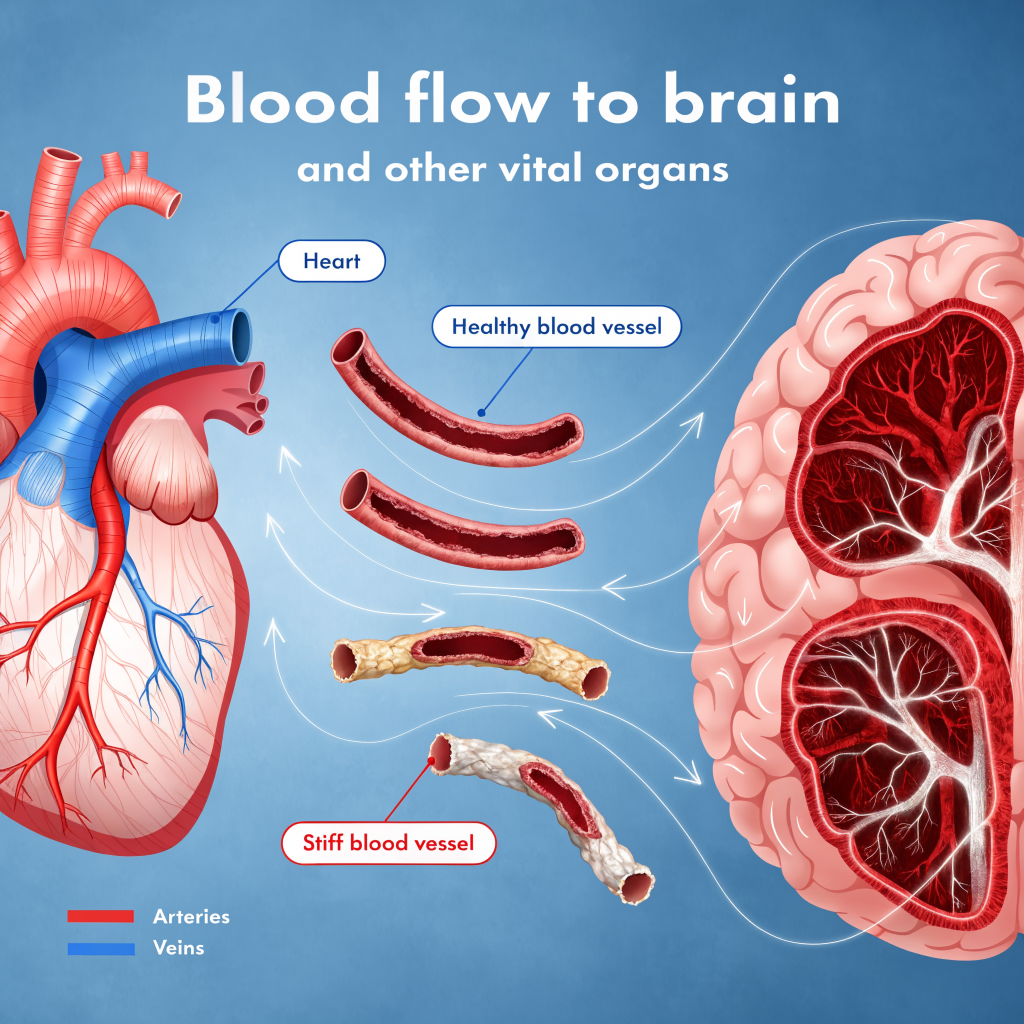
Cerebral blood flow naturally decreases with age, but cardiovascular disease accelerates this decline dramatically. Healthy blood vessels are elastic and responsive, expanding and contracting with each heartbeat to meet your brain’s shifting demands. As risk factors like hypertension, diabetes, or high cholesterol accumulate, these vessels stiffen, delivering less oxygen and fewer nutrients while allowing metabolic waste to build up.
Researchers have introduced the concept of a “brain age gap,” measuring the difference between your brain’s biological age and chronological age. Studies using data from the National Institute on Aging (NIA) have shown that poor vascular health can make your brain appear biologically older than it actually is.
A 2026 study published in Neurobiology of Aging confirmed that cardiovascular risk factors are independently associated with accelerated brain aging. This underscores a powerful truth: supporting brain function through targeted nutrients and lifestyle changes is essential.
Hypertension is one of the most significant modifiable risk factors for cognitive decline and dementia. Chronically elevated blood pressure damages the tiny blood vessels deep within your brain, causing microbleeds, white matter lesions, and reduced cerebral blood flow that erode neural integrity over time.
The American Heart Association (AHA) has published scientific statements emphasizing that midlife hypertension dramatically increases dementia risk later in life. The CDC identifies uncontrolled blood pressure as a leading contributor to cognitive impairment.
The encouraging news is that blood pressure is highly treatable. Controlling hypertension in your 30s and 40s can significantly reduce long-term cognitive decline risk. A comprehensive health optimization and lab testing approach can help you understand your full cardiovascular risk picture.
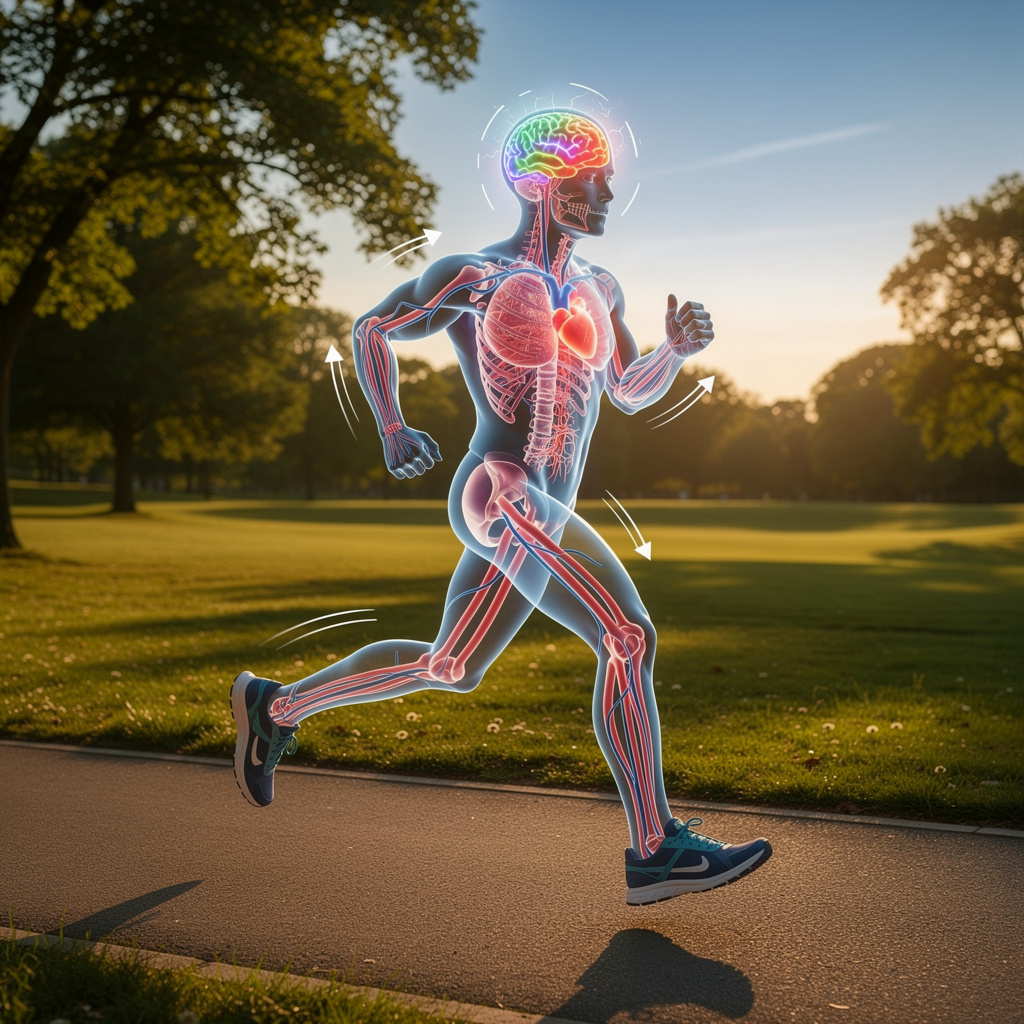
Cardiovascular exercise is one of the most consistently effective interventions for both heart and brain health. It increases blood flow to the brain and triggers a cascade of biological processes that protect and rejuvenate neural tissue.
Research from the NIA demonstrates that aerobic exercise boosts hippocampal volume, the size of your brain’s memory center, effectively reversing part of the age-related shrinkage trajectory. Exercise also stimulates neurogenesis, the growth of new brain cells, and increases BDNF (brain-derived neurotrophic factor), a protein that supports neuronal survival.
A large-scale study in Frontiers in Aging Neuroscience, involving over 40,000 participants, found that vascular risk factors modifiable through exercise are strongly associated with cognitive-motor decline. Even modest improvements in cardiovascular fitness produce measurable brain benefits, especially after age 40.
The baseline recommendation is 150 minutes of moderate aerobic activity per week, roughly 30 minutes five days a week. But the benefits are not all-or-nothing. Even 20-minute daily walks make a measurable difference, particularly for people who are currently inactive. The key is consistency. Daily habits that support both mental and physical fitness compound over time.
Specific nutrients play critical roles in supporting both cardiovascular and cognitive function. These are not optional extras; they are essential components of the biological machinery that keeps your heart pumping and your brain firing.
DHA makes up approximately 40% of the total fatty acids in your brain. Research from the NIH Office of Dietary Supplements shows that higher omega-3 levels correlate with larger brain volume and better cognitive test scores. The Framingham Offspring cohort study found that higher red blood cell omega-3 levels were associated with preserved brain structure, supporting omega-3 brain aging prevention as a well-backed strategy.
B vitamins regulate homocysteine, an amino acid that damages blood vessel walls when elevated, increasing cardiovascular disease and dementia risk. Magnesium supports vascular relaxation and cerebral blood flow regulation. CoQ10 is vital for mitochondrial energy production in heart and brain cells, with levels declining naturally with age and statin use. Vitamin D deficiency has been linked to both cardiovascular disease and cognitive impairment.
These are the vitamins for brain and heart health that form the nutritional foundation of cognitive aging prevention. Getting enough through diet alone can be challenging, which is where targeted supplementation or professional nutrient therapy becomes valuable.

If you are already thinking about optimizing your nutrient levels, there is a delivery method that bypasses the limitations of oral supplements: IV nutrient therapy.
Oral supplements face significant absorption barriers, including digestive breakdown, liver filtration, and limited gut absorption, resulting in roughly 20% bioavailability on average. IV therapy delivers nutrients directly into your bloodstream, achieving 100% bioavailability and therapeutic blood levels that oral supplements cannot match.
NAD+, or nicotinamide adenine dinucleotide, is a coenzyme essential for cellular energy production and DNA repair. NAD+ levels naturally decline with age, and emerging research links this depletion to accelerated aging in both cardiovascular and neural tissues. Restoring NAD+ through targeted IV therapy supports cellular energy production in heart muscle and neurons.
High-dose B vitamin infusions support neurotransmitter production and energy metabolism. Glutathione, the body’s master antioxidant, protects both vascular endothelium and brain cells from oxidative stress, one of the key drivers of aging in both organs.
IV nutrient therapies are complementary to lifestyle changes, not replacements. They are accelerators designed to optimize nutrient delivery. Our patients at Infusion Health frequently report improved energy and mental clarity after beginning targeted nutrient therapy protocols. At Infusion Health, our IV vitamin infusion therapy programs support both cardiovascular and cognitive health as part of a comprehensive wellness strategy.

Beyond exercise and nutrients, several daily habits have a measurable impact on both cardiovascular and cognitive health.
Sleep is not passive rest. It is an active period during which your brain clears metabolic waste through the glymphatic system. Poor sleep increases blood pressure and disrupts this critical cleaning process. The AHA’s “Life’s Essential 8” framework recognizes sleep as a cardiovascular health metric, confirming what research has long shown: sleep is foundational to both heart and brain health.
Chronic stress elevates cortisol, which damages the hippocampus and increases cardiovascular strain. Practices like meditation, breathwork, and the use of adaptogens for stress and cognitive support can help. Digital detox strategies to reduce cognitive overload can lower the constant low-level stress many people experience from screen-heavy lifestyles.
Social isolation is also an independent risk factor for both cardiovascular disease and dementia. Your brain is a social organ that thrives on engagement and meaningful connection. Nurturing your relationships supports your brain’s long-term structural health as much as any supplement.
The Mediterranean diet pattern, rich in omega-3 fatty acids, polyphenols, fiber, and antioxidants, has been consistently associated with better cardiovascular and cognitive outcomes. It is not about rigid rules; it is about emphasizing whole, nutrient-dense foods that support the systems your heart and brain depend on.
The most important takeaway is that small, consistent habits matter more than dramatic overhauls. Start with one change and build from there.
Some signs warrant professional evaluation, and it is always better to address them early. Persistent brain fog, memory changes affecting daily life, unexplained fatigue, shortness of breath during normal activities, or consistently elevated blood pressure readings are signals that your cardiovascular and cognitive health deserve a closer look.
Comprehensive lab testing can assess nutrient levels, inflammatory markers, and cardiovascular risk factors. Tests like homocysteine levels, lipid panels, and high-sensitivity C-reactive protein (hs-CRP) provide a much more complete picture than standard screenings alone. A naturopathic approach looks at the whole picture rather than treating symptoms in isolation.
At Infusion Health, our telemedicine consultations make it easy to get started, and we offer comprehensive lab testing to assess your heart and brain health markers.
The evidence is clear: cardiovascular health and brain health are inseparable. Every choice you make that benefits your heart, from controlling blood pressure to staying active to optimizing nutrient levels, also benefits your brain. And every cognitive habit you cultivate supports your cardiovascular system in return.
Here are three things you can act on today:
Research consistently confirms that what is good for your heart is good for your brain. The earlier you start, the better your long-term outcomes. Ready to take a proactive approach? Schedule your telemedicine consultation with Infusion Health to explore how IV nutrient therapy, NAD+ therapy, and comprehensive lab testing can support your journey to a healthier heart and a sharper mind.
High blood pressure damages the small blood vessels in your brain, causing microbleeds and reduced blood flow that accelerate cognitive decline and increase dementia risk.
Yes. Improving cardiovascular health through exercise, diet, blood pressure control, and nutrient optimization can slow cognitive decline and may improve memory function.
Omega-3 fatty acids (DHA and EPA), B vitamins (B6, B12, folate), magnesium, CoQ10, and vitamin D all play critical roles in both cardiovascular function and cognitive health.
Yes. Aerobic exercise increases blood flow to the brain, stimulates the growth of new neurons, and preserves myelin, the protective coating around neural pathways.
IV therapy delivers nutrients directly into the bloodstream at 100% bioavailability, correcting deficiencies that affect both heart and brain function.