30+ Years
of Medical Experience

Author: Dr. Kevin Wallace, ND | Reviewed by the Infusion Health Clinical Team
You know the feeling. You are exhausted no matter how much you sleep. The scale keeps creeping up even though your diet hasn’t changed. Your hair seems thinner, your brain feels foggy, and you can’t quite put your finger on what’s wrong. You wonder: is this just stress, or is something deeper going on with my thyroid?
Chronic stress affects thyroid function through multiple biological pathways. Sustained stress triggers cortisol release, which suppresses thyroid-stimulating hormone (TSH) production, impairs the conversion of inactive T4 to active T3, and can increase reverse T3 levels that block thyroid hormone from working. In some people, chronic stress also contributes to autoimmune thyroid attacks. The result is a cascade of thyroid disruption that often goes undiagnosed because standard lab tests miss the early signs.
In this guide, we’ll walk through how stress disrupts your thyroid at the hormonal level, the symptoms to watch for, why the cycle is so hard to break, and what you can do about it.
Your thyroid is the body’s metabolic master controller. This small, butterfly-shaped gland at the base of your neck produces hormones that regulate your energy levels, body temperature, heart rate, digestion, and metabolism. When your thyroid is functioning well, you barely notice it. When it’s not, everything feels harder.
Here is what people don’t realize: stress disrupts thyroid function through hormonal pathways. This isn’t a fringe theory or wellness trend. It’s supported by research published in journals including the National Institutes of Health (NIH) and the Mayo Clinic. The thyroid and stress response evolved to work together for short-term survival, but modern life keeps the stress switch stuck in the “on” position, and the thyroid pays the price.
People experience stress-related thyroid symptoms for months or years without realizing the two are connected. They attribute their fatigue to a busy schedule, their weight gain to aging, and their brain fog to burnout. Meanwhile, the underlying hormonal disruption continues unchecked. Understanding the stress-thyroid cascade is the first step toward breaking the cycle.
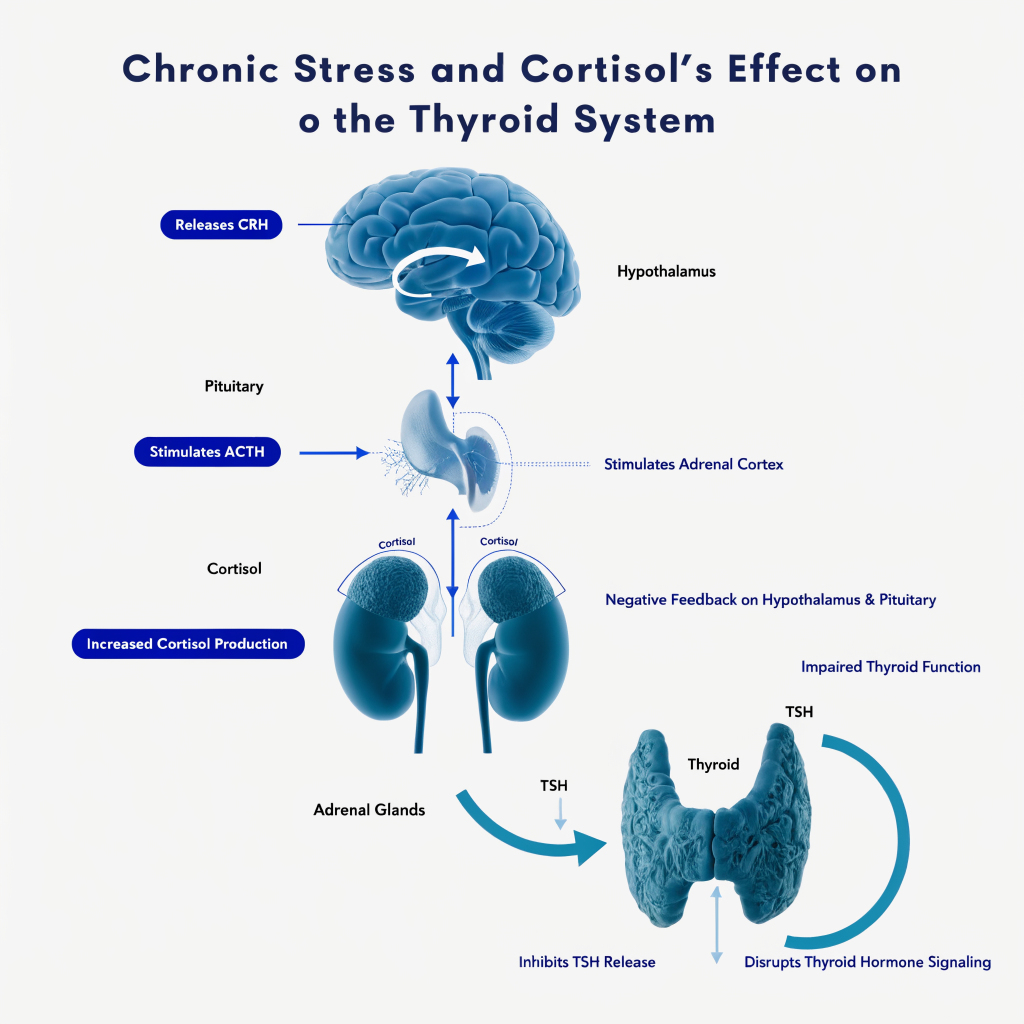
To understand how stress affects your thyroid, you need to know about the HPA axis. HPA stands for hypothalamus-pituitary-adrenal, and it’s your body’s command center for the stress response. Think of it like a fire alarm system in your home. When everything is working correctly, the alarm goes off when there’s a real fire, and then it turns off once the danger has passed.
When stress becomes chronic, the HPA axis stays activated long after the original stressor is gone. It keeps producing cortisol, your primary stress hormone, at elevated levels. Chronically elevated cortisol interferes with thyroid function at multiple points in the hormonal signaling chain.
Research shows that chronic HPA axis activation suppresses TSH production, reduces T4 to T3 conversion, and increases reverse T3, a form that blocks T3 from working. This is a direct, measurable biological pathway. For more on this connection, see our guide on thyroid and adrenal gland dysfunction.
This is where the science gets specific. Chronic stress doesn’t just “affect” your thyroid in a general sense. It disrupts thyroid function through three distinct mechanisms that compound each other over time. Understanding these pathways helps explain why thyroid symptoms can appear even when standard lab results come back “normal.”
TSH, or thyroid-stimulating hormone, is the signal your pituitary gland sends to your thyroid telling it to produce hormones. It’s the starting point of the entire thyroid production chain. When cortisol levels remain chronically elevated, the pituitary gland reduces TSH output. The thyroid never receives the signal it needs to do its job.
How does cortisol affect the thyroid? Elevated cortisol suppresses TSH release at the pituitary level, reducing the thyroid’s production of T4 and T3 hormones. Research shows that chronically high cortisol correlates with measurably lower TSH levels, meaning the thyroid is being starved of the stimulation it needs. This creates a hormonal hijack where stress hormones override the body’s normal thyroid signaling.
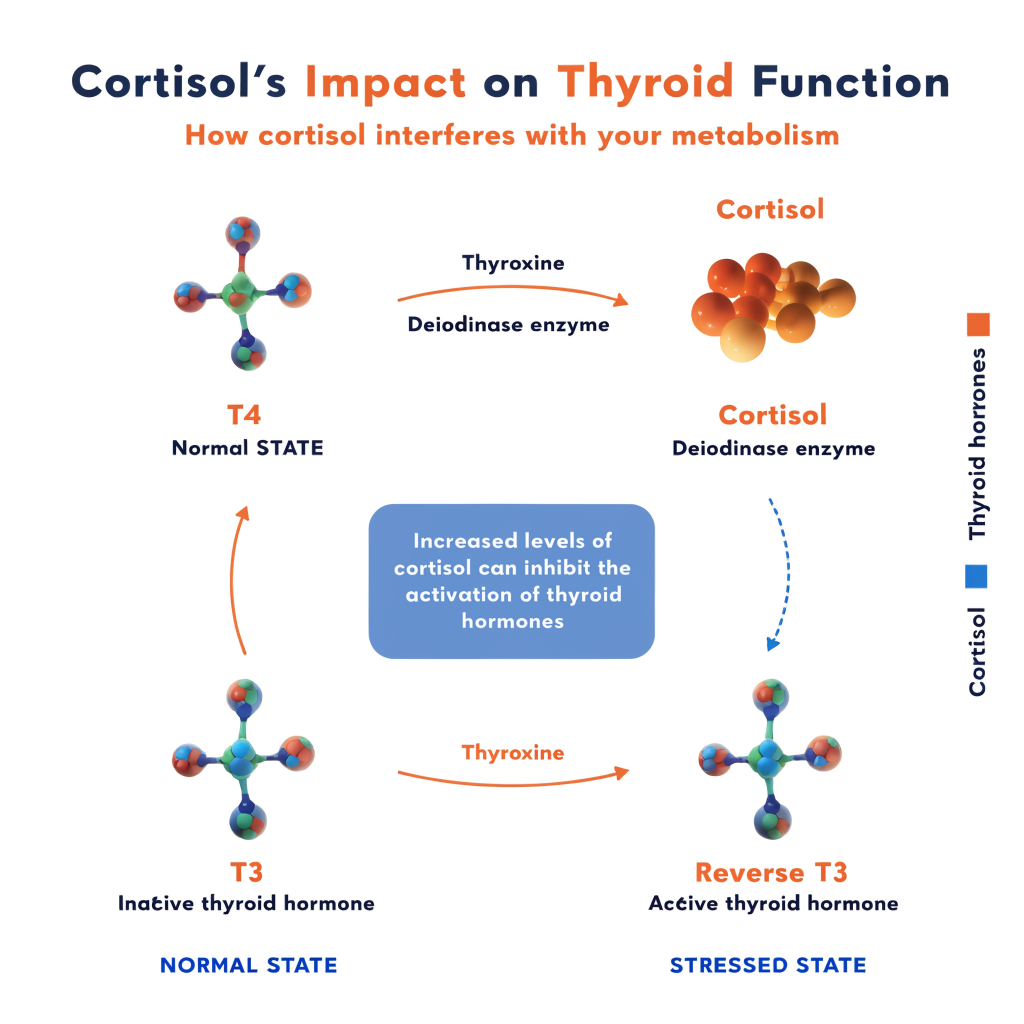
Here’s something that surprises many people: the thyroid produces mostly T4, which is an inactive hormone. Your body needs to convert T4 into T3, the active form that actually powers your metabolism. This conversion happens primarily in the liver and kidneys, and chronic stress significantly impairs it.
When cortisol stays elevated, the conversion process slows down. The result is a common but frequently missed problem: normal T4 levels on a standard lab test, but low T3. This is why so many people feel hypothyroid despite their doctor telling them their labs are “perfect.” The standard TSH test often misses this conversion problem entirely. Additionally, cortisol increases the production of reverse T3 (rT3), a form that actively blocks T3 from binding to cells. It’s like having a key that fits the lock but can’t turn because something is jammed in the way.
Stress doesn’t just slow the thyroid down. In some people, it can trigger the immune system to attack the thyroid itself. This is the mechanism behind Hashimoto’s thyroiditis, the most common cause of hypothyroidism in the United States. Cortisol dysregulation affects immune tolerance, which is the body’s ability to distinguish its own tissues from invaders. When that system breaks down, the immune system can launch an attack on the thyroid gland.
Can chronic stress cause Hashimoto’s? While stress alone doesn’t cause Hashimoto’s in people without genetic susceptibility, research shows it can trigger autoimmune thyroid disease in genetically predisposed individuals. People with existing Hashimoto’s have higher cortisol levels and more perceived stress, and stress can increase thyroid antibody levels, worsening the condition. For anyone with a family history of autoimmune thyroid disease, managing stress is a medical priority.
For a deeper look at how stress drives autoimmune responses, see our guide on how chronic stress influences autoimmune flare-ups.
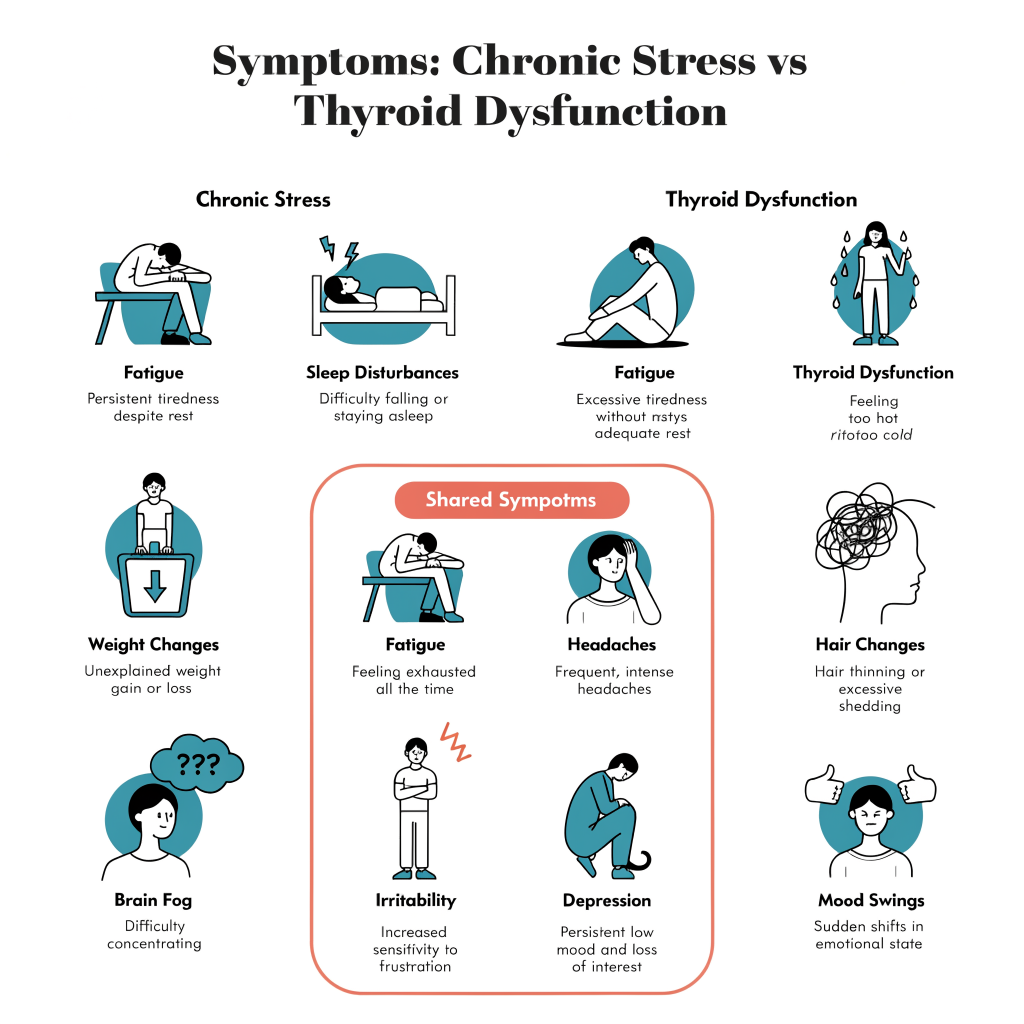
What are the symptoms of stress on the thyroid? The most common signs include unexplained fatigue, weight gain or difficulty losing weight, brain fog, sleep disturbances, hair thinning, mood changes, and digestive issues. These symptoms often overlap with both chronic stress and thyroid dysfunction, making it difficult to identify which is the root cause without proper testing.
One of the trickiest aspects of the stress-thyroid connection is that the symptoms look almost identical. Both chronic stress and thyroid dysfunction cause fatigue, weight changes, brain fog, sleep problems, and mood swings. This overlap is precisely why lab testing is essential. Here’s how to tell them apart:
| Symptom | More from Stress | More from Thyroid | Both |
|---|---|---|---|
| Fatigue | Adrenal fatigue pattern | Metabolic slowdown | Strong overlap |
| Weight gain | Cortisol-driven cravings | Slowed metabolism | Both contribute |
| Hair loss | Telogen effluvium (stress shedding) | Thyroid-related thinning | Both common |
| Cold intolerance | Less common | Very common | Thyroid-specific |
| Brain fog | Cortisol-driven | Reduced T3 to brain | Strong overlap |
| Rapid heartbeat | Anxiety response | Hyperthyroid symptom | Both possible |
| Digestive issues | Stress-related IBS | Hypothyroid constipation | Both common |
| Mood changes | Anxiety, irritability | Depression, apathy | Both present |
The key insight here is that the overlap is so significant that self-diagnosis is unreliable. If you’ve been dismissing your symptoms as “just stress” for weeks or months, it’s worth getting a comprehensive thyroid panel done. A standard TSH test often misses the picture. Request a full panel that includes TSH, Free T4, Free T3, reverse T3, and thyroid antibodies (TPO and TG antibodies) to get the complete picture.
Does stress make hypothyroidism worse? Yes, and here’s why: hypothyroidism reduces the body’s ability to produce adequate cortisol and manage the stress response. When thyroid function drops, your capacity to handle physical and emotional stressors decreases, which creates more stress, which further disrupts thyroid function. It’s a feedback loop that can feel impossible to escape.
This bidirectional relationship explains why treating only one side of the equation often feels incomplete.
Standard thyroid medication addresses hormone levels, but it doesn’t address the stress response that’s driving the disruption in the first place. This is why some people feel only partially better on medication. Breaking the cycle requires addressing both the thyroid and the stress response together, which is exactly the kind of comprehensive approach we take at Infusion Health. For more on how stress-driven hormonal cascades affect overall health, see our article on how stress-driven hormonal imbalance affects the body.
How do you fix thyroid problems caused by stress? The stress-thyroid cascade is not a one-way street. There are concrete, evidence-based steps you can take to protect your thyroid function and reduce the impact of chronic stress. These strategies work by targeting the HPA axis, supporting thyroid hormone production and conversion, and reducing the autoimmune trigger that stress can create.
Mindfulness and meditation. Regular meditation practice has been shown to reduce cortisol levels and improve thyroid function markers. Even 10 to 15 minutes daily can make a measurable difference in stress hormone levels over time.
Sleep optimization. Aim for 7 to 9 hours of consistent, quality sleep. Cortisol follows your circadian rhythm, and disrupted sleep directly increases cortisol production. Going to bed and waking up at the same time daily helps regulate both cortisol and thyroid hormone production.
Moderate exercise. Walking, yoga, swimming, and strength training help regulate cortisol and support thyroid function. The key word is moderate. Over-exercising can actually increase cortisol and worsen thyroid disruption. Listen to your body and avoid pushing through extreme fatigue.
Breathing techniques. Simple practices like the 4-7-8 breathing method (inhale for 4 seconds, hold for 7, exhale for 8) or box breathing (equal inhale, hold, exhale, and hold for 4 seconds each) activate the parasympathetic nervous system and reduce cortisol in minutes. These are especially useful during acute stress moments.
Certain nutrients play a critical role in supporting both adrenal function and thyroid health. Prioritizing these in your diet can help strengthen your body’s resilience to the stress-thyroid cascade:
Beyond individual nutrients, an anti-inflammatory, blood-sugar-stabilizing dietary pattern helps prevent cortisol spikes from high-sugar or high-carbohydrate meals. Reduce caffeine intake (which increases cortisol), limit alcohol (which disrupts sleep architecture), and minimize processed foods (which promote inflammation). For a complete guide to thyroid-supporting nutrition, see our article on thyroid-supporting foods.
Self-care strategies are powerful, but there are clear indicators that it’s time to seek professional evaluation:
A comprehensive approach that addresses both thyroid function and the stress response is a strong starting point. At Infusion Health, we combine hormone optimization, stress management support, and natural approaches to supporting thyroid health with personalized treatment plans. Our goal is not just to address symptoms, but to identify and resolve the underlying hormonal imbalances driving them.

The stress-thyroid connection is real, but it is manageable. You don’t have to overhaul your entire life overnight. Start with three small, actionable steps today:
We encourage you to schedule a consultation at Infusion Health for comprehensive hormone and thyroid assessment. Our team takes the time to listen, test thoroughly, and create a personalized plan that addresses both your thyroid function and the stress response driving the disruption. You can also learn more about hormone optimization and IV therapy options on our services page.
Your health isn’t broken. It’s just out of balance, and balance can be restored. Understanding the stress-thyroid cascade puts you ahead of the curve. The next step is action, and we’re here to help you take it.
This article is for informational purposes only and does not constitute medical advice. Always consult with a qualified healthcare provider before making changes to your treatment plan.