30+ Years
of Medical Experience

By Kevin Wallace, Wellness Writer at Infusion Health

The average American spends over seven hours a day staring at a screen. That is roughly half of every waking hour consumed by phones, laptops, tablets, and televisions. If you have ever looked up from your phone after an hour of mindless scrolling and wondered where the time went, you are not alone. The truth is, most of us are living in a state of digital overload, and it is quietly affecting our health, our sleep, and our relationships. The good news is that effective digital detox strategies exist, and they do not require you to throw your phone in a lake. This guide walks you through the science, the real benefits of stepping back, a complete digital detox plan, and practical steps you can start using today.
According to DataReportal’s Digital 2025 report, the average U.S. adult now spends approximately 7 hours per day on screens for personal use alone. That figure does not include work-related screen time, which for many remote workers adds another 6 to 8 hours. Health researchers have coined the term “techno-stress” to describe the toll of constant digital engagement. A 2023 BMC Public Health study found significant associations between high screen time and increased rates of anxiety, depression, and sleep disturbance. Sleep quality suffers when blue light suppresses melatonin production. Hormone balance can be disrupted by chronic stress, including the low-grade stress caused by constant connectivity.
The encouraging part: research shows that even small, consistent reductions in screen time lead to measurable improvements in mood, sleep, and cognitive function. You do not need a complete overhaul. You just need a plan.
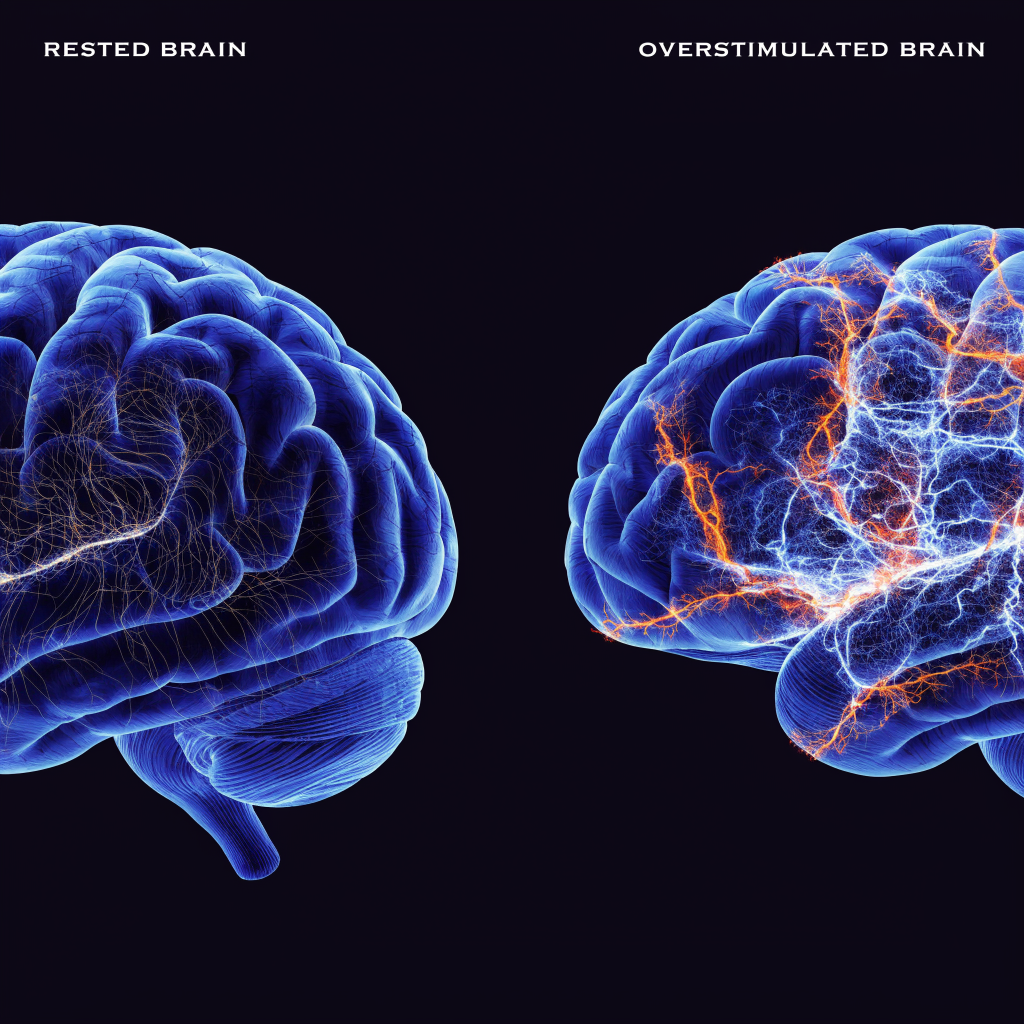
A digital detox is a period of intentional reduction or elimination of digital device use, including smartphones, computers, tablets, and social media, to reduce stress, improve focus, and reconnect with offline life. According to the Mayo Clinic, digital detoxes can help reduce anxiety and improve overall well-being.
It is important to understand what a digital detox is not. It is not about quitting technology forever. It is not anti-tech, and it is not a punishment for bad habits. A digital detox is simply about creating a more intentional relationship with your devices. Research from Georgetown University Health Library confirms that even short periods of reduced screen time produce meaningful mental health benefits. The key is consistency, not perfection.
Here are seven science-backed benefits of reducing screen time:
1. Better Sleep Quality: Reduced blue light exposure supports your body’s natural melatonin production. A Harvard Health review found that evening blue light shifts circadian rhythms by up to 90 minutes, significantly delaying sleep.
2. Reduced Anxiety and Stress: A digital detox for mental health can significantly reduce cortisol levels. The APA’s 2023 Stress in America survey found that constant digital connectivity was among the leading contributors to chronic stress, with reduced screen time linked to lower anxiety and improved emotional regulation.
3. Improved Focus: Fewer distractions allow deeper concentration. Research on attention residue shows that switching between tasks fragments your ability to think clearly. Reducing digital interruptions supports cognitive function and mental clarity.
4. Healthier Relationships: Quality presence improves when devices are put away. Studies in Computers in Human Behavior found that “phubbing” (phone snubbing) during conversations significantly reduces relationship satisfaction.
5. Reduced Physical Strain: Less eye strain, fewer headaches, and improved posture. The American Optometric Association reports that digital eye strain affects up to 90% of people who use screens for more than 3 hours daily.
6. Better Mood: Social media use has been linked to comparison-driven anxiety. A NIH/PMC study found that reducing social media to 30 minutes per day significantly decreased loneliness and depression.
7. Greater Sense of Presence: Without constant distraction, the day feels longer and more fulfilling.
These are common experiences, not personal failures. If several sound familiar, it might be time to try some digital detox strategies:
☐ You reach for your phone within 5 minutes of waking up
☐ You feel anxious or experience “phantom vibrations” when your phone is not nearby
☐ You scroll while eating meals, alone or with others
☐ You have trouble falling asleep without watching something on your phone
☐ You check your phone during conversations or while stopped at a red light
☐ You feel a compulsion to check notifications immediately when they arrive
☐ Your screen time reports consistently exceed the goals you set
☐ You feel irritable or bored without access to your devices
☐ Social media use triggers feelings of envy, inadequacy, or frustration
☐ You have tried to reduce screen time before but struggled to stick with it
If you checked more than three of these, you are in good company. The awareness itself is the first step toward change.
Most digital detox advice sounds great on paper but falls apart in real life. Here are strategies designed for actual humans with actual responsibilities.
Do not try to overhaul your entire digital life overnight. Start with just 15 minutes of screen-free time daily. Set a timer, put your phone in another room, and choose an offline activity: stretch, read a few pages, step outside, or sit quietly. Fifteen minutes is achievable for nearly anyone, and it builds momentum.
Designate specific areas and times as device-free. The dining table and bedroom are two particularly impactful choices. Habit formation research shows that environmental cues strongly influence behavior. When your phone is physically absent, the temptation disappears with it. Try making the first hour of your day and the last hour before bed completely screen-free.
This single change can reduce phone-checking by up to 50%. Turn off all non-essential notifications. Only allow calls and messages from key contacts. Both iOS and Android have built-in Focus modes that let you create custom notification profiles for work, sleep, and personal time.
One effective approach is the “replace, do not remove” principle. When you take away scrolling, you create a void. Fill it with something enjoyable: stretching, journaling, calling a friend, taking a walk, or working on a hobby. When the urge to scroll hits, you will have a ready alternative instead of relying on willpower alone.
A digital sunset means setting a hard cut-off for screens 60 to 90 minutes before sleep. Blue light from screens suppresses melatonin, the hormone that signals your brain it is time to rest. A Harvard Health report found that evening blue light exposure can shift your circadian rhythm by up to 90 minutes. Replace screen time with a wind-down routine: read a physical book, do light stretching, or try a vitamin and mineral infusion designed to support restful sleep.

Your phone is designed to keep you engaged. Every bright color, notification badge, and infinite scroll feed is engineered to trigger dopamine responses. Fight back by switching to grayscale display, moving social media apps off your home screen, and setting app time limits. When your phone becomes boring, you naturally spend less time on it.
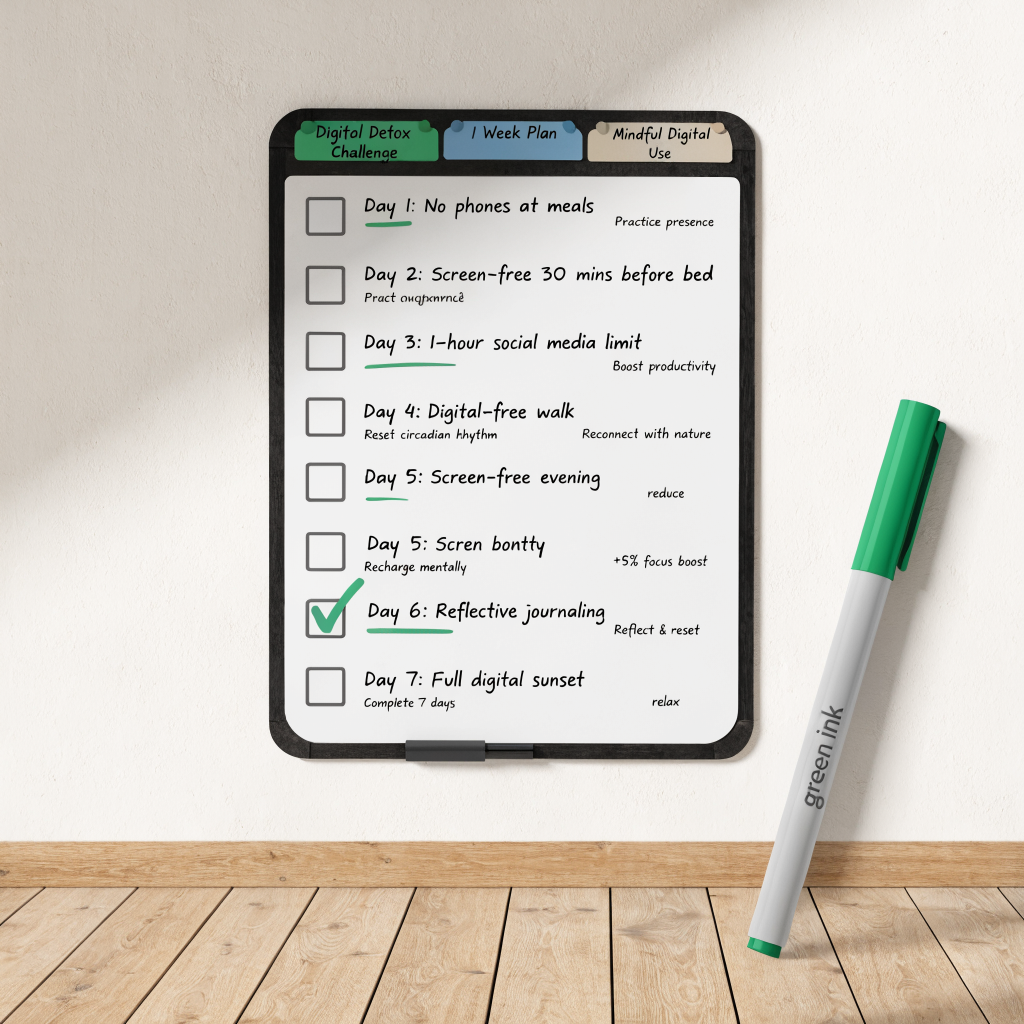
Ready to put these strategies into action? Here is a structured 7-day digital detox plan. This digital detox challenge is not about perfection. It is about building awareness and creating small, sustainable changes that last.

Do not change anything yet. Track your current usage with your phone’s built-in screen time tools (Screen Time on iOS or Digital Wellbeing on Android). Note which apps consume the most time, when you tend to scroll most, and how you feel after extended use. This baseline is your “before” snapshot.
Put three boundaries in place: phone-free zones in your bedroom and dining table, all non-essential notifications turned off, and a digital sunset 60 to 90 minutes before bedtime. These three changes alone can shift your relationship with your devices. Consider an IV therapy session to support your body’s natural rhythms during the adjustment.
Fill the newly empty time with intentional offline activities. Go for a walk without your phone. Have a device-free conversation with someone you care about. Read a physical book. Cook a meal without a recipe app. Journal about how the week has felt so far.
Review your screen time data from the week and compare it to your Day 1 baseline. What felt hard? What felt freeing? Which changes do you want to keep long-term? Pick one or two strategies that worked for you and commit to keeping them going.
There is no single ideal duration, but research suggests that even 24 to 48 hours of reduced screen time can produce measurable improvements in mood, focus, and sleep quality. What matters more than the length of any single detox is consistency over time. Fifteen minutes of daily screen-free time will always outperform one week of total abstinence followed by a return to old patterns.
The Georgetown University Health Library notes that benefits are most pronounced when reduced screen time becomes a sustained lifestyle change rather than a one-time event. Think of it like exercise: a single workout feels good, but real results come from showing up consistently.
Understanding why digital habits are so hard to break helps you work with your brain instead of against it.
Every notification, like, and message delivers a small hit of dopamine, the neurotransmitter associated with pleasure and reward. Your phone delivers these hits in a variable reward cycle, much like a slot machine. You do not know when the next like or message will arrive, so your brain keeps checking in anticipation. According to NIH/PMC research on dopamine and reward pathways, this intermittent reinforcement is a powerful driver of habitual behavior.
Constant connectivity keeps your cortisol levels elevated. Cortisol is your body’s primary stress hormone, and while it is useful in short bursts, chronically elevated cortisol is linked to weight gain, impaired immune function, anxiety, and disrupted sleep. Every notification and work email ping triggers a small stress response. Over hundreds of pings per day, those add up to a significant physiological burden.
Here is the hopeful part. After a period of reduced stimulation, your dopamine receptors become more sensitive. You start finding greater pleasure in smaller, more meaningful rewards: a real conversation, a walk in nature, a good meal. Researchers describe this as neural “rewiring,” and it is why digital detox strategies feel easier over time. The first few days are the hardest. After that, your brain begins to adapt. For additional support during this transition, NAD+ therapy supports cellular repair and mental clarity.
If you work from home, “just put your phone away” feels impossible. Digital detox strategies for professionals and screen time reduction tips for remote workers are not about avoiding screens entirely. They are about creating intentional separation between work mode and personal time.
Use the Pomodoro Technique to work in focused 25-minute sprints followed by 5-minute screen-free breaks. Create separate user profiles on your computer for work and personal use. Physically separate your workspace from your relaxation space. And establish an end-of-day ritual: close the laptop, put the phone in a drawer, and do something physical for 10 minutes. According to the Mayo Clinic, remote workers who establish clear boundaries between screen time and personal time report lower burnout rates and higher job satisfaction.
As you reduce digital stress and build healthier habits, your body may benefit from additional support. At Infusion Health, we offer wellness services that complement your digital detox journey:
NAD+ Therapy supports cognitive function and brain health, especially when your brain is adapting to less stimulation.
IV Therapy replenishes essential nutrients that support energy levels and overall wellness during lifestyle changes.
Hormone Optimization supports healthy cortisol regulation, directly affected by chronic digital stress.
Vitamin and Mineral Infusions can support sleep quality and eye health, two areas directly impacted by excessive screen time.
Ketamine Therapy is available for readers experiencing anxiety or depression linked to digital overload and burnout.
We offer these services to support your journey, not to replace the work you are doing on your own.
Digital wellness is not a destination. It is an ongoing practice of mindful technology use and small adjustments. Fifteen minutes of screen-free time today becomes an hour within a few weeks. A phone-free bedroom becomes deeper, more restful sleep. The path to a healthier relationship with technology starts with a single step.
Pick one strategy from this guide and try it this week. Maybe it is the 15-Minute Rule, the digital sunset, or the 7-Day Challenge. Every small step is a step toward a healthier relationship with technology.
Ready to take the next step? Contact Infusion Health to learn how our wellness services can support your digital detox journey. You can also explore more wellness insights on the Infusion Health blog.