30+ Years
of Medical Experience


If you are living with polycystic ovary syndrome (PCOS), you know the frustration all too well: irregular cycles, stubborn weight gain, mood swings, and the feeling that no one quite understands. You are not alone, and your symptoms are not something you simply have to live with.
Bioidentical hormone replacement therapy (BHRT) has emerged as a promising option for women with PCOS looking for a personalized, body-identical approach to hormone balance. But is it the right choice for you? In this guide, we will break down what BHRT is, how it addresses PCOS symptoms, and how it compares to traditional treatments.
PCOS affects approximately 1 in 10 women of reproductive age, yet many women feel dismissed when they bring their symptoms to a healthcare provider. If that has been your experience, we want you to know: your concerns are valid.
At its core, PCOS is a hormonal disorder, not just a reproductive issue. The key imbalances include elevated androgens, a disrupted LH to FSH ratio, and progesterone deficiency. These trigger irregular periods, weight gain, insulin resistance, and fertility challenges. At Infusion Health, addressing hormone imbalances is exactly what our hormone optimization program focuses on.
Bioidentical hormone replacement therapy (BHRT) uses hormones derived from plant sources (such as soy and wild yams) that are molecularly identical to the ones your body produces naturally. Your body recognizes and metabolizes these hormones the same way it does your own endogenous hormones.
This is a key distinction from conventional hormone replacement therapy (HRT) for PCOS, which often uses synthetic hormones like conjugated equine estrogens (Premarin) or medroxyprogesterone acetate (Provera). These have different molecular structures, leading to different metabolic pathways and side effect profiles. According to The Endocrine Society, bioidentical hormones are chemically identical to those produced by the human body, while synthetic hormones are not.
BHRT is not one-size-fits-all. Treatment is customized based on lab testing and individual symptoms. It is important to understand the distinction between FDA-approved bioidentical products (such as Estradiol and Prometrium) and compounded bioidentical hormones custom-made at compounding pharmacies. Both options can be effective, and the right choice depends on your clinical needs. Learn more about bioidentical hormone therapy and other treatments on our blog.
One of the most common questions we hear is, “Can hormone therapy actually help my PCOS?” The short answer is that BHRT can address several of the underlying hormonal imbalances that drive PCOS symptoms. Let us look at how it works for each major symptom cluster.
Progesterone therapy is often the first-line BHRT approach for women with PCOS. Bioidentical progesterone can help induce regular withdrawal bleeds, and estrogen may be added to balance the estrogen-to-progesterone ratio. The goal is to restore cyclic predictability, which also reduces the risk of endometrial hyperplasia when periods are absent for extended periods.
Hormone balance plays a significant role in metabolic function, and this is where hormone therapy for PCOS weight loss becomes relevant. Estrogen therapy may improve insulin sensitivity in some women, supporting better glucose metabolism. BHRT is not a standalone weight loss treatment, but it can remove the hormonal roadblocks that make weight management harder. Our medical weight loss program works alongside BHRT to help women with PCOS achieve sustainable results.
Hormonal fluctuations in PCOS directly affect neurotransmitter function, including serotonin and GABA. This is why so many women experience anxiety, mood swings, and depression that have a real biochemical basis. Progesterone has a calming effect through its metabolite allopregnanolone, which acts on GABA receptors, while estrogen supports serotonin production. Many women report noticeable improvements in mood stability once their hormones are optimized. If you are experiencing significant anxiety or depression, ketamine therapy may also benefit women with PCOS as part of a comprehensive mental health plan.
BHRT is not a fertility treatment, but hormone optimization can improve the hormonal environment for conception. Correcting progesterone deficiency supports luteal phase health, and lowering androgen dominance through estrogen balance may improve ovulation frequency. However, BHRT can be contraceptive at certain doses. If you are trying to conceive, you need a specialized fertility-focused protocol rather than a standard BHRT regimen. Working with an experienced provider who understands bioidentical hormones for PCOS fertility matters.
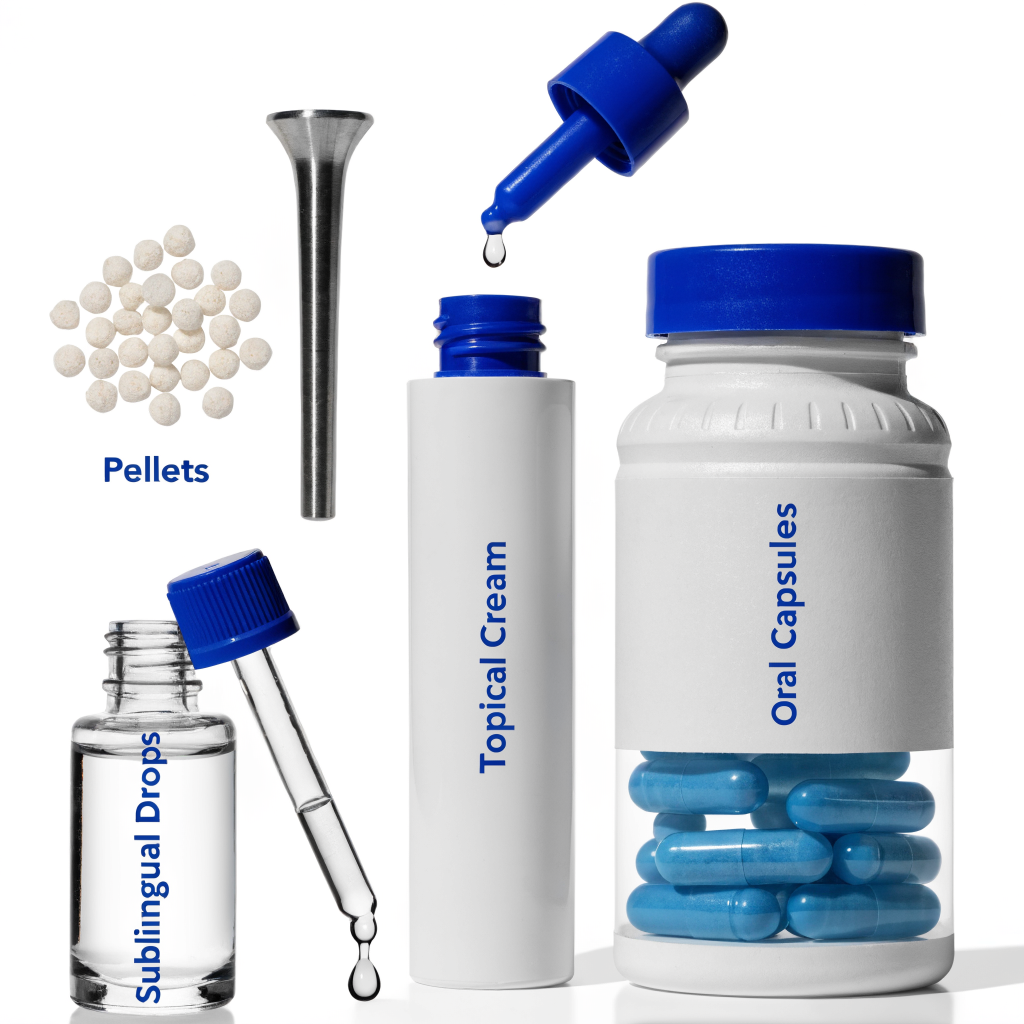
One of the practical advantages of BHRT is that it comes in several delivery methods, each with its own benefits. Here is a breakdown of the most common options:
| Method | How It Works | Pros | Ideal For |
|---|---|---|---|
| Pellets | Tiny pellets inserted under the skin, releasing hormones steadily for 3-6 months | Consistent levels, low maintenance | Women who want “set it and forget it” convenience |
| Topical Creams/Gels | Applied to skin daily | Flexible dosing, easy to adjust | Women early in treatment who are fine-tuning their dose |
| Oral Capsules | Taken by mouth (e.g., Prometrium, Estradiol) | Convenient, FDA-approved options available | Women who prefer oral medications |
| Sublingual Drops | Absorbed under the tongue | Fast absorption, bypasses liver processing | Those with digestive concerns or liver sensitivities |
Pellet therapy is particularly popular for PCOS patients because it provides steady hormone levels without daily attention, though it requires a minor in-office procedure every 3 to 6 months. Topical creams offer more flexibility and are often a good starting point for women new to BHRT. Your provider will help you determine which method aligns well with your needs and comfort level.
If you have been researching PCOS treatment options, you have probably encountered metformin and birth control pills as the standard recommendations. These work differently than BHRT, and understanding the distinctions helps you have a more informed conversation with your provider.
Metformin is a first-line treatment for PCOS, primarily targeting insulin resistance. It helps your body use insulin more effectively but does not replace the hormones PCOS patients are deficient in, such as progesterone or balanced estrogen. BHRT vs metformin PCOS is not an either/or question. These treatments are not mutually exclusive: metformin addresses the metabolic component while BHRT targets the hormone imbalance itself.
Birth control pills are the most commonly prescribed treatment for PCOS symptom management, working by suppressing ovulation and providing synthetic hormones. The key difference with BHRT vs birth control for PCOS is philosophical: birth control masks symptoms but does not address the underlying hormone imbalance. Many women prefer not to take birth control long-term, especially if they are trying to conceive. BHRT offers a more physiologically aligned approach by restoring the hormones your body is missing rather than introducing synthetic analogs.

Diet, exercise, and supplements like inositol, berberine, and omega-3 fatty acids are foundational for PCOS management. BHRT works well as part of a comprehensive approach, helping your lifestyle changes work better by stabilizing energy and improving metabolism. Some women also find complementary therapies like IV nutrient therapy and NAD+ therapy support their overall wellness while undergoing BHRT.
Here are some indicators that you could be a good candidate for BHRT as a PCOS hormone imbalance treatment:
BHRT is generally not recommended for women with hormone-sensitive cancers (breast, uterine, ovarian), active liver disease, or unexplained vaginal bleeding. These contraindications will be evaluated during your initial consultation.
If you have ever been told that your symptoms are “normal” or “just something to live with,” please know that you deserve a provider who takes your concerns seriously. BHRT may not be the answer for everyone, but it is worth exploring if you are looking for a more personalized approach to managing your PCOS.
One of the biggest sources of anxiety around starting treatment is not knowing what to expect. Here is a straightforward look at the BHRT journey.
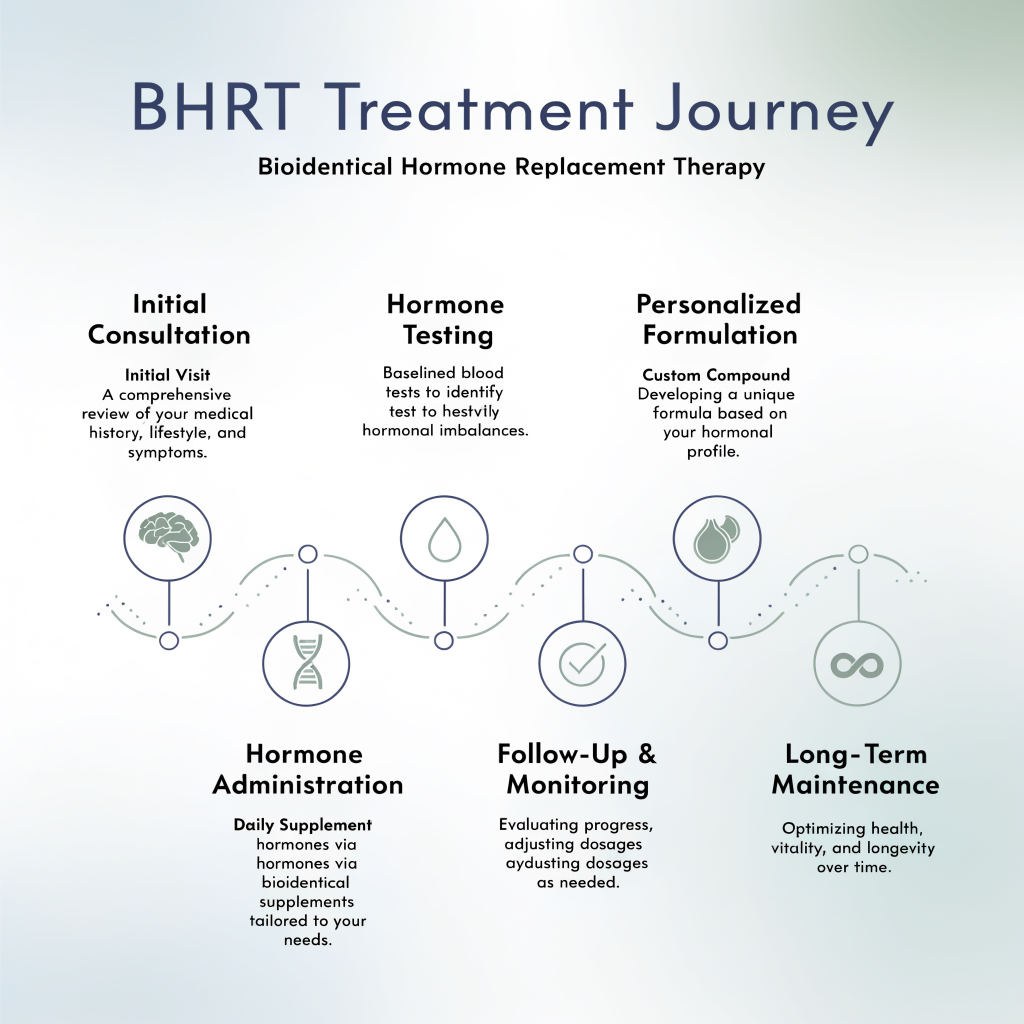
Many women find that supportive therapies like vitamin and mineral infusions help them feel well during the transition, especially if nutrient deficiencies contribute to fatigue.
We believe in transparency, so let us talk about what to watch for. BHRT can have side effects, though most are mild and manageable.
Common side effects during the dose adjustment period include temporary bloating, breast tenderness, and mild mood changes that typically resolve as your body adjusts. For pellet therapy, minor bruising or soreness at the insertion site usually resolves within 2 to 3 days.
Long-term considerations: Bioidentical hormones are generally considered safer than synthetic HRT, but long-term studies are still evolving. BHRT should always be prescribed and monitored by a qualified provider with regular blood work to prevent over-treatment. The North American Menopause Society (NAMS) notes that individual risk assessments are important. At Infusion Health, we monitor your hormone levels closely to keep you in your optimal range.

Can BHRT cure PCOS?
No, there is no cure for PCOS. BHRT helps manage symptoms by correcting underlying hormone imbalances and can significantly improve quality of life, but it does not eliminate the condition.
How long does it take for BHRT to work for PCOS symptoms?
Some women notice improvements in sleep, energy, and mood within 2 to 4 weeks. Menstrual cycle regulation often takes 2 to 3 cycles, while weight and metabolic changes typically require 3 to 6 months alongside lifestyle modifications.
Is BHRT safe for women with PCOS?
When prescribed and monitored by a qualified provider, BHRT is generally considered safe for appropriate candidates. Bioidentical hormones have a favorable safety profile compared to synthetic hormones, though BHRT is not recommended for women with certain hormone-sensitive cancers or other contraindications.
Will BHRT help me get pregnant with PCOS?
BHRT can improve the hormonal environment for conception but is not a fertility treatment. It can be contraceptive at certain doses, so if you are trying to conceive, a specialized fertility-focused protocol is needed.
Does BHRT help with PCOS weight gain?
Many women report improved weight management when hormone levels are balanced. Estrogen and progesterone play important roles in metabolism and insulin sensitivity. BHRT works well alongside a healthy diet, regular exercise, and potentially medical weight loss support.
What is the difference between BHRT and birth control for PCOS?
Birth control pills use synthetic hormones to suppress ovulation and regulate cycles. BHRT uses bioidentical hormones that match what your body naturally produces. Birth control masks symptoms, while BHRT aims to restore balance.
Can I take BHRT with metformin for PCOS?
Yes, these are often used together. Metformin addresses insulin resistance while BHRT corrects hormone imbalances. Many women find the combination more effective than either treatment alone.
Does insurance cover BHRT for PCOS?
Coverage varies. FDA-approved bioidentical products like Prometrium may be covered, while compounded hormones typically are not. Check with your insurance provider for specifics.
BHRT offers a promising, personalized approach to managing PCOS symptoms by addressing hormone imbalances at their source. It is not a magic cure, and it is not the right fit for everyone. But for many women with PCOS who have not found relief with conventional treatments alone, it can be a meaningful step toward feeling like themselves again.
Every woman’s hormone profile is unique. If you are ready to explore what bioidentical hormone replacement therapy for PCOS could look like for you, or have questions about hormone replacement therapy for PCOS in general, we would love to help.
Ready to find out if BHRT could help you feel like yourself again? Schedule a consultation with our hormone optimization team today for comprehensive hormone testing and a personalized treatment plan.