30+ Years
of Medical Experience

If you have been dealing with chronic stress, mental fatigue, or that stubborn brain fog that just will not lift, you are not alone. Research shows that 55% of Americans report feeling stressed daily, and cognitive fatigue has become one of the most common complaints in primary care visits. The search for adaptogens for stress and cognitive support has exploded in recent years, with the global adaptogen supplement market projected to reach billions of dollars by 2028.
Most people know adaptogens exist. They have seen them on supplement shelves or heard about them on wellness podcasts. What they do not always know is which ones actually work, how to take them properly, or how they fit into a broader wellness plan alongside clinical treatments like IV therapy and NAD+ therapy.
This guide bridges that gap. We will walk you through the science behind adaptogens for stress and cognitive support, highlight the specific herbs with the strongest evidence, and show you how to build a personalized plan that works with your body. Whether you are struggling with cognitive fatigue from screen overload or dealing with the weight of daily stress, there is likely an adaptogen that can help.
Adaptogens are a unique class of herbs that help the body adapt to physical, chemical, and biological stressors. The term was coined by Soviet scientist Dr. Nikolai Lazarev in 1947 and formalized by the Soviet Ministry of Health in 1969, though their use in Ayurvedic and Traditional Chinese Medicine dates back thousands of years.
According to a comprehensive review in Pharmaceuticals, adaptogens must meet three specific criteria (Panossian et al., 2021): they must be nonspecific (increasing resistance to multiple stressors), normalizing (bringing stressed systems back to baseline), and non-toxic (safe for long-term use). The Cleveland Clinic explains that adaptogens help the body maintain equilibrium rather than swinging between extremes.
Unlike stimulants that artificially boost energy and leave you crashing, adaptogens work with your body’s natural stress response systems. They are supportive allies rather than temporary fixes. For a broader look at nutrition for brain health, see our guide to brain-boosting nutrients and diets for cognitive health.
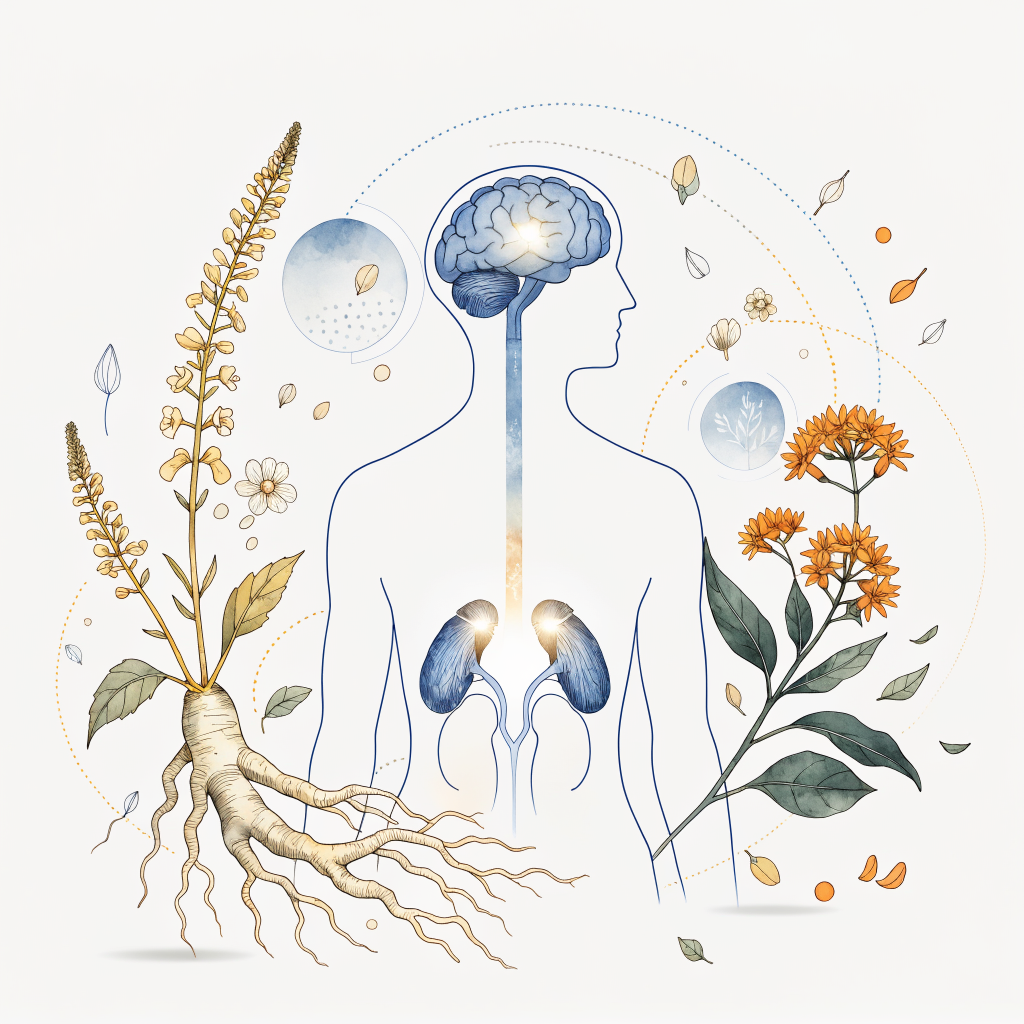
Cortisol, the body’s primary stress hormone, is useful in acute situations but harmful when chronically elevated. Sustained high cortisol has been linked to impaired memory, disrupted sleep, weight gain, and immune suppression (Harvard Health). Adaptogens address this through several mechanisms: they modulate the HPA axis (hypothalamic-pituitary-adrenal axis, the body’s central stress response system), normalize cortisol levels, activate cellular protection pathways, and influence neurotransmitters like serotonin, dopamine, and GABA.
A key concept is the difference between eustress (positive, motivating stress) and distress (harmful, depleting stress). Adaptogens help your body distinguish between the two. They are not sedatives or stimulants: they are stress normalizers. Think of them as a thermostat for your stress response, not a light switch, supporting resilience over time rather than offering a quick fix.
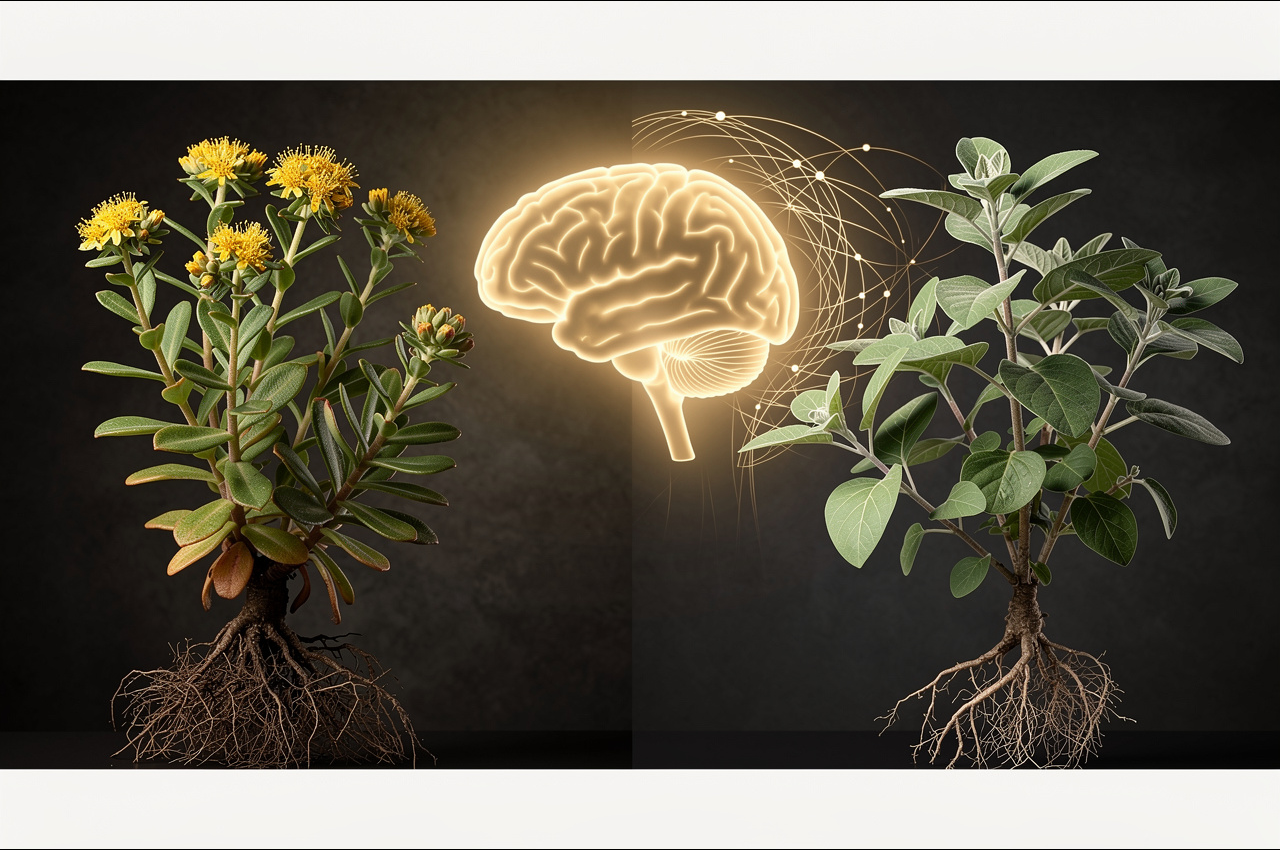
Not all adaptogens are created equal when it comes to managing stress. Here are the three with the strongest evidence.
Ashwagandha is the most well-studied adaptogen for stress. A landmark 60-day randomized, double-blind, placebo-controlled trial found that participants taking ashwagandha experienced a 27.9% reduction in serum cortisol levels, compared to just 4.5% in the placebo group (Chandrasekhar et al., 2012).
Best for: Chronic stress, anxiety, cortisol reduction, and sleep quality. Ashwagandha reduces HPA axis hyperactivity and improves GABA receptor function. If sleep is a concern, you may also want to explore magnesium for restful sleep.
How to take it: 300 to 600 mg daily of a standardized extract (5%+ withanolides). Effects appear within 2 to 4 weeks. Avoid during pregnancy and check with your provider if you take thyroid medications or sedatives.
Holy basil, known as Tulsi in Ayurvedic medicine, has been used for centuries as a rasayana (rejuvenative) herb. It is particularly effective for emotional stress and the mental clarity challenges that accompany it, reducing stress-induced physiological changes and supporting adrenal function.
Best for: Emotional stress, mental clarity, and immune support during stressful periods. How to take it: 300 to 600 mg daily of a standardized extract.
Rhodiola rosea combats stress-related fatigue while improving cognitive performance. A study in Phytomedicine showed that rhodiola significantly reduced mental fatigue and improved cognitive performance in participants under stressful conditions (Darbinyan et al., 2000).
Best for: Stress-related fatigue, burnout, and physical endurance. How to take it: 200 to 600 mg daily (standardized to 3% rosavins + 1% salidroside). Rhodiola is energizing, so avoid it in the evening. Effects tend to appear faster than ashwagandha, within days to two weeks.
These three are the strongest for stress relief, but the adaptogens most effective for stress and brain performance are those that address both stress and cognition simultaneously, as we will explore next.
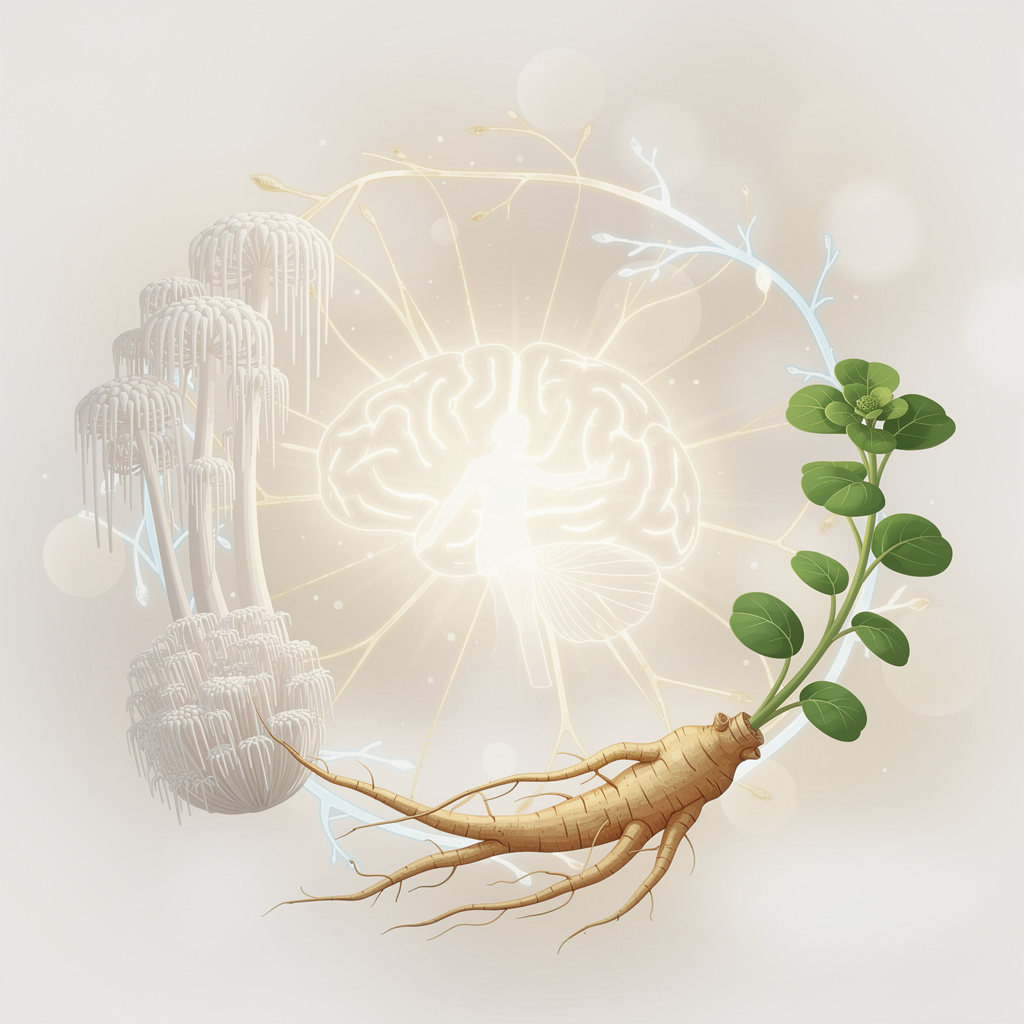
While stress relief is one pillar of adaptogen use, many people are equally concerned about cognitive performance. Brain fog, forgetfulness, and difficulty concentrating can be just as debilitating as stress. Here are the adaptogens with the strongest evidence for supporting brain function.
Lion’s mane is unique among adaptogens because of its ability to stimulate nerve growth factor (NGF) production, a protein critical for neuron growth and survival. A study in the Journal of Alzheimer’s Disease found that lion’s mane improved cognitive function scores in older adults with mild cognitive impairment (Lopresti et al., 2019).
Best for: Memory, focus, NGF stimulation, and brain fog. How to take it: 500 to 1,000 mg daily of extract, or 3 to 5 grams of fruiting body powder. Cognitive effects emerge within 4 to 8 weeks.
Bacopa has an impressive evidence base, with over 50 human studies. A systematic review in the Journal of Alternative and Complementary Medicine confirmed consistent improvements in memory recall and cognitive processing speed (Stough et al., 2008). Bacopa works by enhancing dendritic branching (connections between brain cells) and improving cerebral blood flow.
Best for: Memory recall, learning, and information retention. How to take it: 300 to 450 mg daily (50%+ bacosides), taken with a fat source for absorption. Effects appear within 4 to 6 weeks.
Panax ginseng reduces mental fatigue during demanding cognitive tasks while supporting sustained attention and working memory. Best for: Mental energy, working memory, and sustained attention. How to take it: 200 to 400 mg daily of standardized ginsenoside extract.
Caution: Panax ginseng can interact with blood thinners and diabetes medications. Consult your healthcare provider before use. For additional strategies to sharpen your mind, see our guides to daily brain exercises to boost memory and focus and focus exercises for daily attention.
Some adaptogens work on both stress and cognition simultaneously, making them especially valuable for people dealing with the combination of chronic stress and brain fog.
Ashwagandha reduces cortisol, which indirectly improves focus and memory. Rhodiola rosea is even more direct, reducing mental fatigue while improving cognitive performance under stress. Holy basil helps clear stress-related brain fog while supporting mental clarity.
Researchers describe a “two-pathway” model: some adaptogens target the HPA axis (stress), others target NGF and neurotransmitter systems (cognition), and a select few do both. This is why adaptogens that help with focus and memory tend to address the underlying stress driving cognitive fatigue. A practical takeaway: stacking adaptogens (combining a stress-focused herb like ashwagandha with a cognition-focused one like lion’s mane) can be more effective than a single adaptogen alone. Just introduce one at a time so you can identify what works for your body.
Nootropics (sometimes called “smart drugs”) enhance cognitive function directly, by manipulating neurotransmitters, increasing cerebral blood flow, or providing raw materials for brain cell metabolism. Adaptogens, by contrast, work on stress first, which then improves cognition as a downstream effect.
They are complementary, not competing. Adaptogens build long-term stress resilience and baseline cognitive support. Nootropics provide acute cognitive enhancement when you need a focused boost. The National Center for Complementary and Integrative Health (NCCIH) offers guidance on the safety profiles of various herbal and cognitive supplements. At Infusion Health, our IV therapy and NAD+ therapy services can complement both approaches by addressing cellular-level nutrient depletion.

With so many options, here is a straightforward decision framework:
Stacking guidance: Start low and go slow. Introduce one adaptogen at a time for at least two weeks before adding another. Quality matters: Look for standardized extracts that are third-party tested (USP, NSF, or ConsumerLab certified). Timing: Ashwagandha works morning or evening; rhodiola and ginseng are best in the morning; bacopa should be taken with fat. Cycling: Consider 5 days on, 2 days off, or 8 weeks on, 1 week off to prevent tolerance.
For a personalized assessment, specialized lab testing can identify cortisol patterns, nutrient deficiencies, and genetic factors that guide tailored recommendations.
This is where Infusion Health offers something truly different. Adaptogens provide an excellent foundation, but they work even better when paired with clinical therapies that address the cellular-level impact of chronic stress.
IV vitamin infusions deliver high-dose nutrients (B vitamins, magnesium, vitamin C, glutathione) that complement adaptogen use. While adaptogens regulate the stress response via the HPA axis, IV therapy replenishes the cellular nutrients that chronic stress depletes. NAD+ therapy targets cellular energy production and DNA repair. Chronic stress depletes NAD+ levels; combining adaptogens with NAD+ therapy creates synergistic cognitive recovery.
Our Life Enhancement Medicine program takes this further, combining supplementation guidance with evidence-based clinical treatments tailored to your unique physiology. No two people respond to adaptogens the same way, which is why our practitioners use lab testing and clinical assessment to build personalized plans.
The evidence for adaptogens rests on three pillars:
Individual results vary. Adaptogens are supportive, not curative, and not a substitute for medical treatment of diagnosed conditions. For complementary approaches, our article on meditation’s impact on brain wave activity explores another evidence-based strategy.
Medical Disclaimer: This article is for informational purposes only and does not constitute medical advice. Consult with a qualified healthcare provider before starting any new supplement regimen.
Adaptogens offer a natural, evidence-based approach to managing stress and supporting cognitive function. The science is clear: herbs like ashwagandha, rhodiola, lion’s mane, and bacopa can make a meaningful difference when used consistently. But the key is personalization, and that is where professional guidance makes all the difference.
At Infusion Health, our practitioners can help you build a personalized plan that combines adaptogen therapy with advanced clinical treatments like IV therapy and NAD+ therapy, all guided by lab testing and clinical assessment.
Ready to take the next step?
You have already taken the first step by learning about adaptogens for stress and cognitive support. Now it is time to put that knowledge to work. Your brain and body will thank you.