30+ Years
of Medical Experience

Medical Disclaimer: This article is for informational purposes only and does not constitute medical advice. Always consult your healthcare provider before making changes to your thyroid medication. Never adjust your dosage or switch medications without medical supervision.
If you have been diagnosed with hypothyroidism, you know the routine. Your doctor prescribes levothyroxine, you take it every morning, and you hope the fatigue, brain fog, and weight gain will eventually lift. For many people, that is exactly what happens. But for others, something still feels off. Your labs look normal, yet you do not feel like yourself.
You may have heard about “natural thyroid” from friends, online communities, or integrative health practitioners. Maybe you have seen Armour Thyroid mentioned and wondered whether a more natural approach could work better for your body. The truth is, when you compare synthetic vs natural thyroid hormone options, both have real advantages, and neither one is universally superior.
In this guide, we will walk through exactly what each option contains, how they work differently, what the research says, and how to have a productive conversation with your doctor about which path makes sense for you.
To understand the difference between synthetic and natural thyroid hormone, you first need to know how your thyroid works. Your thyroid gland produces two main hormones:
T4 (thyroxine) is the hormone your thyroid produces in the largest quantity. It is essentially a storage form, a prohormone that your body needs to convert into something more active.
T3 (triiodothyronine) is the biologically active hormone. This is the one that actually regulates your metabolism, energy levels, heart rate, brain function, and body temperature. T3 is what makes you feel “normal.”
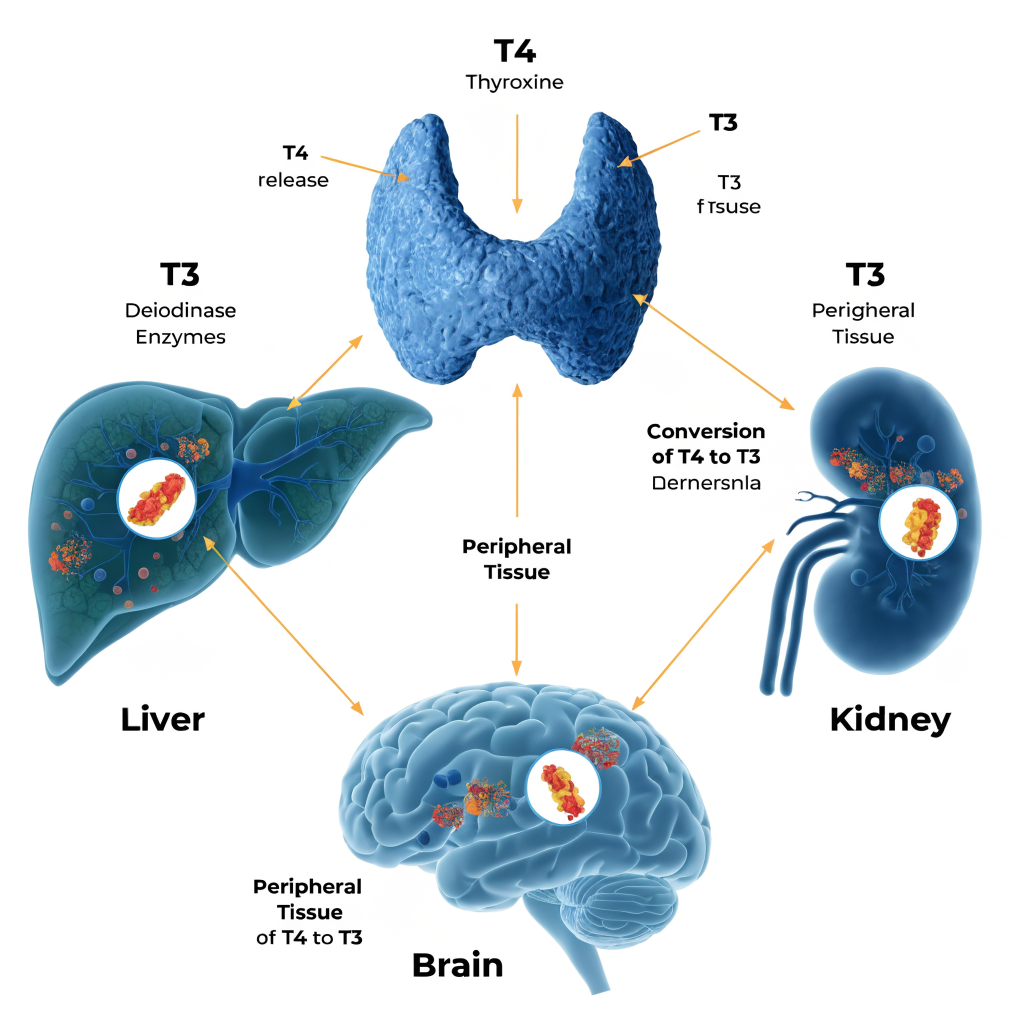
Most of the T3 in your body does not come directly from your thyroid. Instead, your body converts T4 into T3 in peripheral tissues like the liver, kidneys, and brain using enzymes called deiodinases. This T4-to-T3 conversion is central to understanding why different thyroid medications work differently. If your body converts T4 efficiently, a T4-only medication may work perfectly. If that conversion is impaired, you may struggle despite “normal” lab results.
Understanding this conversion process is also why thyroid function tests, including TSH, Free T3, and Free T4, tell only part of the story. Your TSH might be normal while your active T3 remains low at the tissue level.
Synthetic thyroid hormone is levothyroxine, sold under brand names like Synthroid, Levoxyl, and Tirosint. It is a lab-made version of T4, chemically identical to the thyroxine your own thyroid produces. It is the gold standard first-line treatment recommended by the American Thyroid Association and the American Association of Clinical Endocrinologists.
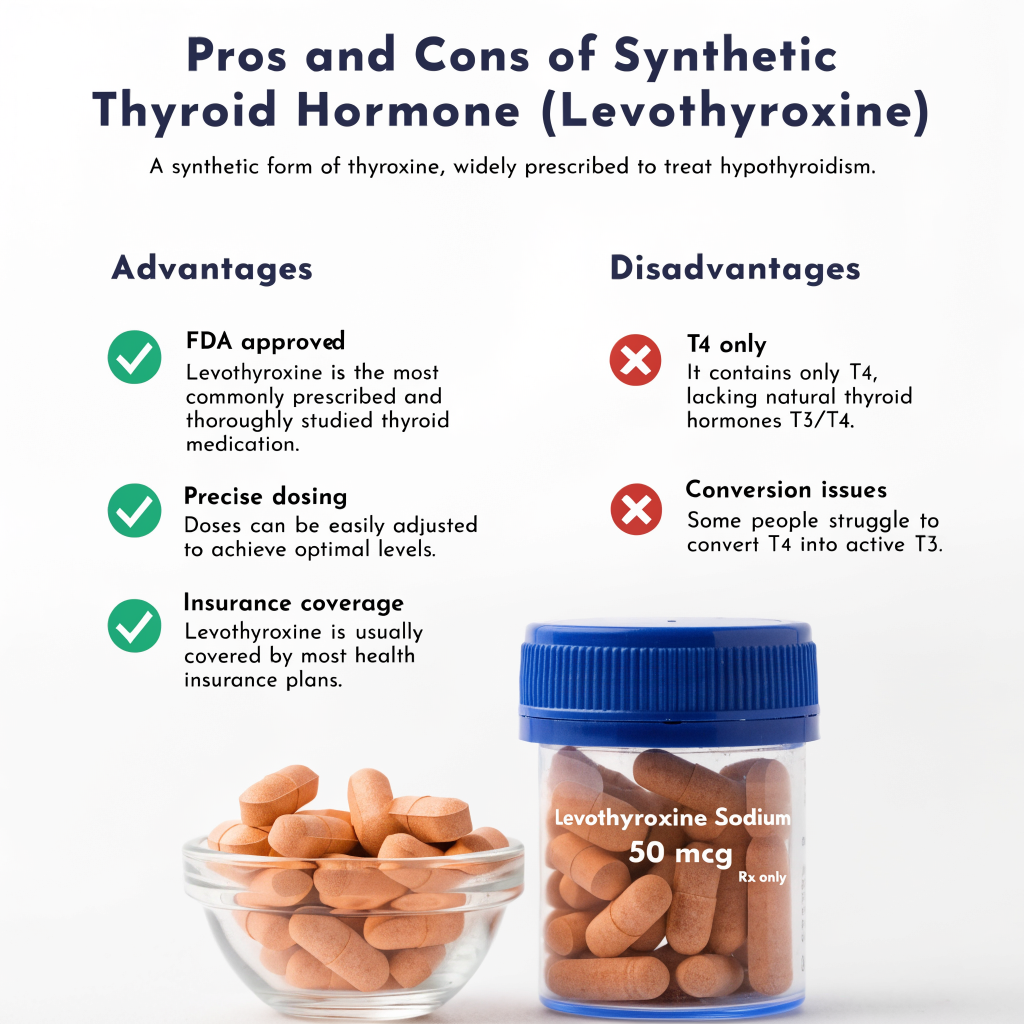
Levothyroxine comes in precise dosages from 25 mcg to 300 mcg, is FDA-approved, and manufactured under strict quality control. For most hypothyroid patients, it works well: it is safe, well-studied, covered by virtually all insurance plans, and easy to monitor with routine blood work. Decades of clinical evidence support it as effective for the majority of people.
However, levothyroxine has one fundamental limitation: it is T4 only. It relies entirely on your body’s ability to convert T4 into active T3. When conversion is inefficient, patients experience persistent symptoms despite normal lab results. Research published in JAMA estimates that 10 to 15 percent of patients continue to feel fatigued, foggy, or unlike themselves on levothyroxine alone.
Natural desiccated thyroid, often abbreviated as NDT, is made from dried, ground pig thyroid glands. You may know it by brand names like Armour Thyroid or NP Thyroid. Unlike levothyroxine, NDT contains both T4 and T3 in a fixed ratio of approximately 4.2:1, along with smaller amounts of T2, T1, and calcitonin.
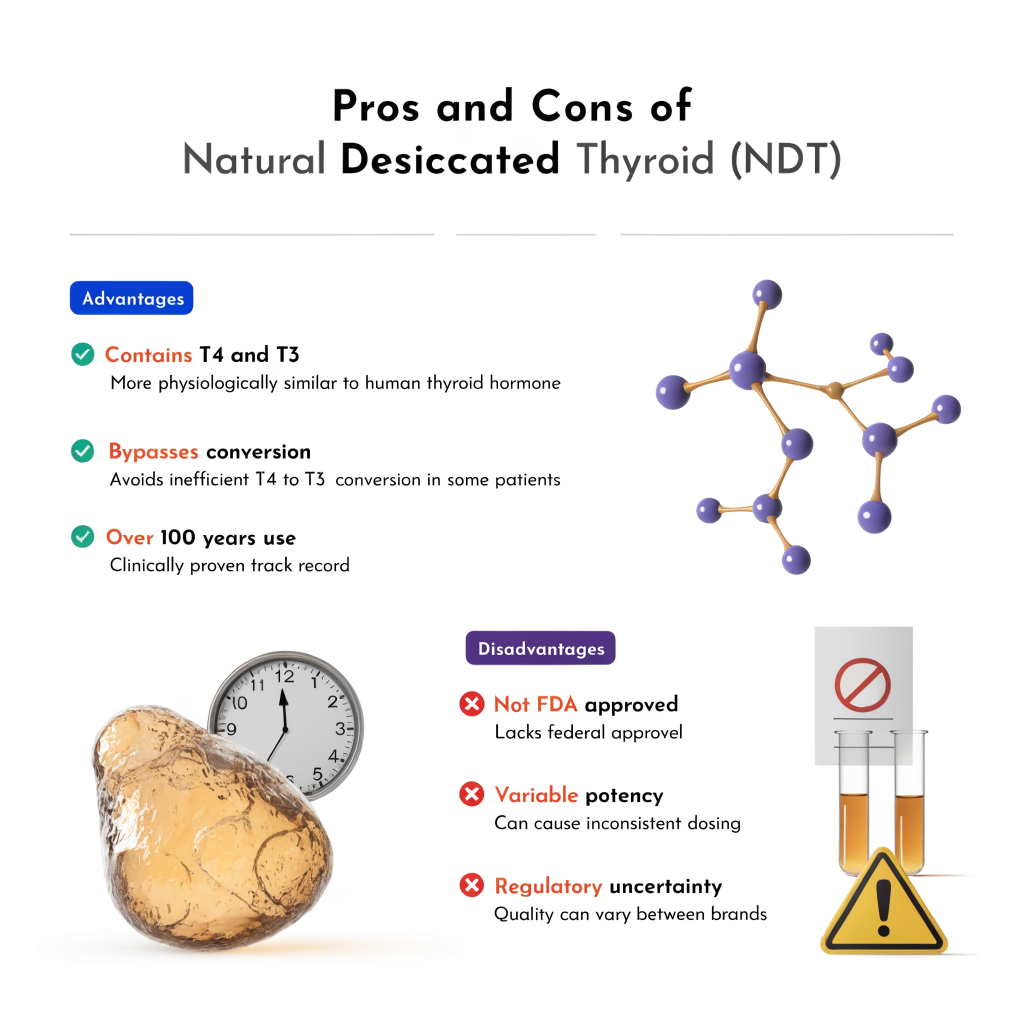
NDT has been used since the 1890s and is prescribed primarily by integrative and functional medicine practitioners. Its primary advantage is that it provides T3 directly, bypassing the conversion step that can be problematic for some patients. For individuals with impaired conversion, this can make a meaningful difference.
However, NDT has trade-offs. It is not FDA-approved as a biologic product. The fixed T4:T3 ratio does not match the human thyroid’s natural ratio of approximately 11:1. And dosing is less precise than synthetic options.
Understanding the natural thyroid vs synthetic thyroid comparison side by side helps you see where each option excels and where it falls short. Here is how the two options compare:
| Feature | Synthetic (Levothyroxine) | Natural (NDT / Armour Thyroid) |
|---|---|---|
| Source | Lab-made, FDA-approved | Animal thyroid gland (pig), not FDA-approved |
| Hormones Included | T4 only | T4 + T3 + T2, T1, calcitonin |
| Dosing | Precise mcg (25-300 mcg) | Grain-based (approx. 30-300 mg) |
| T4:T3 Ratio | N/A (T4 only) | Approx. 4.2:1 (fixed) |
| FDA Status | Approved and regulated | Unapproved (BLA pending) |
| Consistency | High (strict manufacturing) | Variable potency between batches |
| Insurance Coverage | Almost always covered | Varies, often not covered |
| Typical Prescriber | Most physicians and endocrinologists | Integrative and functional medicine practitioners |
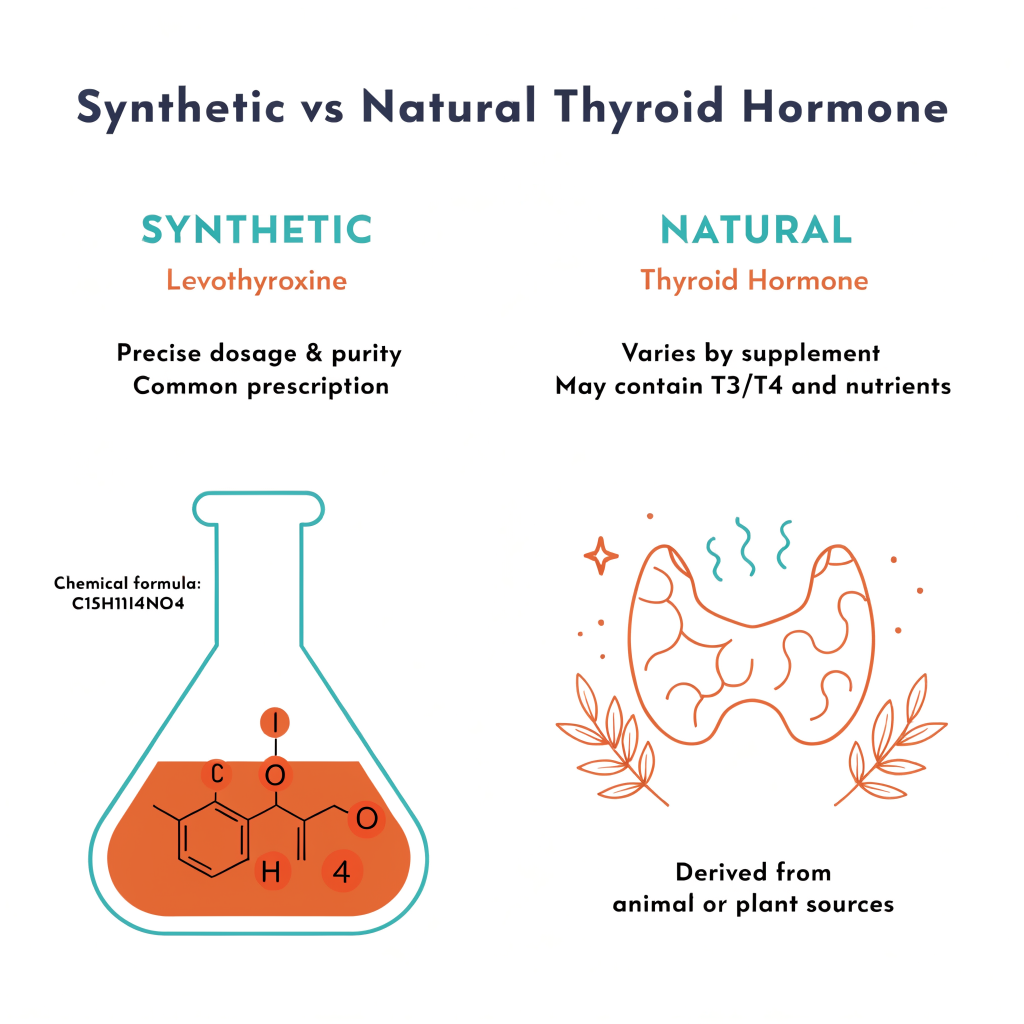
So, which is better: synthetic or natural thyroid hormone? The answer depends on the person. For patients with conversion issues, natural thyroid provides active T3 that T4-only medications cannot deliver directly. For others, the precision, regulation, and insurance coverage of levothyroxine make it the clear winner.
Pros of Levothyroxine:
Cons of Levothyroxine:
So why do most doctors prefer levothyroxine over Armour Thyroid? Levothyroxine offers unmatched dosing precision, regulatory oversight, consistent manufacturing quality, and broad insurance coverage. For patients whose bodies convert T4 to T3 efficiently, it is safe and effective. The challenge arises when conversion is the problem.
Pros of NDT (Armour Thyroid):
Cons of NDT (Armour Thyroid):
When researchers compare NDT vs levothyroxine directly, here are the key findings from major clinical studies:
The Hoang Study (2013): This landmark crossover study of 70 patients found those on NDT lost about 3 pounds more on average. Nearly half (49 percent) preferred NDT, compared to only 19 percent preferring levothyroxine. Quality of life showed no significant difference.
Shakir et al. (2021): This larger comparative study examined levothyroxine, NDT, and combination therapy, finding no significant differences in primary outcomes, though a minor heart rate increase was noted in the NDT group.
Nassar et al. (2024): A systematic review of 16 studies found NDT led to higher TSH and lower total T4 compared to levothyroxine, but quality of life and mental health outcomes showed no significant differences.
A meta-analysis of 11 randomized controlled trials with 1,135 patients found 52 percent preferred combination or T3-containing therapy, compared to 24 percent preferring levothyroxine alone, a statistically significant preference.
The DIO2 Connection: The Thr92Ala polymorphism in the DIO2 gene affects roughly 15 percent of the population and impairs T4-to-T3 conversion, particularly in the brain. Patients with this variant may benefit most from T3-containing therapies.
The JAMA Perspective (2025): A comprehensive review established levothyroxine as appropriate first-line treatment, while acknowledging persistent symptoms should trigger re-evaluation, which may include T3-containing alternatives.
The bottom line: neither option is universally superior. A meaningful subset of patients prefer T3-containing regimens, but objective outcomes tend to be modest. Individual factors, including genetics, conversion efficiency, and symptom profile, matter most.
If you are taking Armour Thyroid or NP Thyroid, an important regulatory development is worth knowing about. In August 2025, the FDA sent letters to manufacturers of desiccated thyroid extract products, announcing its intent to require approved Biologics License Applications. The FDA cited significant manufacturing violations and proposed a 12-month transition period.
In September 2025, the American Thyroid Association issued a statement supporting personalized treatment and patient access. The ATA recognized NDT as a “treatment of choice for some patients” while stopping short of recommending it as first-line therapy. FDA Commissioner Makary later stated the agency would “ensure access for all Americans” during the transition.
This is an evolving situation. Patients currently on NDT should not panic, but they should talk with their healthcare provider about what these changes may mean for their treatment. The key message is that the FDA is not banning NDT, but it is moving toward requiring the same rigorous approval process that applies to other thyroid medications.
Here is a practical framework to help you think through the options:
Levothyroxine is often the right starting point if:
Discussing NDT with your doctor may be worth exploring if:
Can you switch from levothyroxine to natural thyroid? Yes, but never on your own. Transitioning requires careful medical supervision, dose adjustments, and lab monitoring. A qualified practitioner can guide you through the process and help you determine whether the switch is beneficial for your specific situation.
Here is something often overlooked: even the right medication will not work well if your nutrient status is not supporting it. Essential nutrients like selenium, iodine, and zinc play a direct role in how your body processes thyroid hormone, regardless of which medication you take.
Selenium is critical for deiodinase enzyme function, the enzymes responsible for converting T4 into active T3. Low selenium levels impair this conversion regardless of your medication. Studies have shown selenium supplementation can reduce thyroid autoantibodies in Hashimoto’s patients.
Zinc is essential for thyroid hormone synthesis and conversion. Zinc deficiency can mimic hypothyroid symptoms, making it hard to tell whether your medication is working.
Iodine is required for thyroid hormone production, but excess iodine can worsen autoimmune thyroiditis in some patients, so balance is key.
Iron is another often-overlooked factor. Low ferritin impairs T4-to-T3 conversion, and anemia is remarkably common among patients with Hashimoto’s thyroiditis. If your iron stores are depleted, your medication may not be as effective as it should be.
Before considering a switch from levothyroxine to NDT, have your nutrient levels checked through specialized lab testing. Optimizing selenium, zinc, iron, and vitamin D may improve your response to levothyroxine and resolve symptoms you assumed were a medication problem.
Here is what to remember:
The best path forward is working with a provider who understands both options and can guide you through shared, informed decision-making. For more information on thyroid conditions and treatment approaches, explore our thyroid dysfunction resource library.
Ready to explore your thyroid medication options? Book a telemedicine consultation with Infusion Health and work with a practitioner who takes an integrative, patient-centered approach to thyroid health.